THE CIVIL RESISTANCE OF THE JEWS OF THE M.O.I.
Political Actions Carried Out by the Jewish Civil Resistance Movement of the Main-d'Œuvre Immigrée (M.O.I.)
Jewish Civil Resistance
When we talk about the Resistance, we often think of its armed wing, the attacks, the maquisards, and the FTP-M.O.I.
But most members of the Resistance devote themselves to other forms of struggle against the occupiers, also risking their freedom and their lives.
On the one hand, there were those who devoted themselves to supporting the fighters: manufacturing weapons, producing false papers, finding hideouts for the FTP, and, in particular, for the FTP-M.O.I. (Main-d’Œuvre Immigrée), who were targeted on two counts—as Jews and as Resistance fighters—and raising funds to enable everyone to live in complete secrecy.
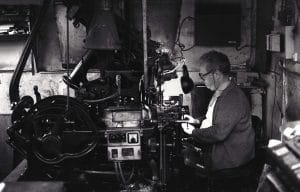
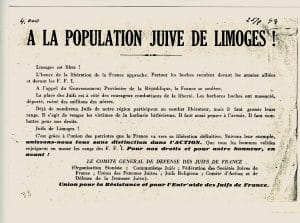
On the other hand, the Jewish Resistance fighters of the M.O.I.—who were the most numerous—carried out political actions designed to thwart the objectives of the Nazis and their collaborators: graffiti, underground printing presses, a very active underground press, posters, the distribution of leaflets and flyers (small leaflets), organizing strikes, seeking out rural families to hide Jewish children, sabotage in workshops working for the Germans, the transmission of documents and information (notably by liaison agents), demonstrations… This is what has been called the Jewish Civil Resistance.
It should be noted that the highly influential Jewish communist Resistance press (in Yiddish (*Unzer Vort*) and in French (*Notre parole* and *Notre voix*, among other publications) was targeted by the Nazis; many of its contributors were executed or died in deportation camps.
Participation in acts of civil resistance also serves to train activists, who form a pool from which FTP and FTP-M.O.I. fighters are selected. For activists in the Jewish section of the M.O.I., this also involved informing the Jewish population (in French and Yiddish) of the dangers threatening them, forging ties with the French population, and taking part in the rescue of Jewish children.
An example of civil Resistance: Sabotage of production intended for the Germans
Anti-Jewish persecution, the plundering of the country’s resources, and the execution of hostages to crush the Resistance prompted Jewish labor activists to devise a new form of struggle.
Internationally, Nazi Germany had been at war with the USSR since the breakdown of the non-aggression pact in June 1941.
As early as September 1941, union activists drew up an initial plan of action targeting goods intended for German troops across all sectors of activity.
Knitters and glove makers, for example, produce items that cannot be worn.
In December 1941, the glove makers launched a general strike that lasted four weeks
Acts of vandalism against machinery are taking place in large companies. Essential engine parts are being stolen or damaged, and electrical systems are being destroyed.
During the winter of 1941–1942, the cold was bitter. Warm clothing intended for German soldiers had to be shipped to the front. Jewish fur workers sabotaged their production.
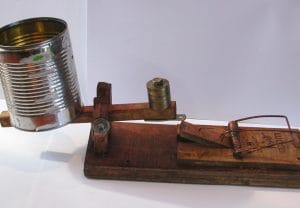
Small explosive devices are very common in workshops across all trades; they cause fires.
In June 1942, during one of these operations, two young Jewish Resistance fighters were arrested by the Nazis and shot in July. Other fighters were imprisoned.
Yet their commitment remains unwavering; many young Jewish immigrant workers from workshops and factories are joining the ranks of the Jewish section, the M.O.I., in its civil and armed struggle.
Cooperation Between the Armed Jewish Resistance and the Civilian Resistance
Alongside a domestic civilian Resistance movement, an armed domestic Resistance movement began to take shape in 1941.
There were many different types of actions (attacks on enemy supplytrains, setting fire to weapons depots, grenade attacks on buildings requisitioned by the German army, etc.).
Liaison officers—usually young women on bicycles—often deliver messages to armed fighters.
Organized members of the Resistance, though very few in number, often rely on support from the general public, whether implicit or explicit.
In May 1943, Jean Moulin, General de Gaulle’s representative in France, succeeded in uniting the various domestic Resistance movements, as well as unions and political parties—ranging from the Communists to the Republican Right. The CNR (National Council of the Resistance) was born. The Resistance was organized into two structures. One, the military branch, consisted of the French Forces of the Interior (FFI).
Gaullist forces, the FTPF, and the FTP-M.O.I. (Main-d’Œuvre Immigrée) were incorporated into the FFI.
The other organization, a civilian one, brings together the Departmental Liberation Committees (CDL), which are restoring the rule of law. Their role throughout the country is significant.
In May 1944, the CNR and the PCF established Patriotic Militias —both civilian and armed—in cities and in the maquis. One of these, M.O.I., was specifically Jewish. Jewish Resistance fighters were ready for the national uprising and the Liberation.