The National Council of the Resistance (CNR), established in May 1943 at the initiative of General de Gaulle, unified the various movements of the domestic Resistance, ranging from the Republican right to the Communists.
His program, adopted in March 1944, called for an “immediate action plan,” as well as progressive social and economic reforms for the postwar period, including Social Security.
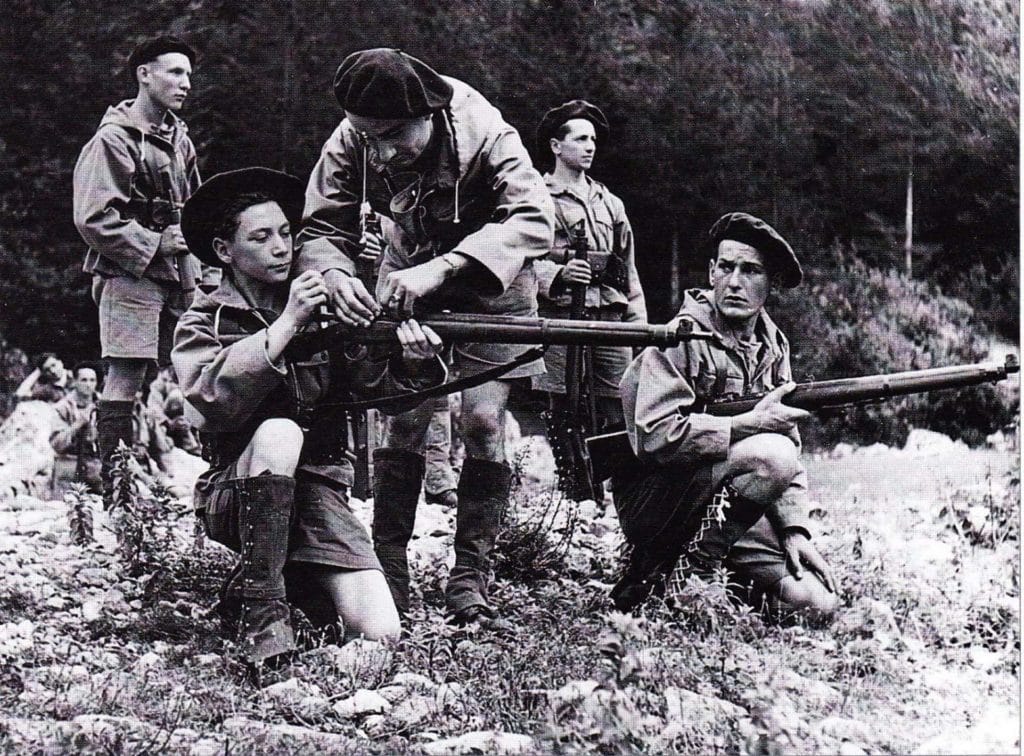
Jean Moulin, prefect of Eure-et-Loir, aware of the strength of the domestic Resistance, informed General de Gaulle, leader of the overseas Resistance based in England. The idea of unifying the various Resistance movements to increase their effectiveness was put forward, since only the FTPF and FTP-M.O.I.—which were close to the Communists—were organized as military units.
Furthermore, the unification of the Resistance, which de Gaulle sought, reflected his desire to establish his authority among the Allies.
On May 27, 1943, in Paris, the first meeting of the CNR took place, chaired by Jean Moulin, Charles de Gaulle’s delegate in France. There were many obstacles, but seated around the table were representatives of eight major domestic Resistance movements, six political parties, and two labor unions, ranging from the Republican right to the Communists.
Jean Moulin was arrested by the Gestapo on June 21, 1943. He died the following month after being tortured. Georges Bidault became the second president of the CNR.
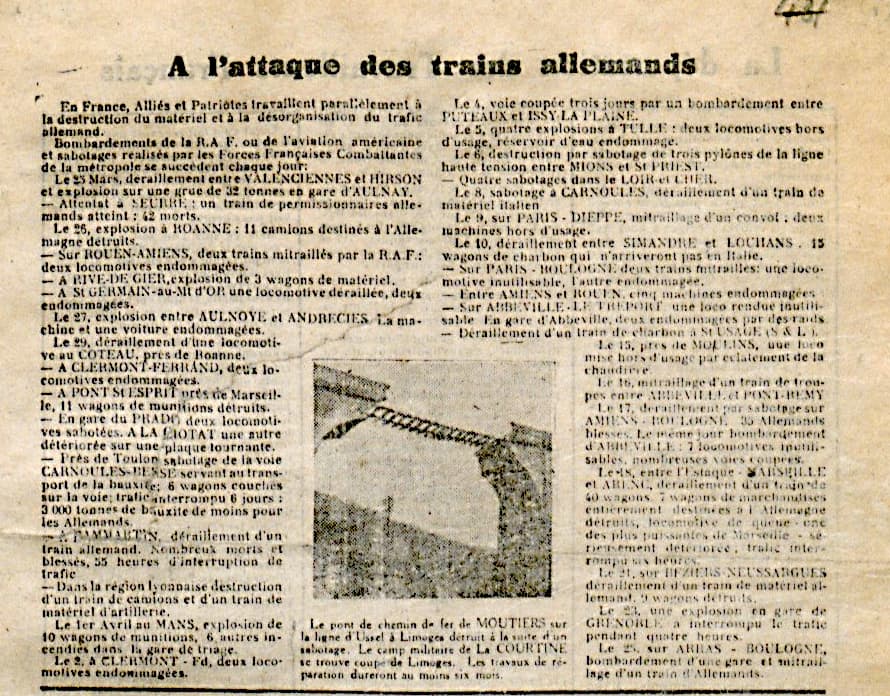
The CNR’s program, “Les Jours Heureux,” was published on March 15, 1944, after a long development process and several drafts. Although it received little attention upon its release, the program came into its own during the years 1944–45. Its first section emphasizes the importance of immediate action through the establishment of patriotic militias working toward the liberation of France, while the second section outlines democratic economic and social measures inspired by communist values.
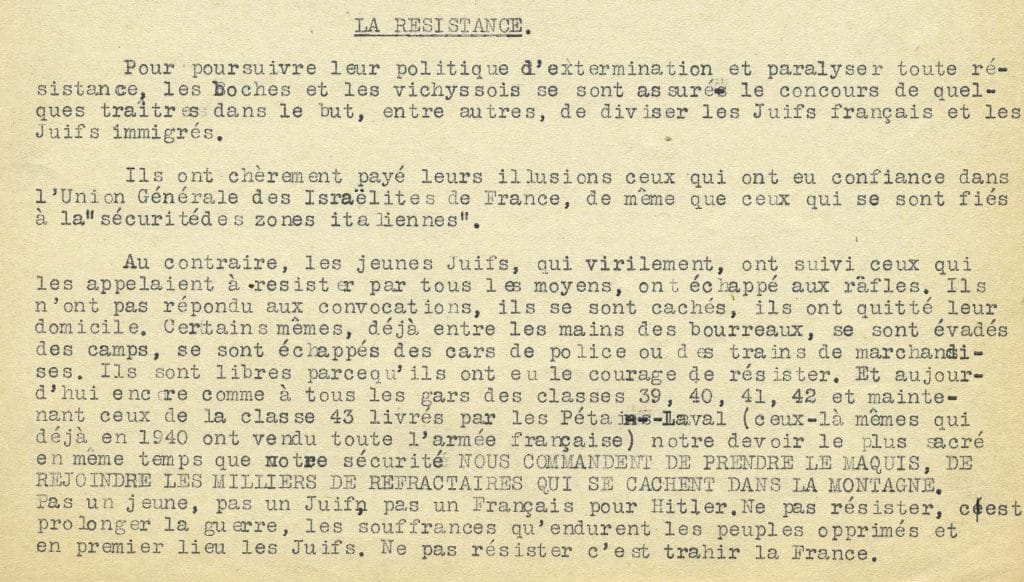
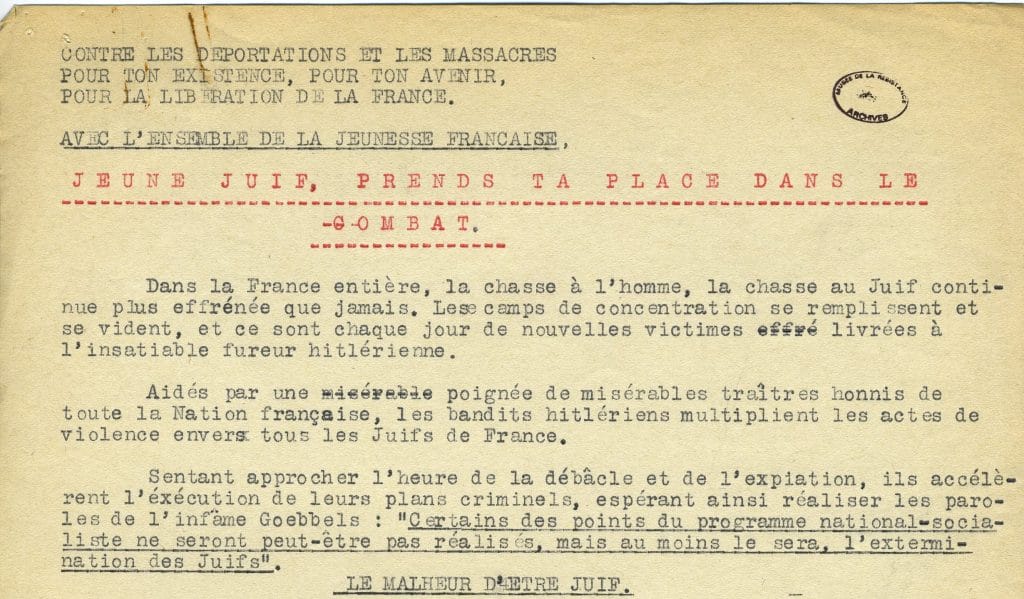
The measures to be implemented promote the elimination of all forms of discrimination suffered by Jews, the restitution of their property, respect for human dignity for all, social justice, the return of major means of production to the nation, and the right to work, retirement, education, and social security…
The influence of the contributions made by numerous members of the Resistance during the debates in the Provisional Consultative Assembly—which met starting in 1943 in Algiers and later in Paris—led to the adoption of ordinances with progressive provisions that embodied the ideas of the CNR’s Program.
Differences of opinion among the various factions within the CNR largely explain the lack of references to secularism, women’s suffrage, or the colonies.
References:
— CNR, 1944, *Les Jours Heureux*, Paris.
— Andrieu, Claire, 1984, “The Common Program of the Resistance,” Paris: Ed. de l’Érudit.