Pen name: Rex
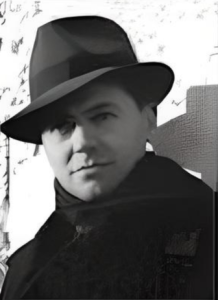
Jean Moulin, known as “Rex” while in hiding, was born in Béziers on June 20, 1899. His father, a teacher, was a committed Republican. Jean Moulin wanted to devote himself to art (he would continue to draw until his death), but his family steered him toward a career in law.
In 1936, as chief of staff to Pierre Cot, Minister of Aviation during the Popular Front, he supported aid to the Spanish Republic, which was in danger.
The following year, at the age of 38, he was appointed prefect of Aveyron and then, in 1939, prefect of Eure-et-Loir. From the very beginning of the Occupation, and despite the discretion required by his position as prefect, he was hostile to state collaboration and vehemently opposed the occupying forces; he supported the 105 Senegalese riflemen who, in Chartres, had courageously resisted the Germans.
On November 2, 1940, Pétain, the collaborationist head of the French state, dismissed this anti-Vichy prefect.
Jean Moulin joined the Resistance: he established contact with the founders of the resistance movements in southern France and traveled to London. His meeting with General de Gaulle, leader of “Free France,” was decisive. Jean Moulin advocates for the cause of the domestic Resistance and the need to supply it with weapons. De Gaulle appoints Jean Moulin as his representative in France, serving as both his personal and political representative.
Moulin worked to coordinate and “militarize” the Resistance activities of the three Gaullist-aligned movements in the South: he founded the United Resistance Movements (MUR) and, in November 1942, chaired a steering committee that brought together the leaders of the movements: Henri Frenay (“Combat”), Emmanuel d’Astier de la Vigerie (“Libération”), and Jean-Pierre Lévy (“Franc-tireur”). The MUR was based in Lyon, where General Delestraint formed and commanded the “Secret Army.”
When the Allies landed in North Africa on November 8, 1942, de Gaulle was ousted in favor of General Giraud. Jean Moulin returned to London and convinced the General of the need for an organization to unite all the Resistance movements.
In Paris, Moulin set to work; the negotiations were tough, but he was tenacious, and on May 8, 1943, the CNR was established.
All Resistance movements in the northern and southern zones, as well as labor unions and political parties—from the Communists to the Republican Right—are represented.
The CNR’s platform is based on values inspired by communism and is characterized, in particular, by significant social advances.
Through his representative, Jean Moulin, de Gaulle was recognized as the undisputed leader of the Resistance.
Despite his precautions, Jean Moulin was arrested in Caluire by Klaus Barbie, head of the Gestapo, known as the “Butcher of Lyon.” Moulin remained silent under torture and officially died on July 8, 1943, in Metz, on a train bound for Germany.
References:
— Daniel Cordier, 2011, *Jean Moulin: The Republic of the Catacombs*. Gallimard
— Photo: Jean Moulin Museum, Paris