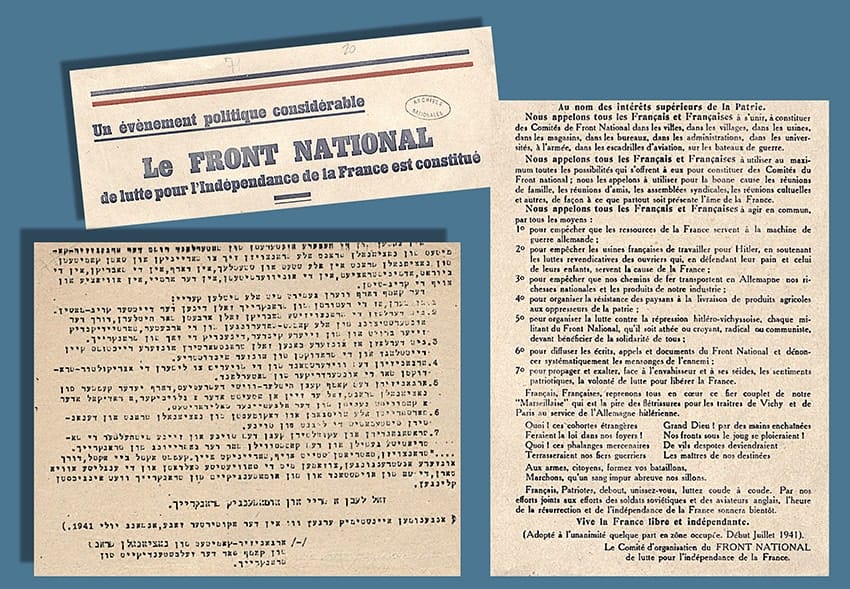
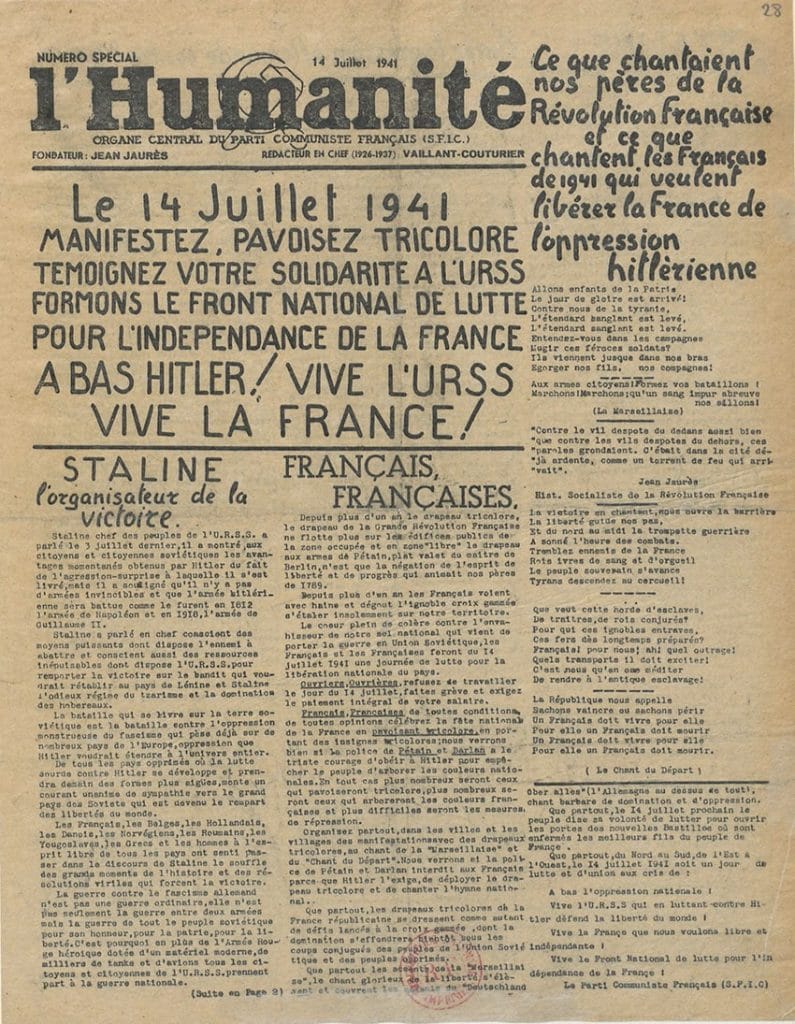
When we talk about the Resistance, we often think of its armed wing, the attacks, and the maquisards. But most members of the Resistance devoted themselves to other forms of resistance against the occupiers, also risking their freedom and their lives.
On the one hand, there were those who devoted themselves to logistical support for the fighters: manufacturing weapons, producing false documents, finding “hideouts” for the FTP and, in particular, for the Jewish members of the FTP-M.O.I.—who were doubly targeted, both as Jews and as resistance fighters—and raising funds to enable everyone to live in complete secrecy.
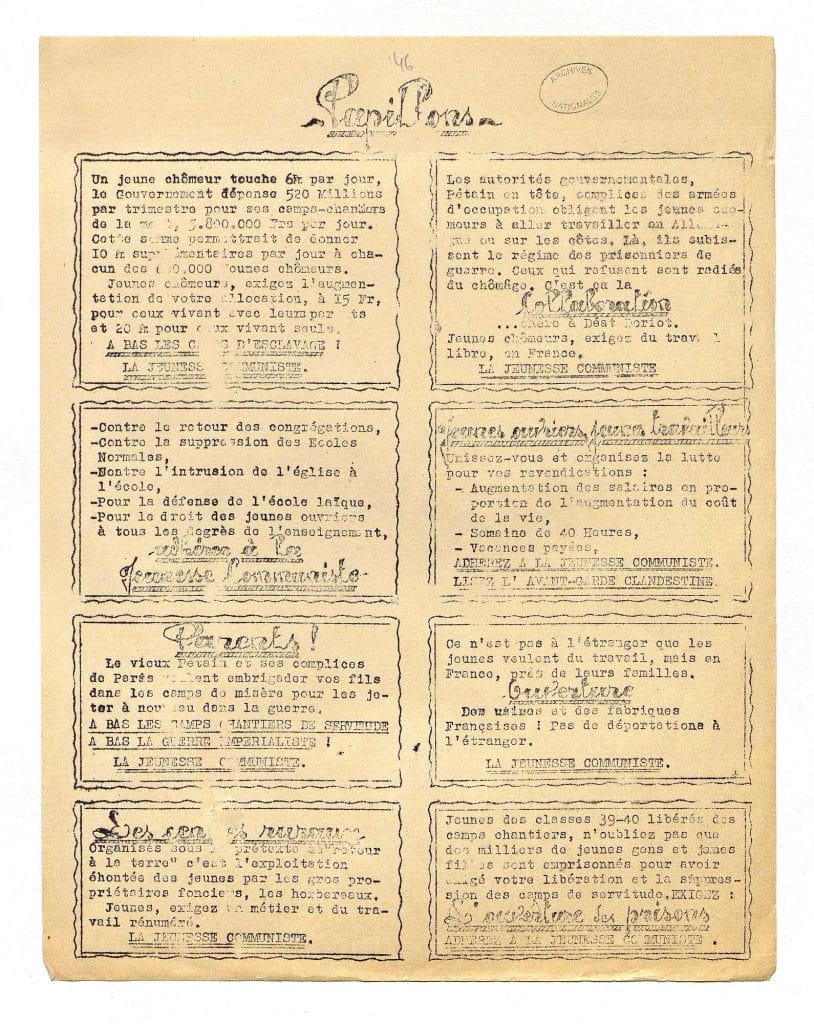
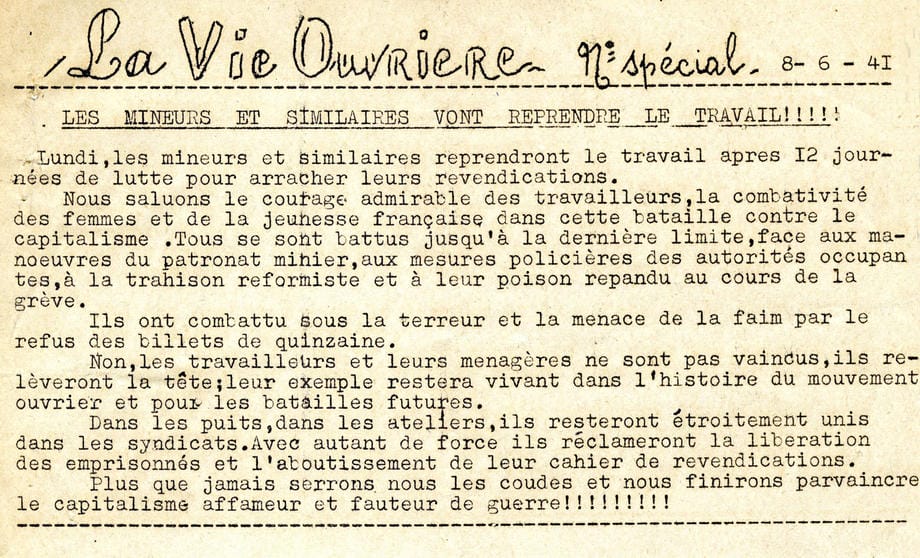
On the other hand, the largest group of Resistance fighters engaged in political activities designed to thwart the objectives of the Nazis and their collaborators: posters and graffiti; writing, printing, and distributing leaflets and underground newspapers; “papillons” (small leaflets); organizing strikes; sabotage in factories working for the Germans, the transmission of documents and information (notably by liaison agents), and demonstrations.
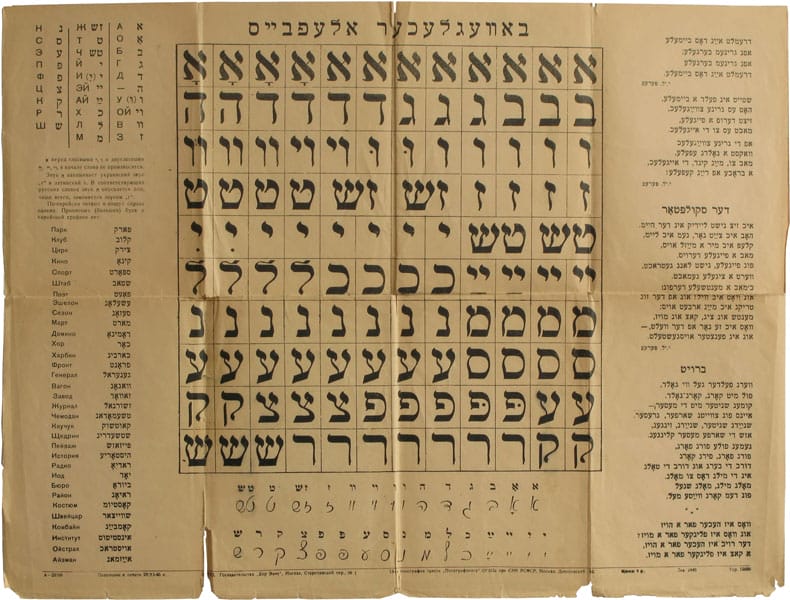
Participation in these activities also serves to train activists, who constitute a pool from which FTP and FTP-M.O.I. fighters are selected. For activists in the Jewish section of the M.O.I., the goal is also to inform (in French and Yiddish) the Jewish population of the dangers threatening them, to forge ties with the French population, and to participate in the rescue of Jewish children.
Reference:
Cukier, Simon; Decèze, Dominique; Diamant, David; Grojnowski, Michel, 1987, Revolutionary Jews, Paris, Messidor/Éditions sociales.