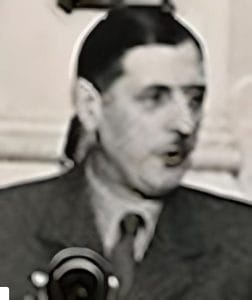
Charles de Gaulle, who would later become General de Gaulle, was born on November 22, 1890, in Lille.
After graduating from the Saint-Cyr Military Academy, he began his career as an officer during World War I. He was wounded during the Battle of Douaumont and held as a prisoner of war from March 1916 to November 1918.
After the war, de Gaulle wrote several military books, the most controversial of which was devoted to the modernization of the army.
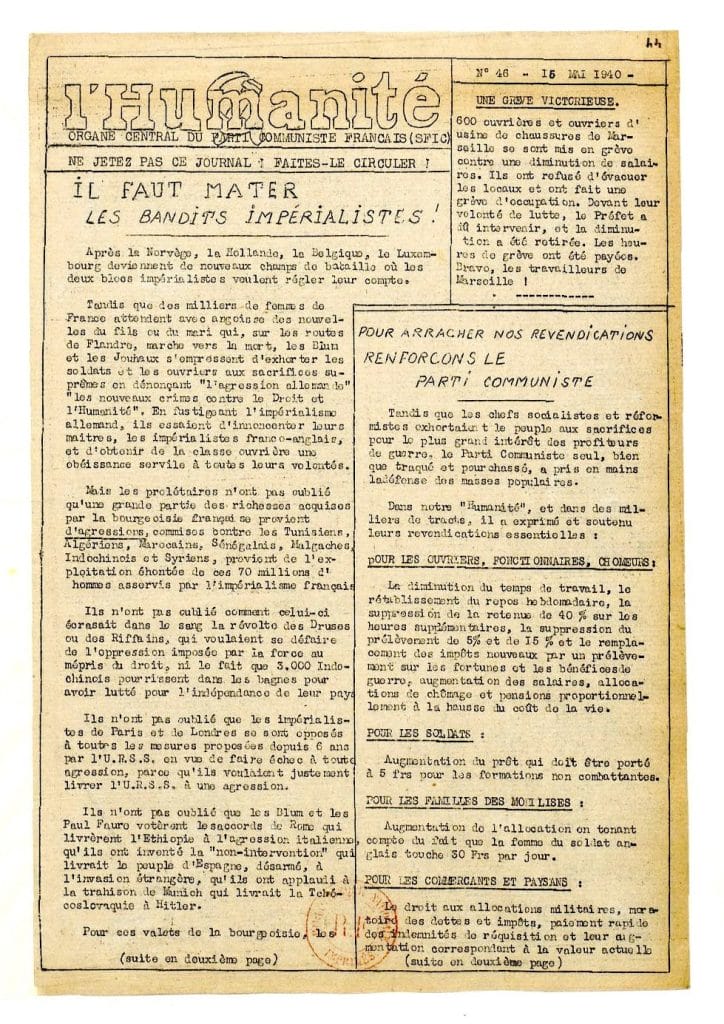
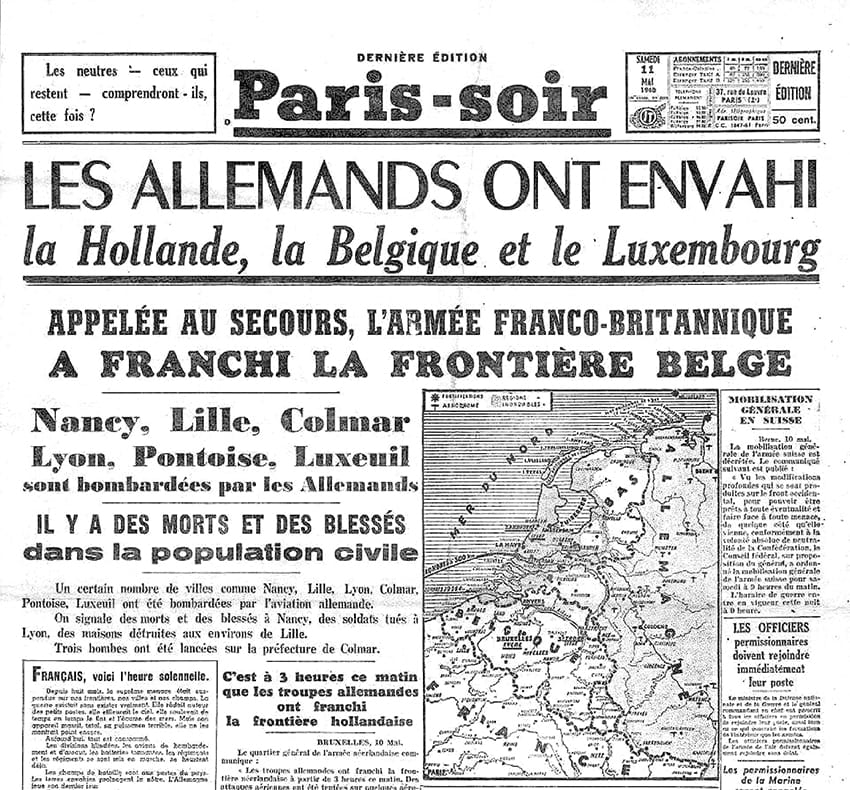
In 1937, de Gaulle was a colonel. He distinguished himself during the Battle of France in May 1940. He was promoted to general on June 1. He served as Under Secretary of State for War and National Defense in Paul Reynaud’s cabinet from June 6 to June 16, 1940.
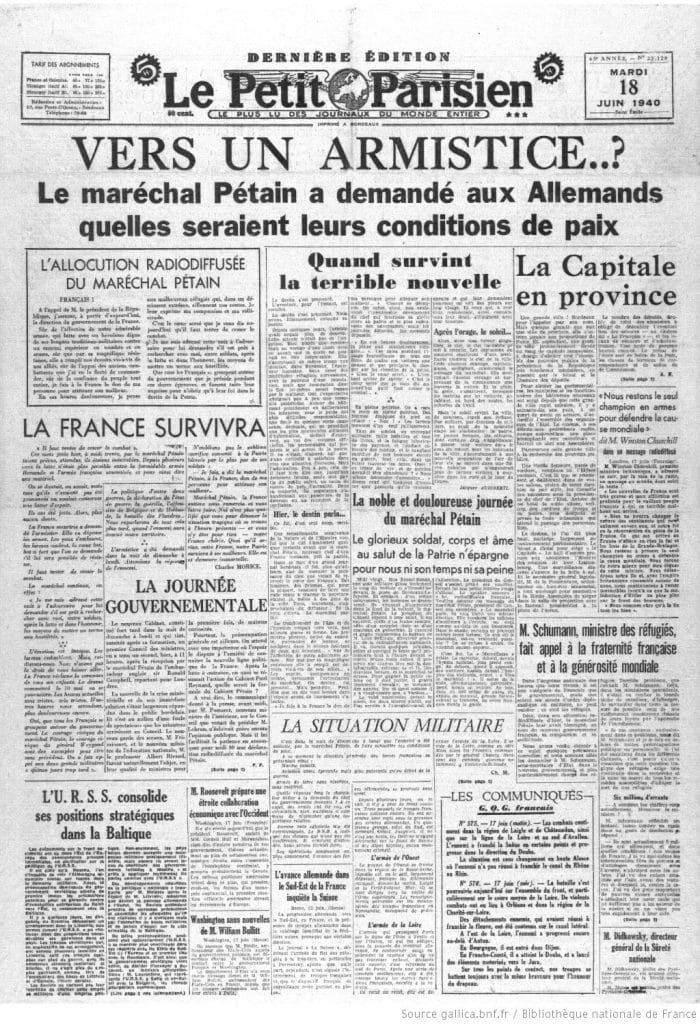
On June 16, Reynaud resigned and was replaced by Pétain, who signed the armistice with Germany.
The next day, June 17, de Gaulle rejected the armistice and went into exile in London.
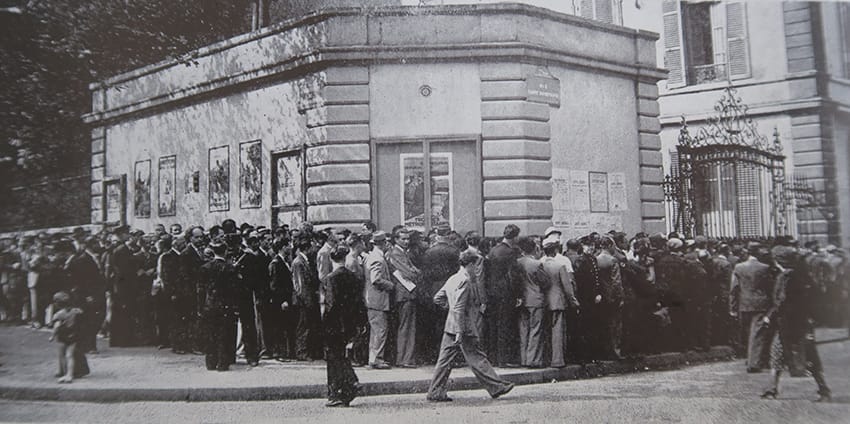
On June 18, he delivered his “Appeal to the French People” on the BBC, urging them to resist the occupying forces and join the Resistance government-in-exile.
British Prime Minister Winston Churchill recognizes General de Gaulle as the leader of “Free France.”
De Gaulle formed armed units, the Free French Forces (FFL), and was subsequently sentenced to death in absentia and stripped of his French citizenship by Pétain and his collaborationist government, which had retreated to Vichy.
De Gaulle, a member of the Resistance who was now stateless, founded the French Committee for National Liberation (CFLN) in 1943, which would later become the Provisional Government of the French Republic.
That same year, to make the fight against the occupying forces more effective, Jean Moulin, General de Gaulle’s representative in France, managed—after great difficulty—to unify the domestic Resistance: the National Council of the Resistance (CNR), created on May 27, 1943, brought together the country’s democratic forces, from the Communists to the Republican right. Its program, made official on March 15, 1944, outlined social reforms inspired by Communist values.
In 1944, de Gaulle, recognized as the undisputed leader of the Resistance, became president of the Provisional Government of the French Republic (GPRF), a position he held until 1946.
De Gaulle’s actions during the war enabled France to stand alongside the Allies, who defeated Nazism.
However, once the war was over, the general downplayed the Vichy regime’s collaborationist policies. The myth of a united, anti-Nazi French Resistance was promoted by the GPRF, which claimed credit for the entire national war effort. The actions of Jewish immigrant Resistance fighters from the M.O.I. were marginalized, even obscured, and the reality of the death camps was ignored.
General de Gaulle served as President of the French Republic from 1959 to 1969. He died in 1970.
References:
— Agulhon, Maurice, 2000, *De Gaulle: History, Symbol, Myth*, Paris: Plon.
— Jean-Louis Crémieux-Brilhac, 1996, *Free France: From the June 18 Appeal to the Liberation*, Paris, Gallimard, “La suite des temps” series.
— Lacouture, Jean, 1984, *De Gaulle: The Rebel, 1890–1944*, Vol. 1, Paris: Éditions du Seuil.