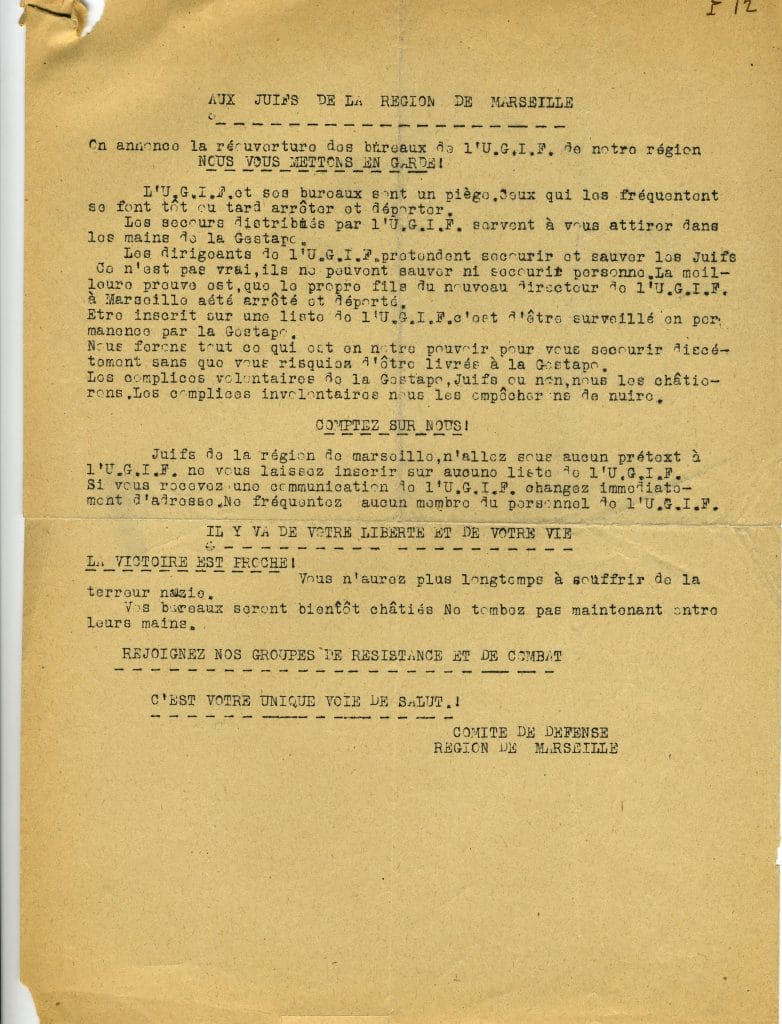
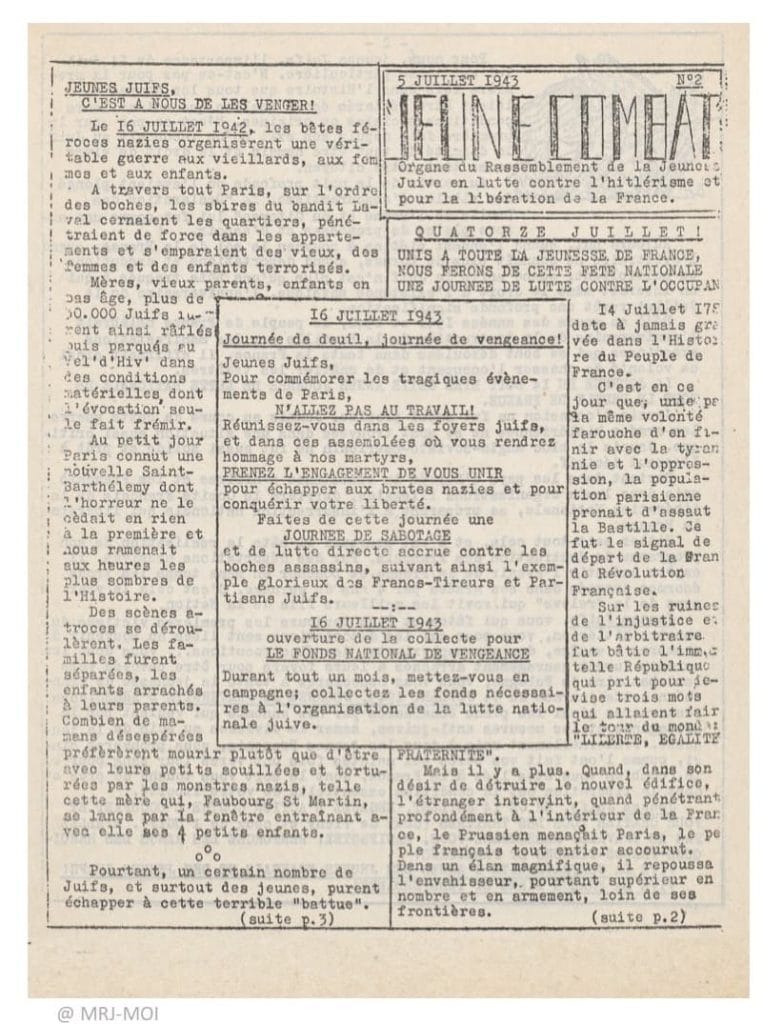
“Inform, alert, convince…” The underground press was one of the Resistance’s indispensable weapons in the fight against the occupiers, in exposing official propaganda, and in organizing action. To publish leaflets and flyers, and later newspapers, the printing shops—which were initially small-scale operations—acquired professional equipment that was either borrowed or salvaged. The Jewish underground press paid a heavy price for its activities due to repression.
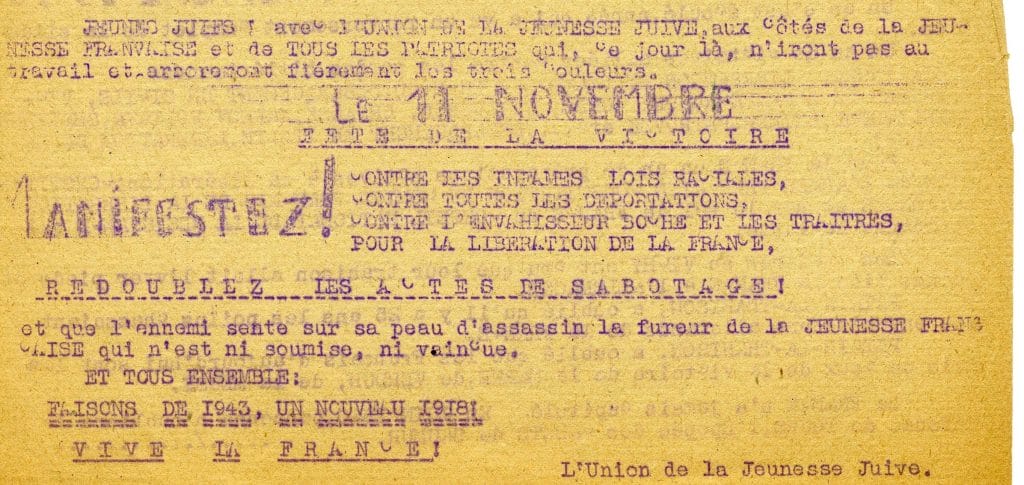
At the beginning of the Occupation, leaflets and flyers were handwritten or typewritten in small quantities. Increased demand for distribution—in response to the growing violence of the Nazis and the Vichy regime—forced the Resistance to develop a clandestine printing network. Robert Endewelt recalls: “In early 1941, we first needed to make ourselves known to the young people in the neighborhood, so we published a small newspaper produced with the rudimentary means available at the time—that is, mimeographed or reproduced on sheets using alcohol-based duplicating fluid.”
Most of the Resistance’s underground newspapers consist of just one or two double-sided sheets, but they require supplies.
Until 1943, the underground press was mainly mimeographed. The mimeograph process involved the use of a stencil (a type of template on which the text was typed or written by hand), but publication was irregular because printing conditions were difficult: not only did they have to obtain typewriters and mimeograph machines, but also ink and paper, all while risking being denounced or spotted by the ever-present police.
Starting in 1944, the danger grew more imminent with each passing day: dogs were trained to detect the scent of molten lead from the printing type that lay scattered on the floor and stuck to the soles of the typesetters’ shoes.
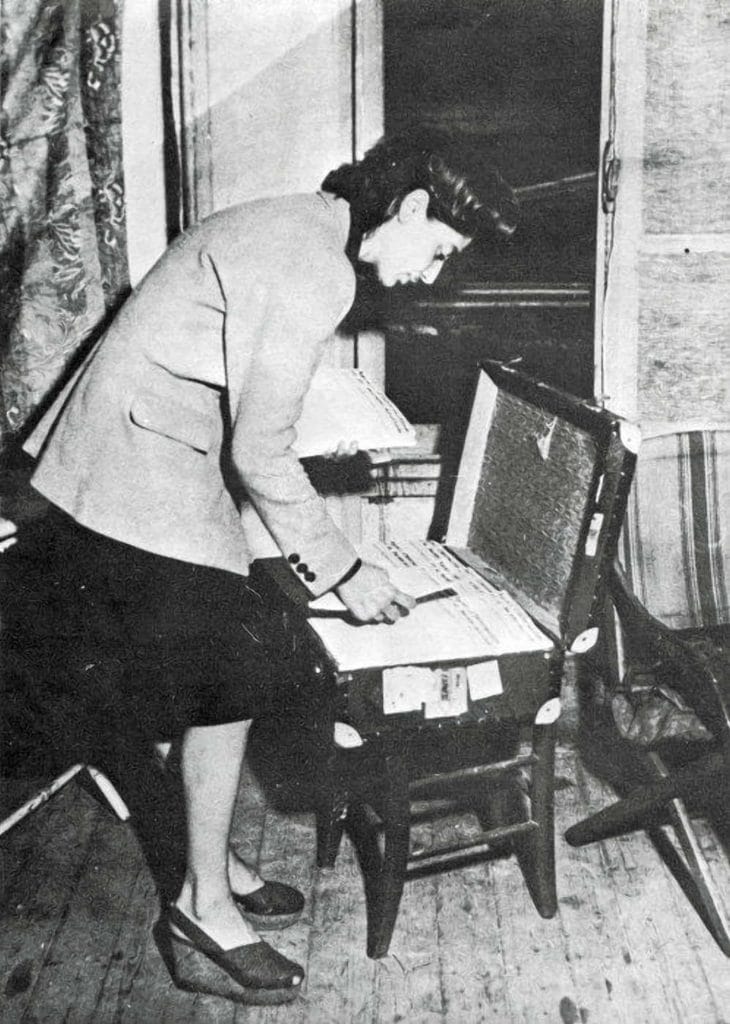
To ensure greater efficiency, the underground press is printed with the help of Resistance printers or using salvaged equipment.
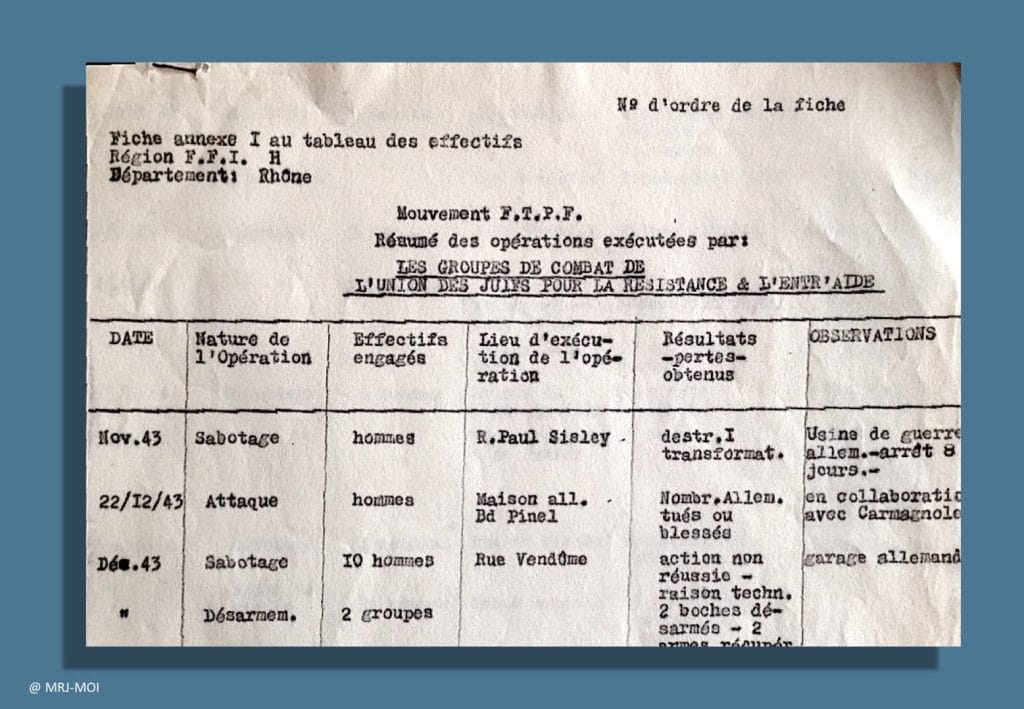
The UJRE operates about thirty clandestine printing shops in Paris and the south of France. It requires both material and human resources: a facility, machinery, as well as editors, typists, professional or makeshift technicians, transporters, distributors, and liaison officers.
Many of the contributors to the clandestine Communist Jewish press “fell in the line of duty”: Israël (Moshe) Bursztyn, the former manager of *Naïe Presse*, Rudolf Zeiler, the printer for *Unzer Wort* ( *Our Word*), the editors Mounié Nadler, Joseph Bursztyn, Aron Skrobek (known as David Kutner), Ephraïm Lipcer, Wowek Cyrzyk, and numerous distributors and members of the technical staff.
Reference:
AACCE, 2009, *The Jews of France and the Resistance,1940–1945*. Published by AACCE