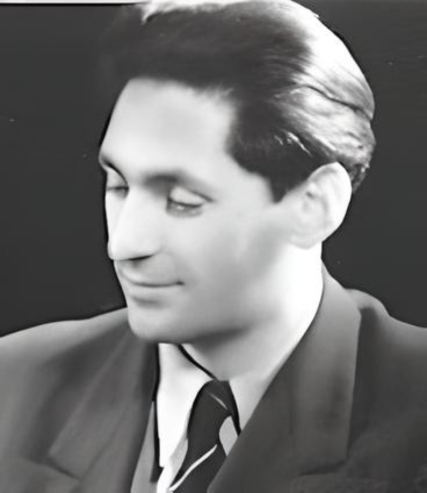
(1909-1967)
Born Nahum Fansten
Nahum Fansten, known as Marceau Vilner, was born in Lithuania in 1909 into a Jewish family. His hometown, Vilna, was under Russian and then Polish rule. He left Poland around 1931, traveling to Great Britain, Belgium, and finally France. He became an engineer.
He joined the French Communist Party in 1933 under the name N. Marceau. After the war, he adopted the pseudonym Marceau Vilner.
Marceau Vilner is one of the leading figures in the “ International Committee of Anti-Fascist Intellectuals for the Release of Thaelman,” a German Communist leader imprisoned by the Nazi regime.
In February 1938, Vilner wrote in a pamphlet that was soon banned: “Fascism started the world war in Spain.”
In September 1938, he published an annotated edition—which was quickly banned—of the main excerpts from *Mein Kampf*. In it, he denounced the danger of Nazism.
In June 1939, his book, *Germany and the French Revolution*, demonstrated that there was “another Germany.”
Vilner married Rachel, who was herself from Vilna and had served as a nurse with the International Brigades during the Spanish Civil War.
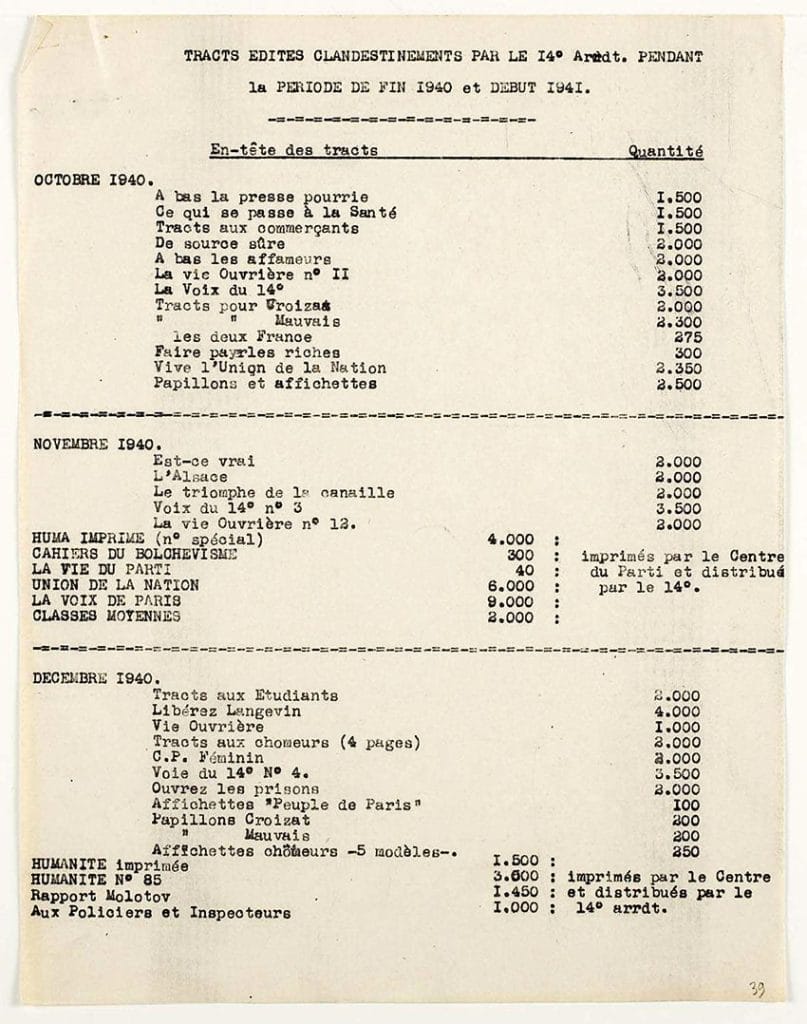
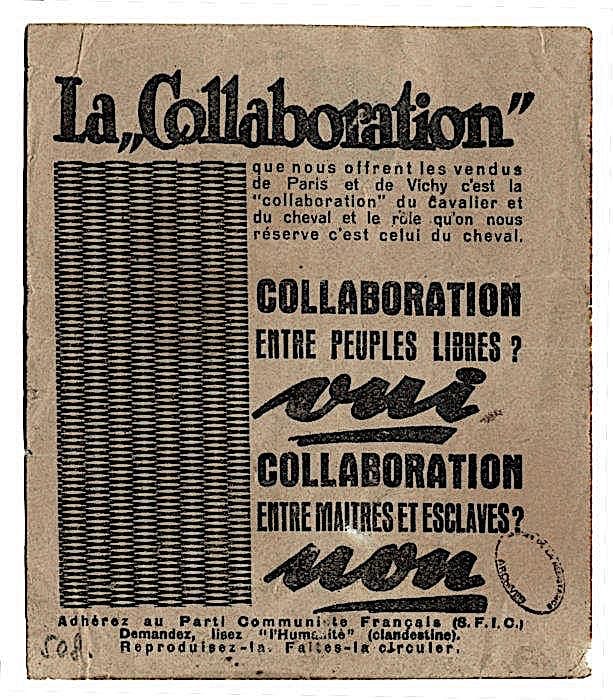
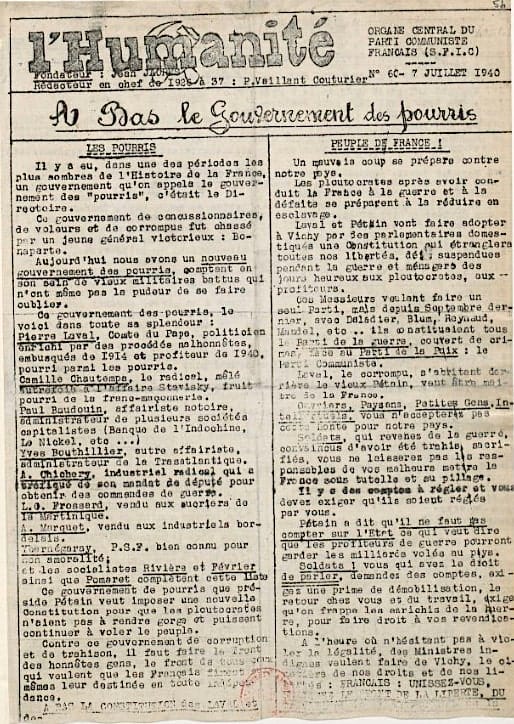
Marceau Vilner enlisted as a volunteer in September 1939 and was demobilized in August 1940. Working in conjunction with the leadership of the M.O.I., he was tasked by the clandestine communist organization “Solidarité” with recruiting groups of Jewish fighters in Paris. He helped edit the underground Jewish newspaper *Notre Parole*. Vilner himself went underground in May 1941, at the time of the “Billet vert” roundup.
He set up an underground printing press, was arrested on July 26, 1941, and interned at the Tourelles camp and then at the Pithiviers camp; there, he helped organize a hunger strike in September 1941 and a protest in December. He led an escape network and produced and edited a monthly newspaper. He was deported to Auschwitz on July 17, 1942, and there, once again, became involved in setting up an escape network. From Auschwitz, Vilner was sent to Warsaw in October 1943 to work on “cleaning up” the ruins of the ghetto. He was transferred to Dachau on July 1, 1944. American troops liberated the camp on May 2, 1945, and the 600 foreign internees designated “Fainstein from France” to represent them “before the Military Authority and any other authority.” Upon his return from Dachau, Vilner helped found the “Association of Former Jewish Deportees from France” in 1945, which he chaired until his death. His recurring goal was to help people understand the unique nature of Jewish martyrdom.
Secretary-General of the UJRE and editor-in-chief of *Droit et Liberté*, the monthly magazine of the Movement Against Racism and Anti-Semitism, he co-edited *Naïe Presse* and founded the weekly *Presse Nouvelle* (PNH) in 1965.
He died on July 24, 1967, in Paris.
References:
— Cukier, Simon; Decèze, Dominique; Diamant, David; Grojnowski, Michel, 1987 , *Revolutionary Jews*, Messidor/Éditions sociales.
— Private sources within the Fansten family
— Photo: private collection, Fansten (DR)