(1908–2001)
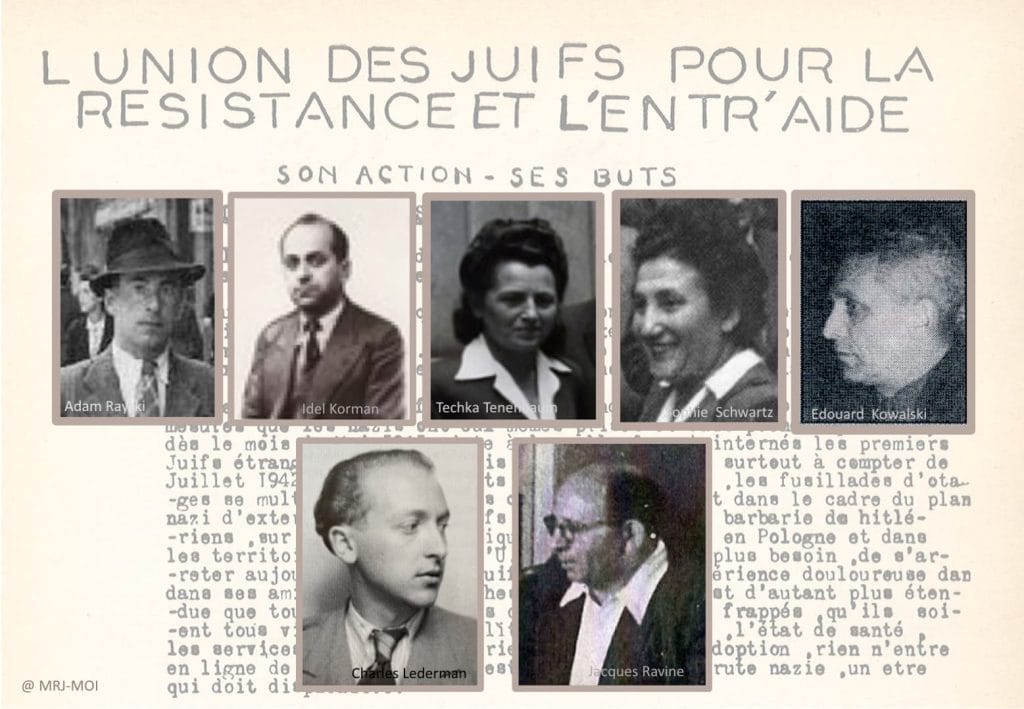
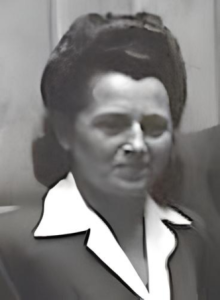
Techka (or Teschka) Tenenbaum, whose real name was Tauba Forszteter, was born in Ostrowiec, Poland, on May 15, 1909.
She fled anti-Semitism and sought refuge in France.
She soon became an activist in Paris with the women’s garment workers’ union.
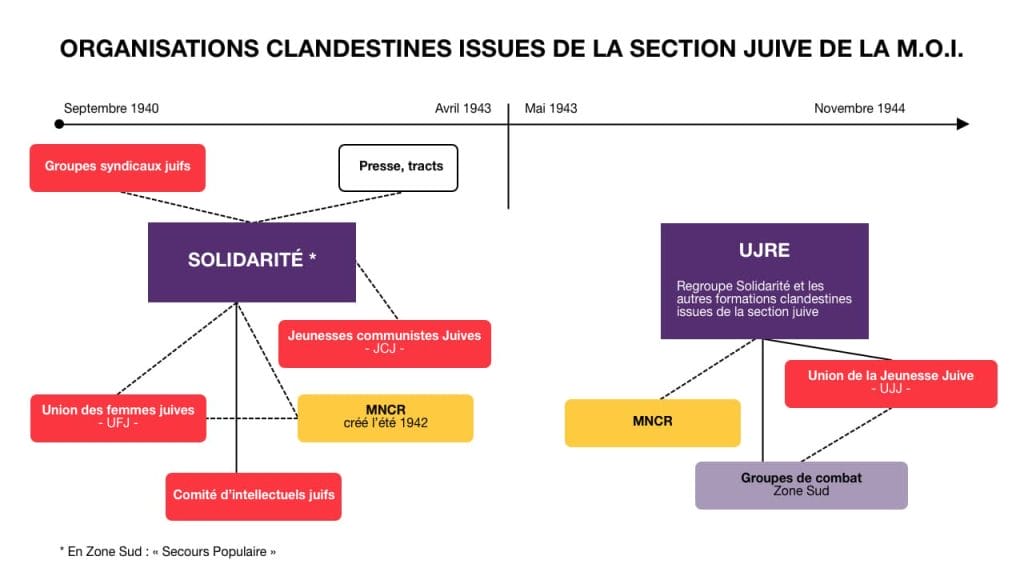
In early September 1940, six weeks after the start of the Occupation, she took part, along with several leaders of the Jewish section of the M.O.I., at 54 rue Custine in Paris’s 18th arrondissement, in the first meeting of “Solidarité ” (a clandestine Jewish organization whose immediate task was to provide material aid to the families of combatants and prisoners of war).
Alongside “Solidarité,” which would go on to play a major role in the Resistance, and in close collaboration with it, the Union of Jewish Women (UFJ) was formed at the initiative of a few activists (notably Techka Tenenbaum herself and Sophie Schwartz).
Techka, also known as Thérèse, was quickly brought into the leadership of the M.O.I. in Paris.
In the summer of 1942, under her leadership, a group of women—including 60 Christian activists—gathered at the Jaurès metro station and made their way to the Drancy camp, carrying packages for the interned women and children. The camp commander initially refused the packages, but, faced with the scale of the women’s protests—which resonated within the camp—he relented.
In late August 1942, following the Vél’ d’Hiv’ roundup, Techka Tenenbaum led a demonstration of Jews and non-Jews outside the Drancy camp to demand the immediate release of children, the elderly, and the sick.
On September 11, she took part in a rally in Paris in front of the Office of Prisoner-of-War Affairs to demand a guarantee that the prisoners’ families would not be deported or interned.
On February 16, 1943, the Union of Jewish Women, together with the Mouvement National contre le Racisme (MNCR), organized the rescue of 63 Jewish children who had been gathered at a center run by the UGIF and were facing deportation. The children were smuggled out of the center on Rue Lamarck in Paris and entrusted, through Pastor Paul Vergara and social worker Marcelle Guillemot, to numerous Protestant women tasked with hiding the children and then placing them with foster families.
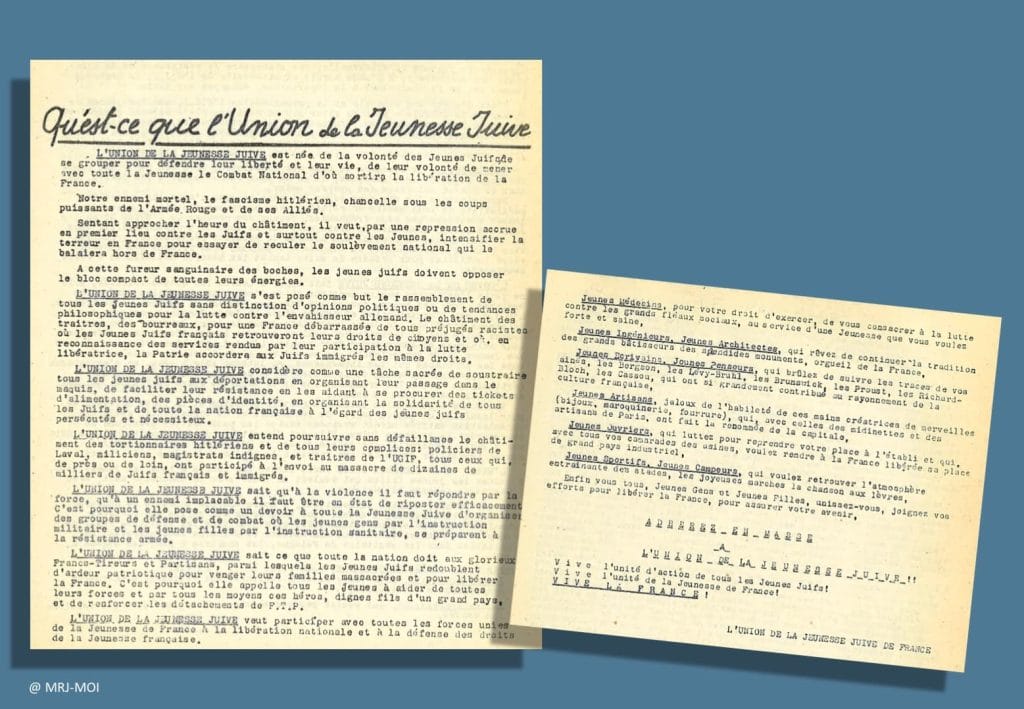
In the spring of 1943, Techka Tenenbaum helped found the UJRE (Union of Jews for Resistance and Mutual Aid).
She was then sent on an assignment to eastern France, where she served as the M.O.I.’s interregional director.
On January 6, 1944, she was deported to the Ravensbrück concentration camp.
After the Liberation, she became a full-time staff member of the UJRE before returning to Poland with her partner, the Resistance fighter Idel Korman, who, like her, was a co-founder of the UJRE.
Driven out by anti-Semitism, she returned to France and died in Paris on December 13, 2001.
References:
— Diamant David, 1971, *The Jews in the French Resistance (1940–1944)*. Ed . Le Pavillon, Roger Maria Editeur
— AACCE Collective, 2009, *The Jews of France and the Resistance*. Published by AACCE
— Ravine Jacques, 1973, *The Organized Resistance of the Jews in France*. Julliard
— Photo (Courtesy of the author)