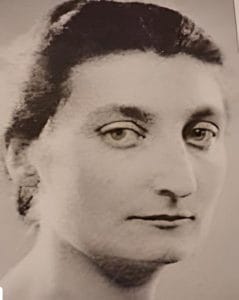
Suzanne Augustine Lorge was born in Brussels in 1905 into a wealthy, liberal Protestant family.
In 1925, she married the writer Claude Spaak, brother of Paul-Henri Spaak, a member of parliament and minister, and of the screenwriter Charles Spaak.
In the 1930s, first in Belgium and then in Paris, where she settled in 1936, she devoted herself to helping Spanish Republican refugees and immigrants from Eastern Europe fleeing Nazism. She had two children.
During the Occupation, she continued her humanitarian work. Starting in 1942, as part of the Mouvement National contre le Racisme (MNCR)—founded by the Jewish section of the M.O.I. to raise awareness among Christian communities about the persecution of Jews—she devoted herself more specifically to rescuing Jewish children.
Her social standing enabled her to seek out a wide range of assistance and find support, particularly among judges, writers, and in ecclesiastical circles. She was thus able to obtain addresses where children could be hidden and fake documents prepared for them, and she raised substantial funds (including donations from the writer Colette, her neighbor) to clothe and feed them.
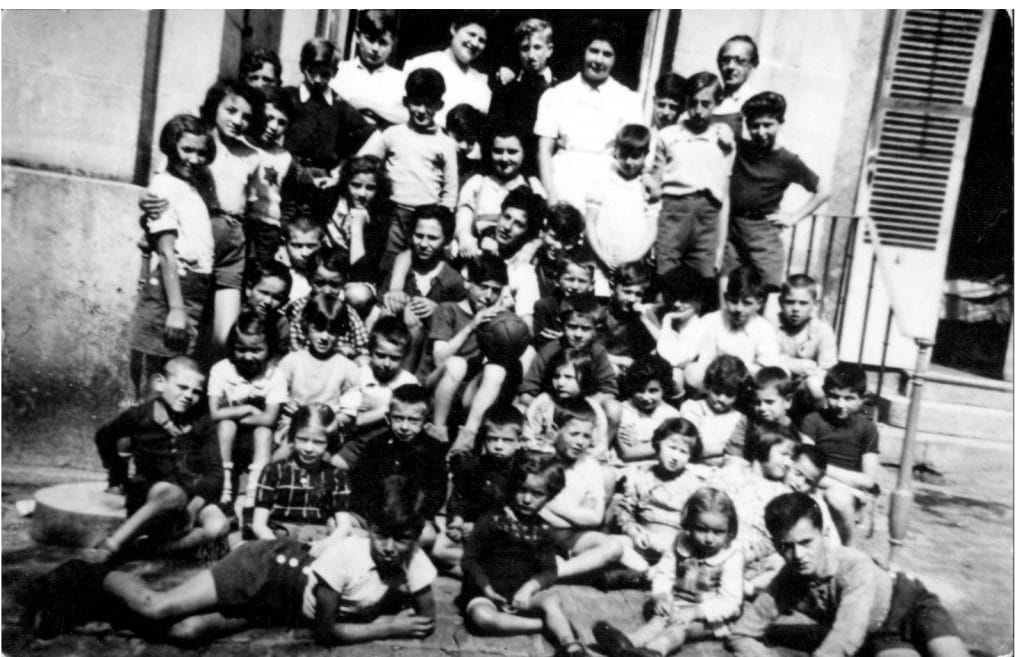
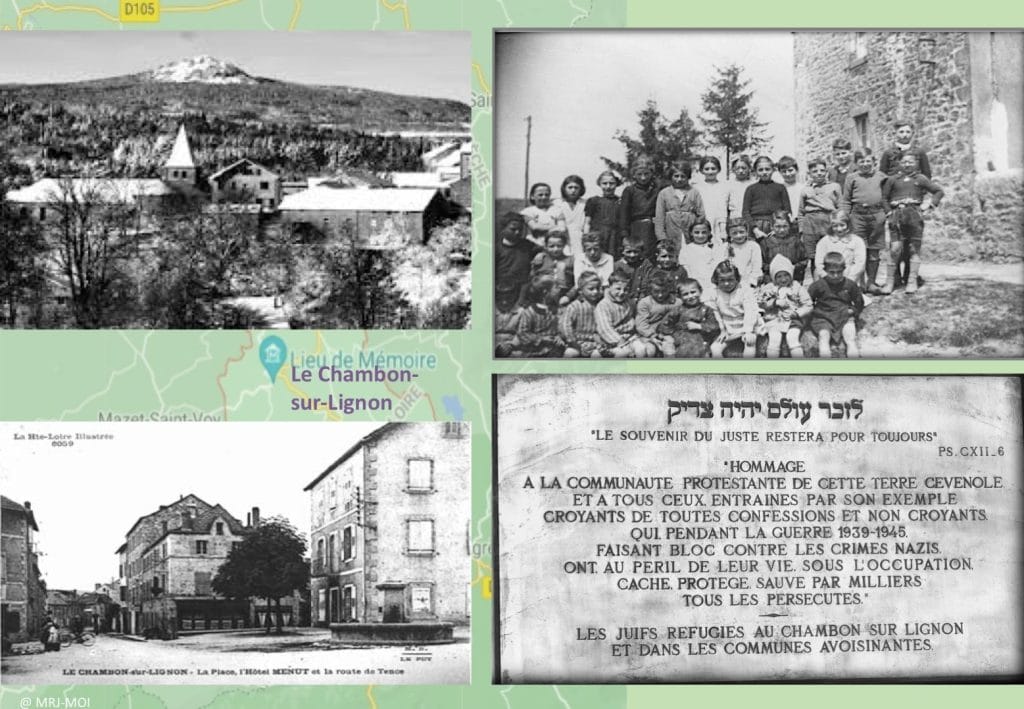
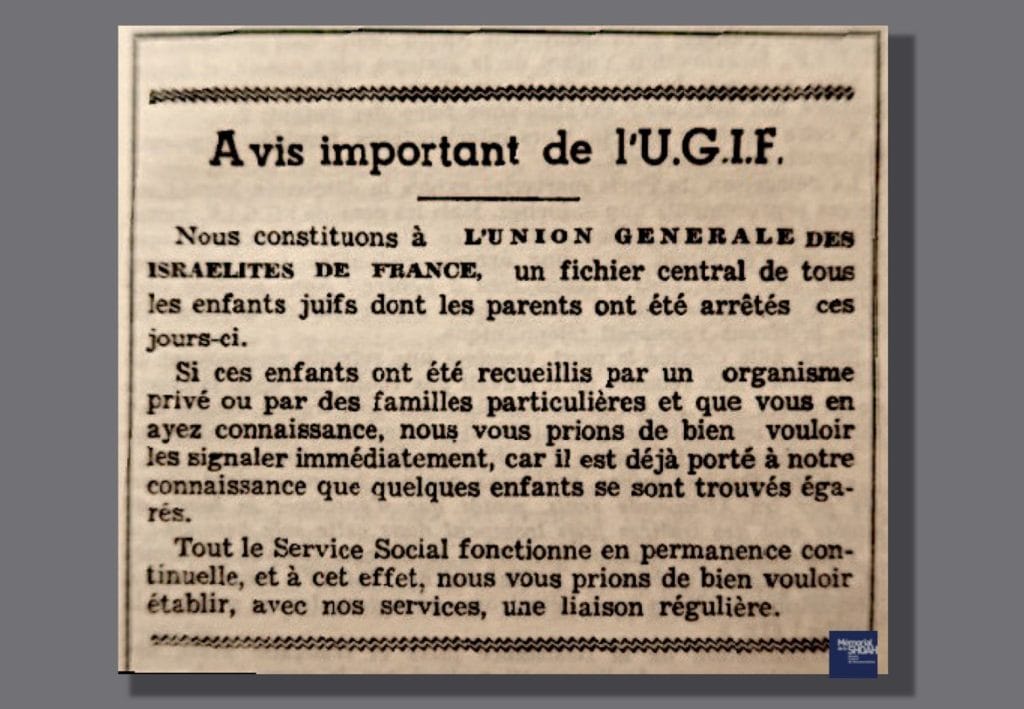
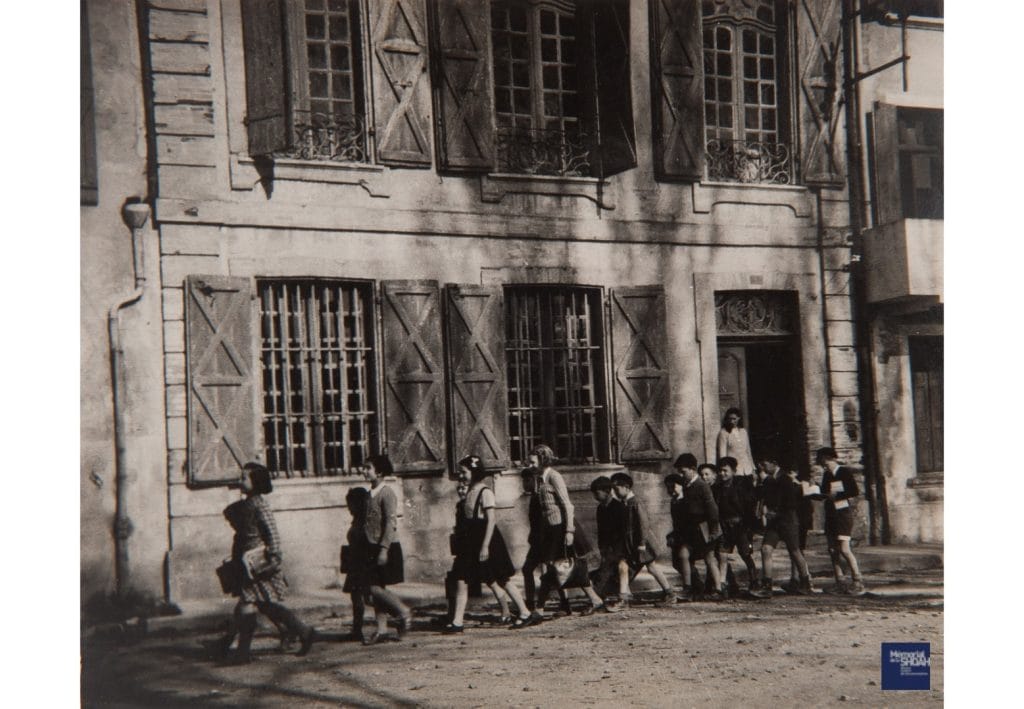
The most spectacular operation in which she took part was the exfiltration, in a single day, of some sixty children from a shelter run by the UGIF, which was threatened with deportation. Thanks to Pastor Paul Vergara of the Temple de l’Oratoire, the pastor’s secretary, Marcelle Guillemot, numerous parishioners of the temple, and the Union of Jewish Women (UFJ)—which had emerged from the Jewish section of the M.O.I.— the children were taken to safety in the countryside to live with host families.
Suzanne Spaak’s actions saved more than 500 children who would otherwise have faced a horrific death. Facing danger in Paris, S. Spaak fled to Brussels with her children. Arrested by the Gestapo, she was transferred to Fresnes Prison, where she was subjected to physical and psychological torture, including blackmail that threatened the lives of her loved ones. She was executed on August 12, 1944, two weeks before the Liberation of Paris.
In 1985, Suzanne Spaak was named “Righteous Among the Nations.”
References:
— Gensburger, Sarah (ed.), 2012, *They Were Just Children: The Deportation and Rescue of Jewish Children in Paris*. Skira Flammarion.
— Nelson Anne: 2018, *The Heroic Life of Suzanne Spaak*. Published by Robert Laffont.
— Photo: Private collection (DR)