The SS was an all-powerful Nazi organization. It was directly responsible for the extermination of the Jews of Europe (or the “Shoah”).
The acronym SS stands for the Nazi organization Schutzstaffel (literally “protection squad”). By extension, the SS refers to the members of this Nazi paramilitary organization, which wielded vast powers. Originally created to protect Hitler in 1925, the SS became all-powerful during World War II and expanded its functions to include ideological, political, economic, and military roles. The Waffen-SS, its armed wing, was notorious for its atrocities across all theaters of war.
Heinrich Himmler, the head of the SS, organized the extermination of the Jews of Europe alongside his deputy, Reinhard Heydrich. Adolf Eichmann, another high-ranking SS official, was responsible for the logistics of the “Final Solution to the Jewish Question.”
The SS planned mass killings (or the “Shoah by bullets”) in Eastern Europe by deploying the “Einsatzgruppen,” mobile killing units, primarily in Ukraine, Lithuania, and Belarus. Nearly 3 million Jews were murdered by firing squad.
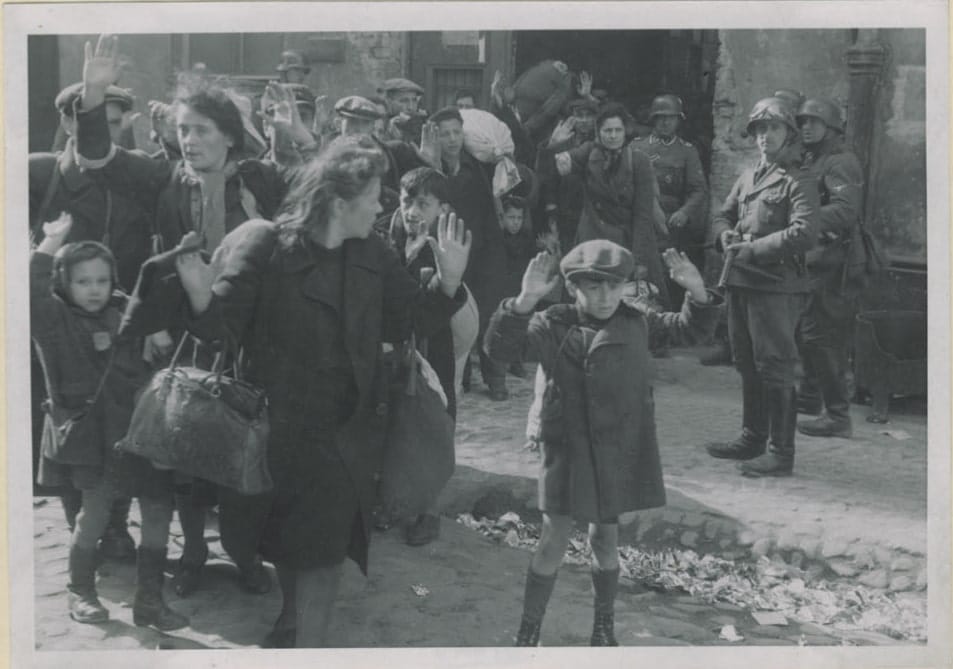
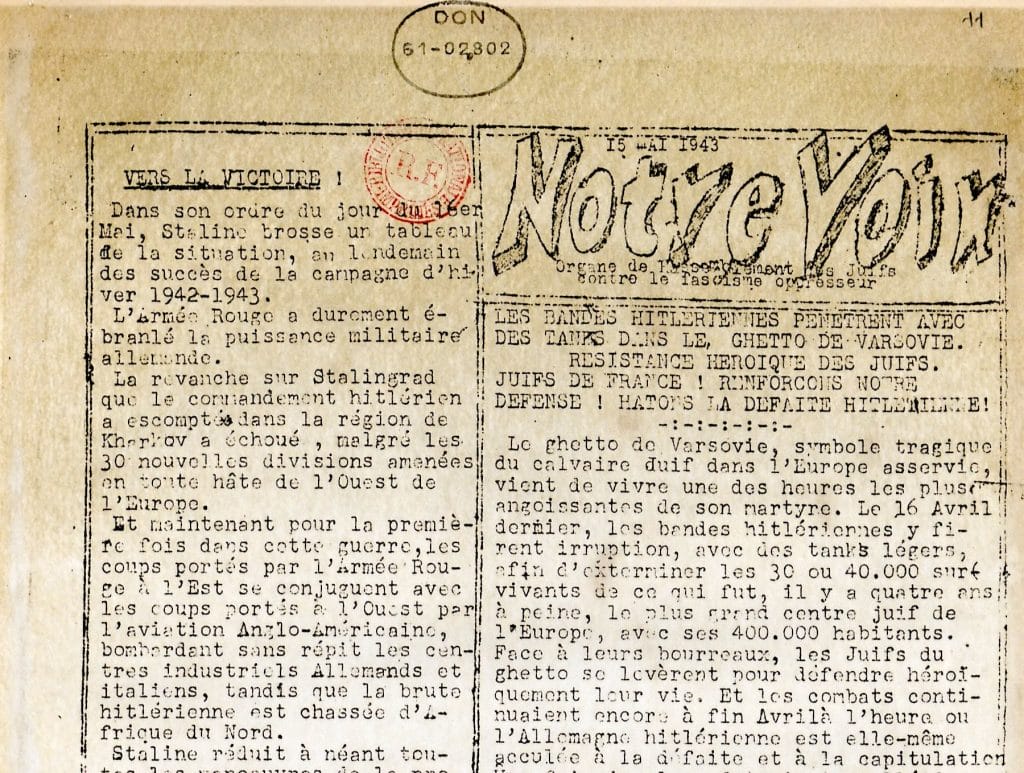
The gas extermination camps, designed by the SS, took over from the mass massacres and “industrialized” the process of destruction. The killing centers at Chelmno, Belzec, Sobibor, Treblinka, Auschwitz-Birkenau, and Majdanek were all run by the SS. It was also the SS that crushed the Warsaw Ghetto Uprising.
In France, as the end of the Nazi regime drew near, an SS division carried out the Oradour-sur-Glane massacre (648 villagers were burned alive in the church in retaliation for actions by the Resistance).
The SS is directly responsible for the “Shoah.” Counting all nationalities, the number of Jewish victims of the Nazis in general—and of the SS in particular—totals 6 million.
At the Nuremberg Trials (1945–1946), the SS, which had spread terror throughout Europe, was officially declared a “criminal organization.”
References:
— Annette Wieviorka, 2006, The Nuremberg Trials. Ed Levi.
— Hannah Arendt, 1966, *Eichmann in Jerusalem*. Published by Guérin; 1991, Gallimard Folio.