Skip to content
Flyout Menu
A visit to the museum
Literature Review
About the Museum
Our achievements
Our film
Our blog
Our database of Resistance fighters from the M.O.I.
Contact
English
Français
(
French
)
A visit to the museum
Literature Review
About the Museum
Our achievements
Our film
Our blog
Our database of Resistance fighters from the M.O.I.
Contact
English
Français
(
French
)
A visit to the museum
Literature Review
About the Museum
Our achievements
Our film
Our blog
Our database of Resistance fighters from the M.O.I.
Contact
English
Français
(
French
)
Search
Home
Photos
Toutes les salles
1.
Before 1934
The Jewish section of the M.O.I.
2.
1934 - 1939
Against Fascism | Outbreak of War
3.
Jan 1940 - Sept 1940
The Occupation | Creation of “Solidarity”
4.
Sept 1940 - June 1941
State Antisemitism | Responses
5.
June - August 1941
Armed resistance
6.
August - Oct 1941
Execution of hostages
7.
Oct - Dec 1941
Persecutions | The Resistance
8.
Jan–Jul 1942
Vel’ d’Hiv Roundup | The FTP-M.O.I.
9.
July 1942 - Feb 1943
Rescue of Jewish Children
10.
August 1942 - May 1943
Stalingrad | Warsaw Ghetto Uprising
11.
1943
Creation of the UJRE
12.
Jan 1943 - Mar 1944
Repression | The Major Surveillance Operations
13.
Apr 1943 - March 1944
Unification of the Resistance
14.
Apr - Sep 1944
Insurrection and Liberation
15.
Oct 1944 - Nov 1945
End of the War | Reconstruction
Voir toutes les salles
Salle 10 - Stalingrad | Soulèvement du ghetto de Varsovie
August 1942 – May 1943
10. Stalingrad | The Warsaw Ghetto Uprising
Photos
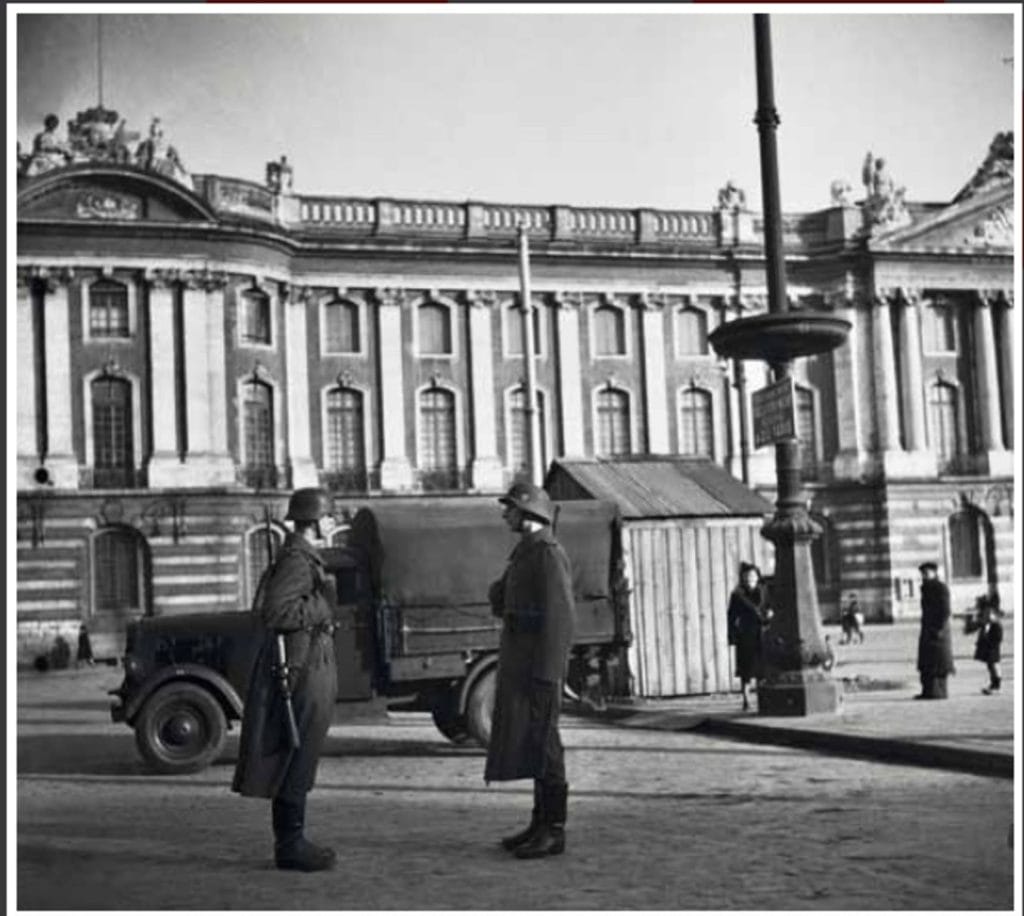
On November 11, 1942, the Wehrmacht (the Nazi army) occupied the “free” zone. The Occupation army was stationed in Toulouse, at Place du Capitole.
Notes
The Germans Enter the Southern Zone
Photos
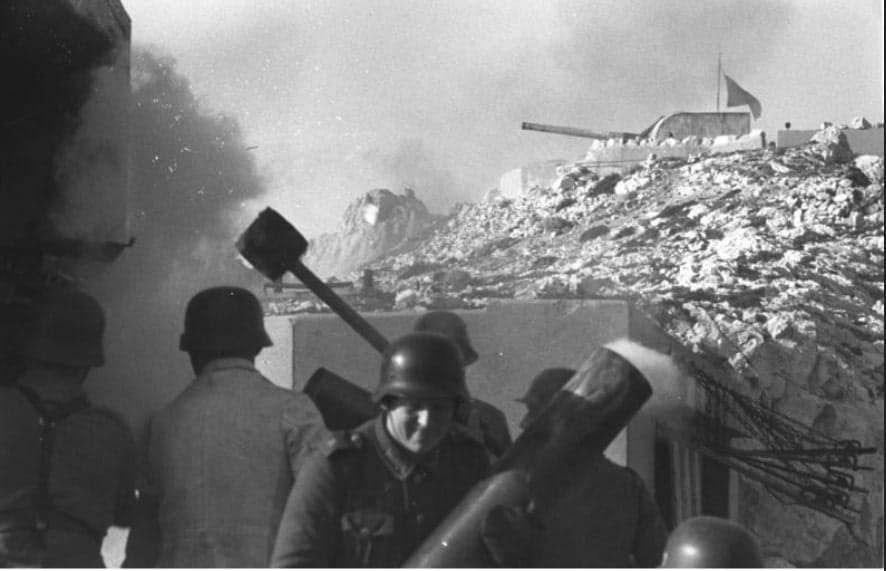
A German coastal battery in the mountains of southern France in 1942.
Photos
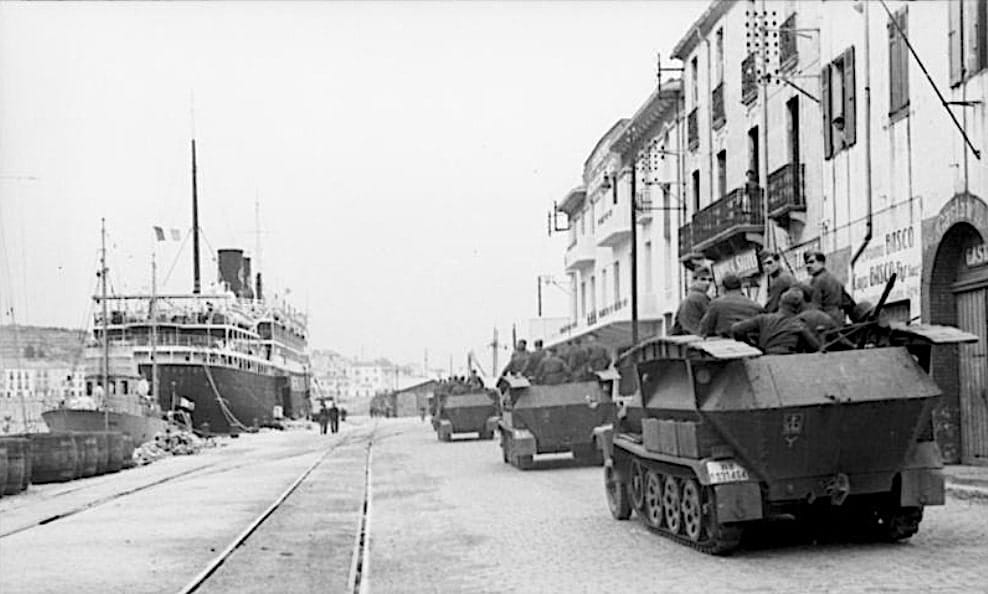
The Wehrmacht is involved in the Occupation of the so-called “free zone” (Operation Anton), here in Port-Vendres.
Documents
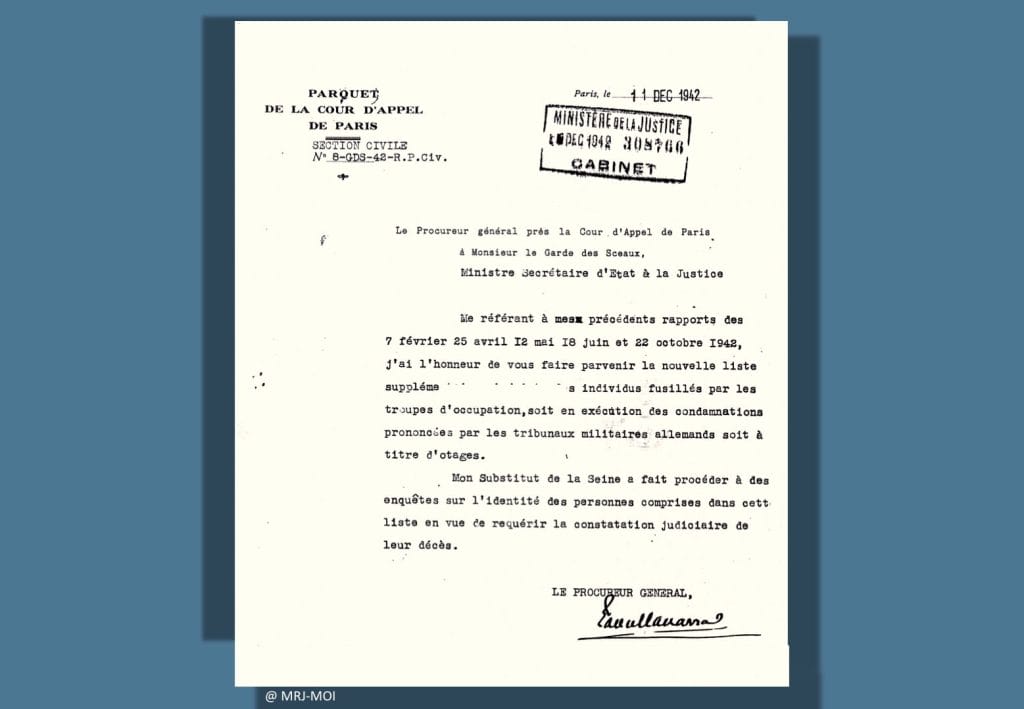
Letter from the Paris Public Prosecutor to the Minister of Justice confirming the executions of hostages by German troops (Dec. 11, 1942).
Newspapers
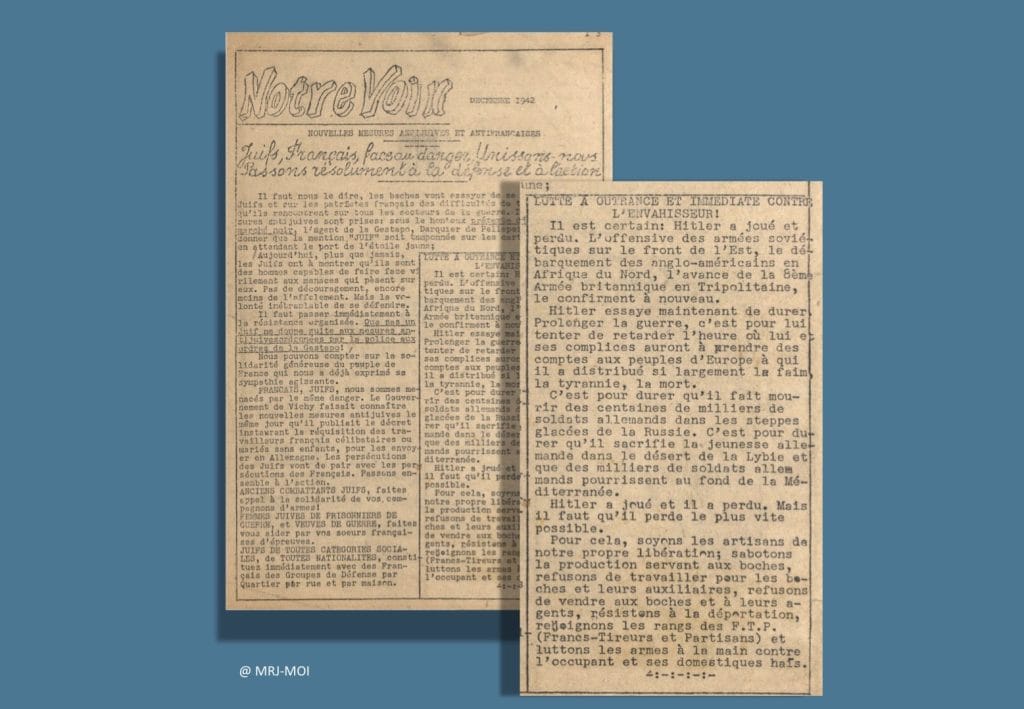
Our
December 1942 issue of
*La Voix*
calls for unity against the Vichy government and the Occupation forces.
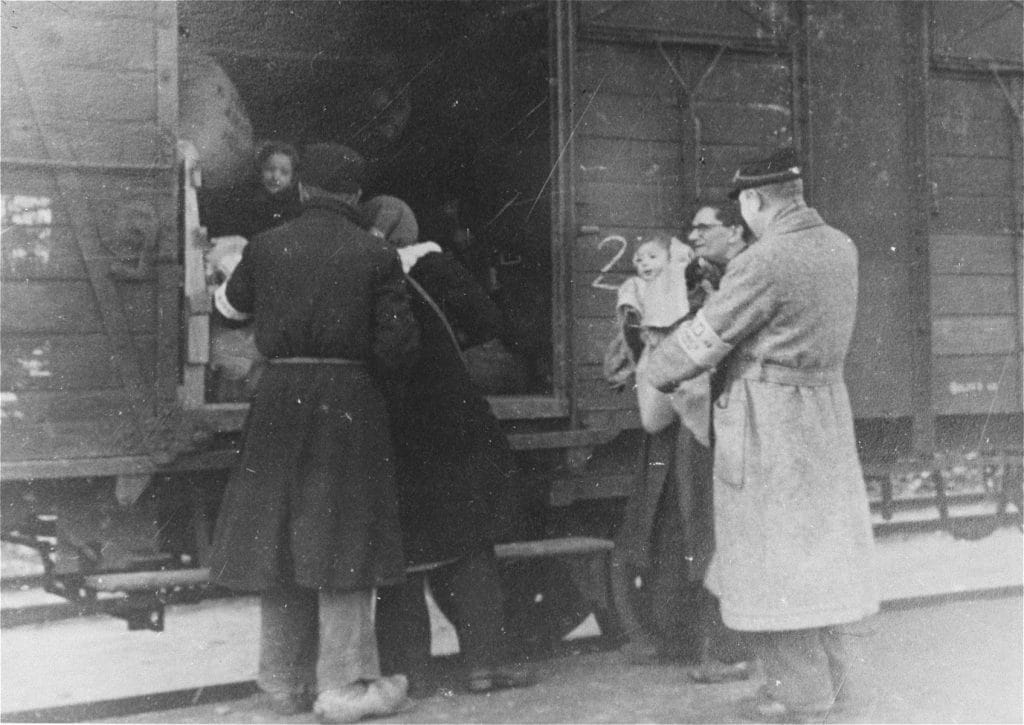
Photos
Westerbork (Netherlands): Jews (children, women, and men) board a train bound for the Auschwitz-Birkenau extermination camp.
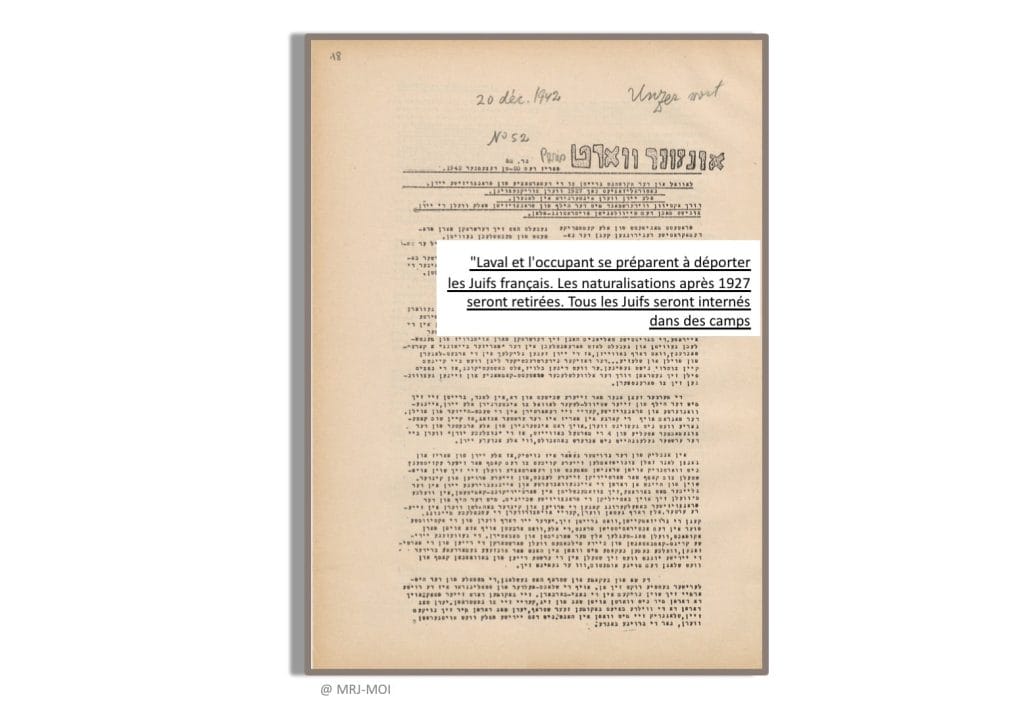
Newspapers
The December 20, 1942, issue of
*Unzer Wort*
warns: “Laval and the occupying forces are preparing to deport French Jews.”
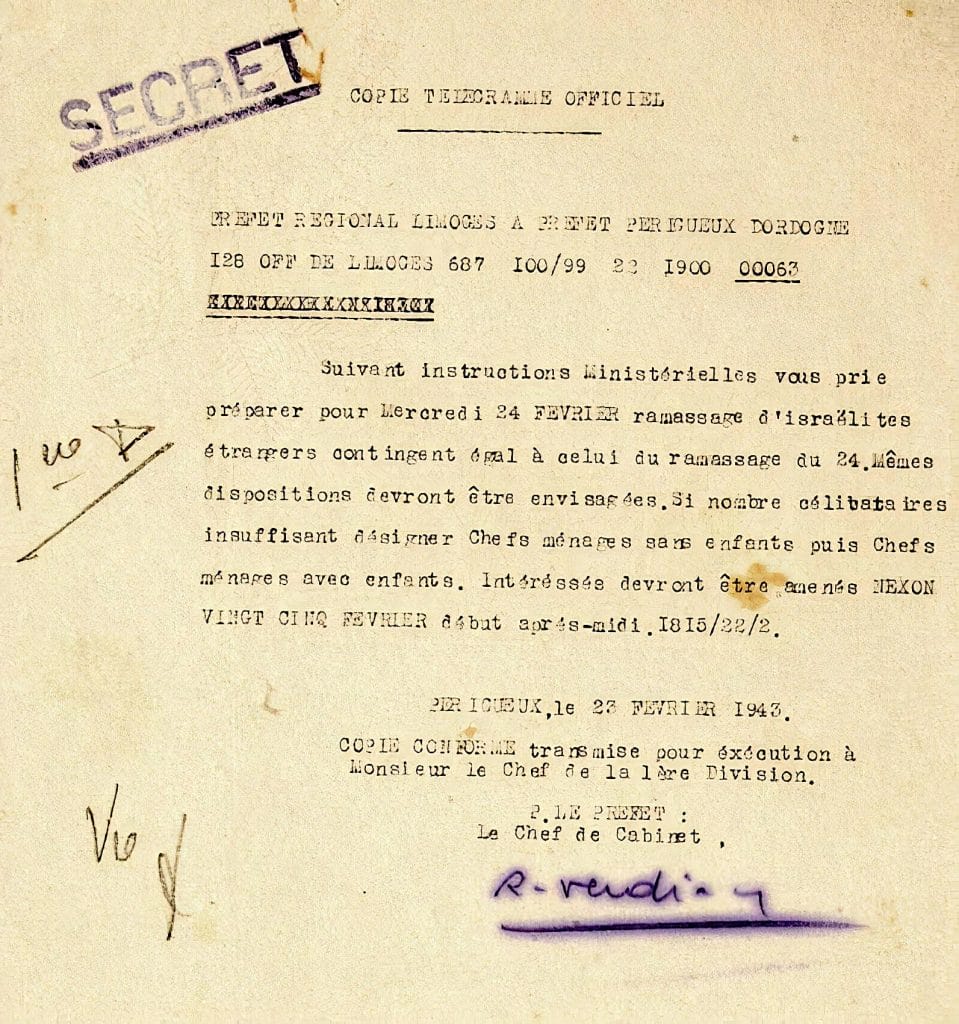
Documents
Copy of a telegram (Feb. 23, 1943) from the regional prefect of Limoges to the prefect of Périgueux regarding the “roundup” of foreign Jews and the procedures for their selection.
Notes
Raids
Documents
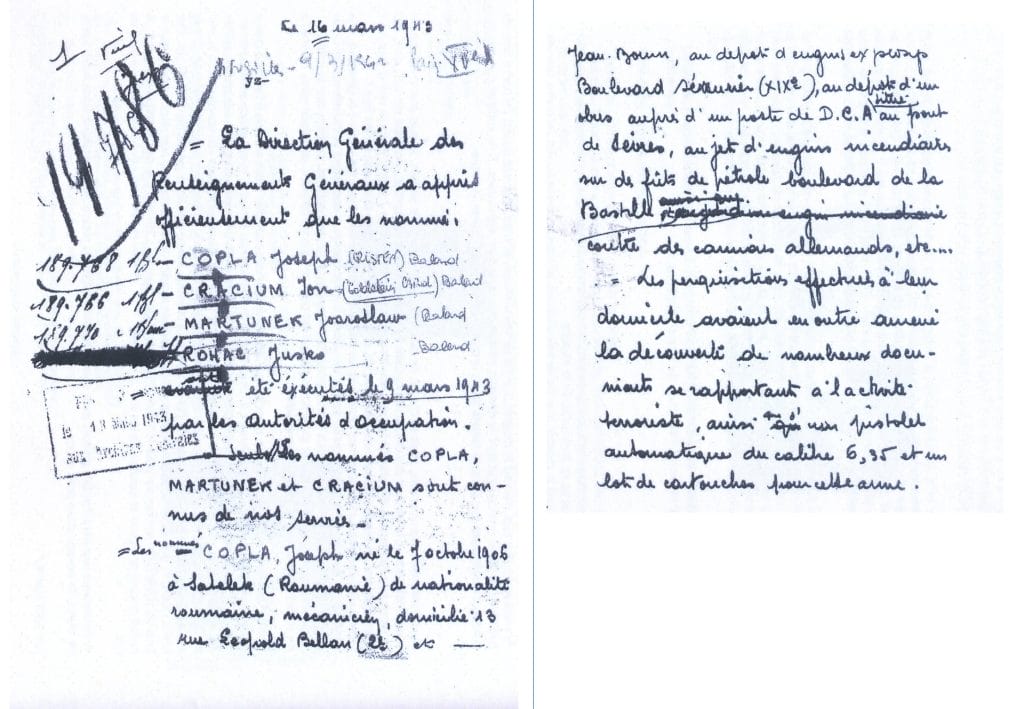
The General Intelligence Directorate announces the execution by the Germans of three “terrorists” and details their actions in Paris (March 16, 1943).
Documents
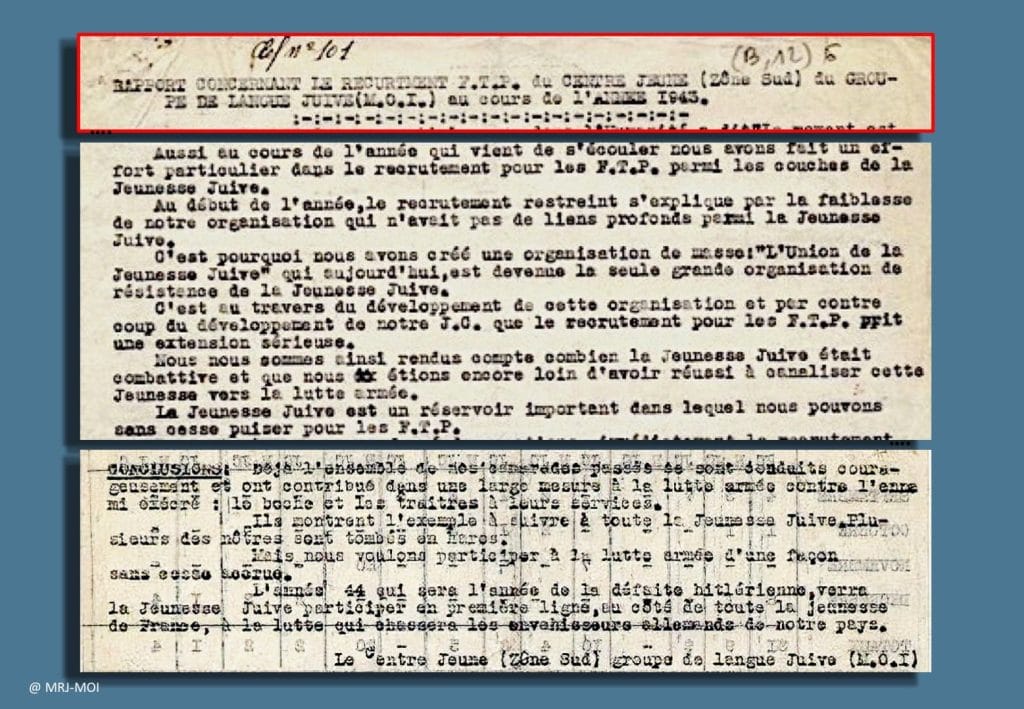
FTP-M.O.I. Report (Southern Zone) on the Development of the Armed Struggle: Establishment of the Union of Jewish Youth (UJJ) as a mass organization and recruitment base (late 1943).
Photos
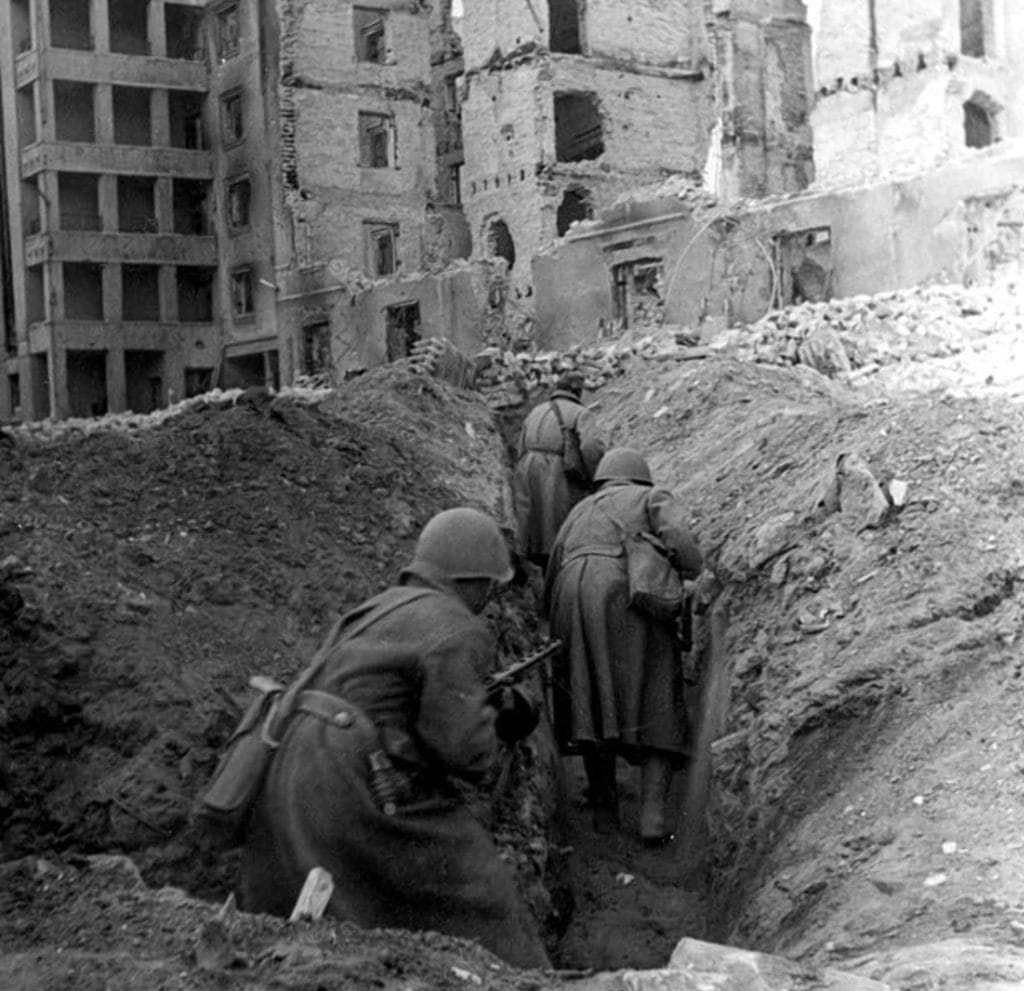
Soviet soldiers advancing along a trench amid the ruins of Stalingrad.
Notes
Battle of Stalingrad
Photos
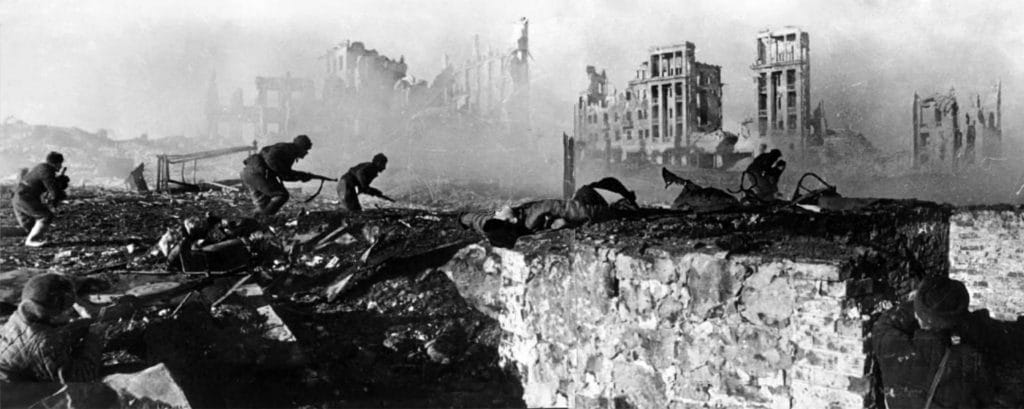
Soviet soldiers advancing through the ruins of Stalingrad (on the right bank of the Volga).
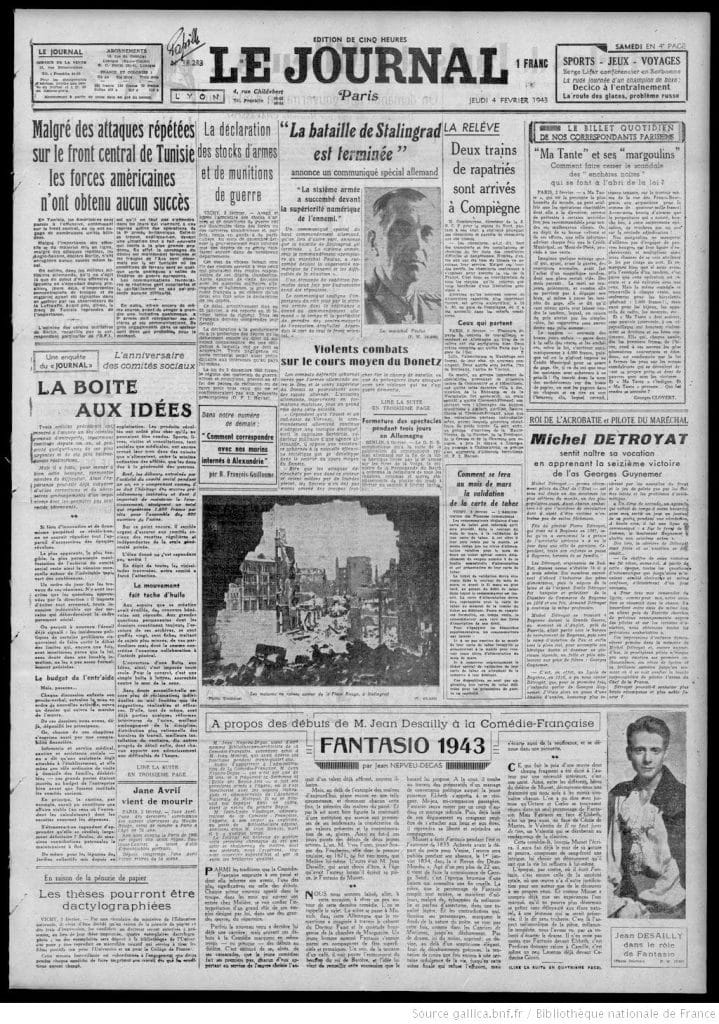
Newspapers
“The Battle of Stalingrad Is Over”:
The
February 4, 1943, edition of
*Le Journal*
reports the surrender of von Paulus’s Sixth Army at Stalingrad on February 3.
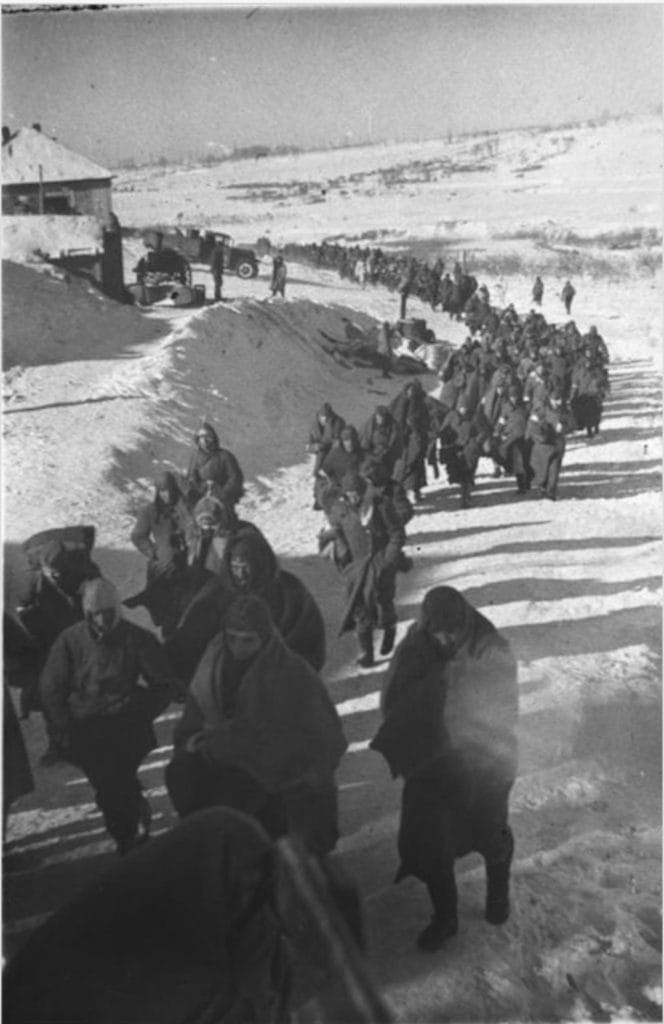
Photos
German soldiers taken prisoner after the surrender (February 2, 1943) of von Paulus’s Sixth Army at Stalingrad.
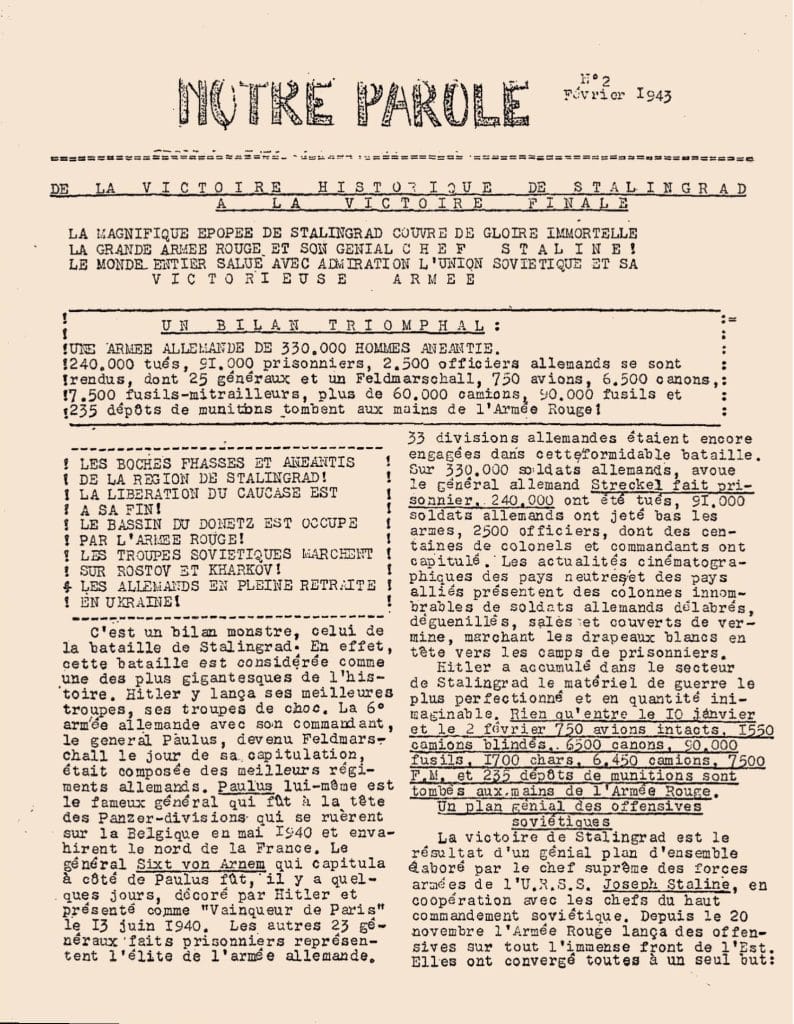
Newspapers
“From the Historic Victory at Stalingrad to the Final Victory”:
*Notre Parole*
No. 2, February 1943, celebrates the Red Army’s victory.
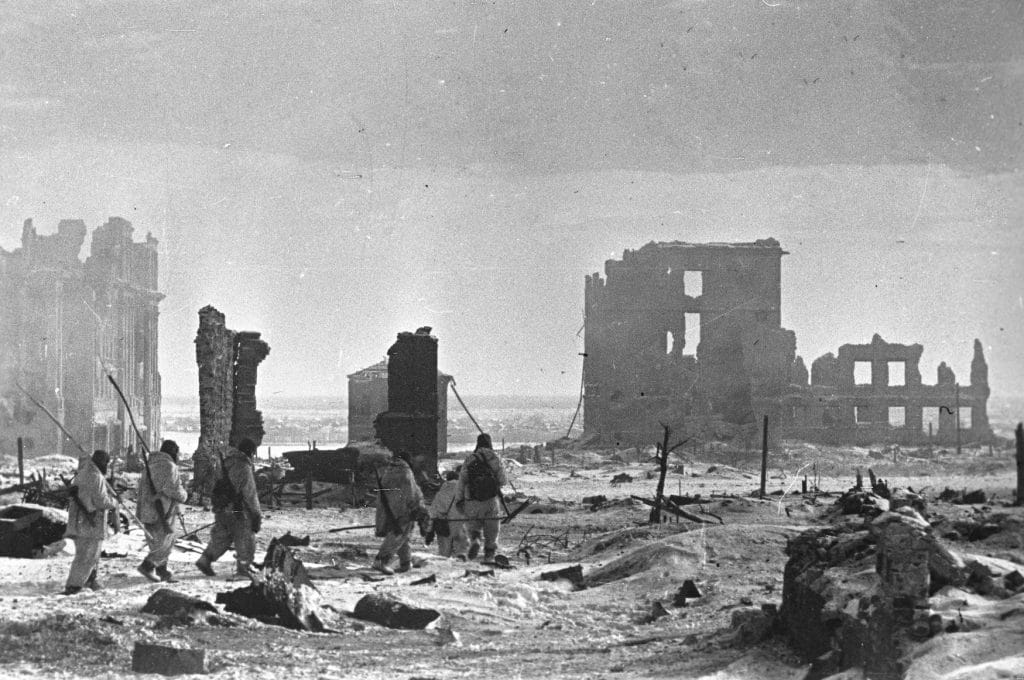
Photos
Downtown Stalingrad on February 2, 1943, after the German surrender. The Volga River is visible in the background.
Newspapers
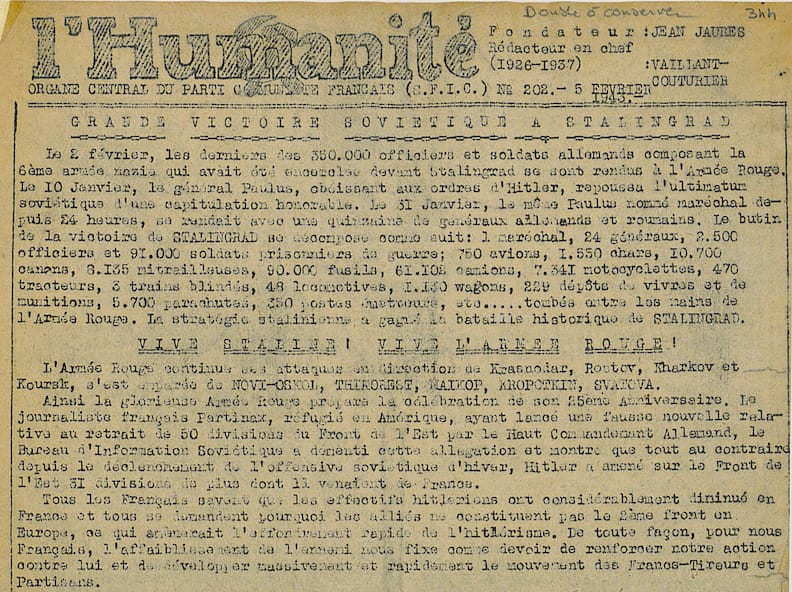
The February 5, 1943, issue of
*L’Humanité*
celebrates the Red Army’s victory at Stalingrad.
Videos
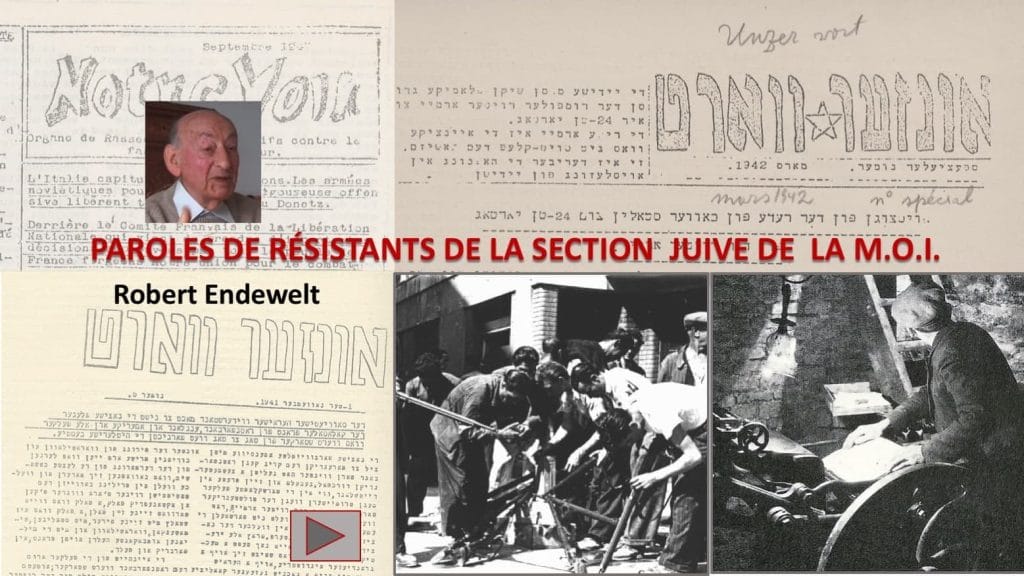
Robert Endewelt analyzes the German defeat at Stalingrad as the prelude to victory over Nazism.
Newspapers
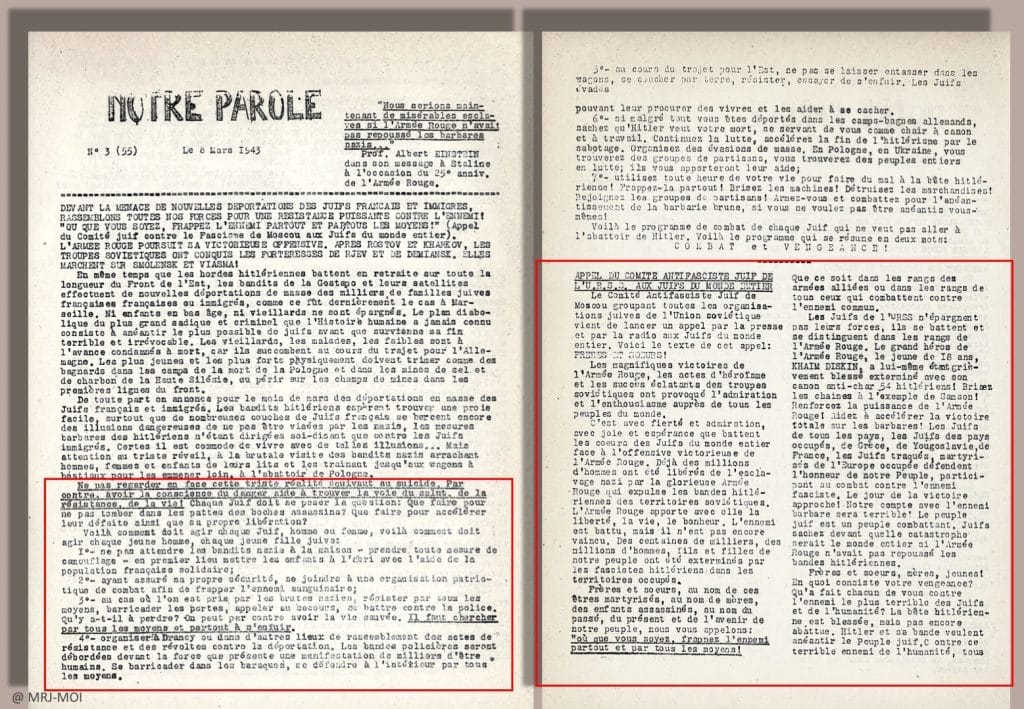
Our newspaper *Notre Parole*
, in its March 8, 1943, edition, after praising the Soviet military successes, warned Jews—both foreign and French—against roundups and deportation.
Postcards
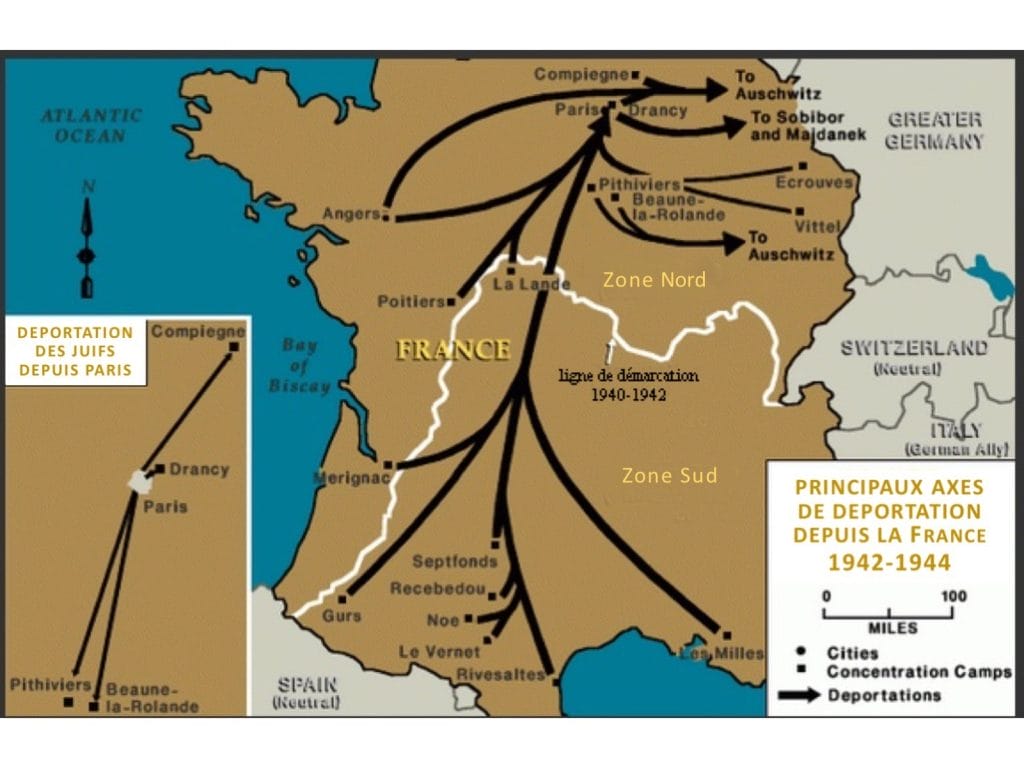
Map: Camps in France and deportation routes to concentration camps and extermination centers in Eastern Europe.
Photos
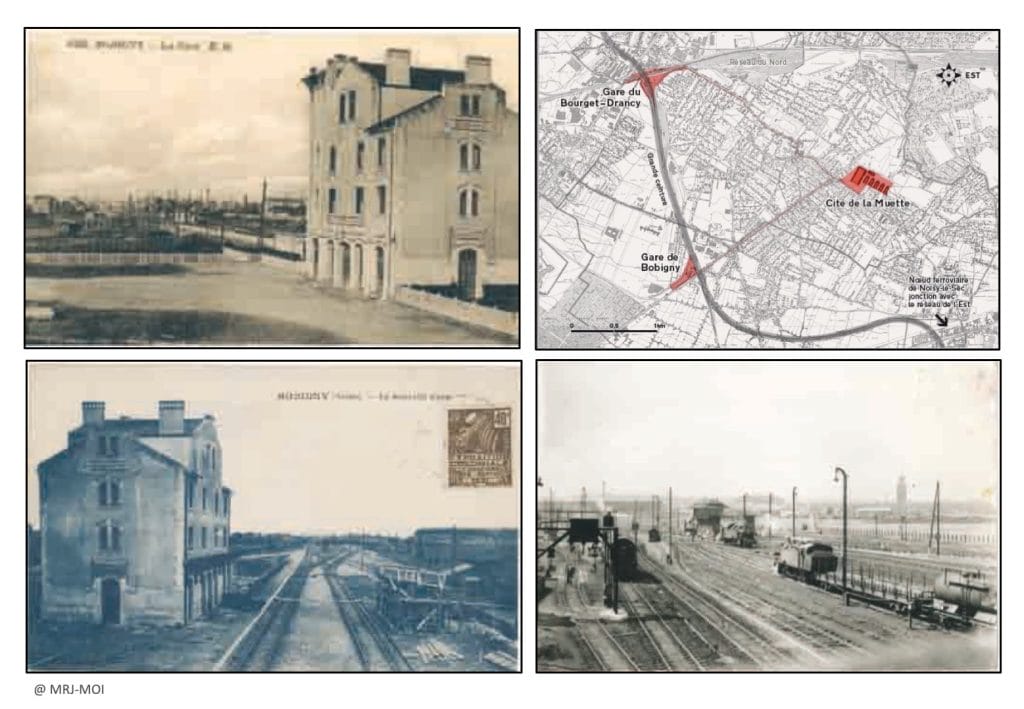
Postcards of the Bobigny train station, near Drancy, from where convoys departed for concentration and extermination camps in Eastern Europe.
Page
1
Page
2
Page
3