Skip to content
Flyout Menu
A visit to the museum
Literature Review
About the Museum
Our achievements
Our film
Our blog
Our database of Resistance fighters from the M.O.I.
Contact
English
Français
(
French
)
A visit to the museum
Literature Review
About the Museum
Our achievements
Our film
Our blog
Our database of Resistance fighters from the M.O.I.
Contact
English
Français
(
French
)
A visit to the museum
Literature Review
About the Museum
Our achievements
Our film
Our blog
Our database of Resistance fighters from the M.O.I.
Contact
English
Français
(
French
)
Search
Home
Photos
Toutes les salles
1.
Before 1934
The Jewish section of the M.O.I.
2.
1934 - 1939
Against Fascism | Outbreak of War
3.
Jan 1940 - Sept 1940
The Occupation | Creation of “Solidarity”
4.
Sept 1940 - June 1941
State Antisemitism | Responses
5.
June - August 1941
Armed resistance
6.
August - Oct 1941
Execution of hostages
7.
Oct - Dec 1941
Persecutions | The Resistance
8.
Jan–Jul 1942
Vel’ d’Hiv Roundup | The FTP-M.O.I.
9.
July 1942 - Feb 1943
Rescue of Jewish Children
10.
August 1942 - May 1943
Stalingrad | Warsaw Ghetto Uprising
11.
1943
Creation of the UJRE
12.
Jan 1943 - Mar 1944
Repression | The Major Surveillance Operations
13.
Apr 1943 - March 1944
Unification of the Resistance
14.
Apr - Sep 1944
Insurrection and Liberation
15.
Oct 1944 - Nov 1945
End of the War | Reconstruction
Voir toutes les salles
Salle 10 - Stalingrad | Soulèvement du ghetto de Varsovie
August 1942 – May 1943
10. Stalingrad | The Warsaw Ghetto Uprising
Photos
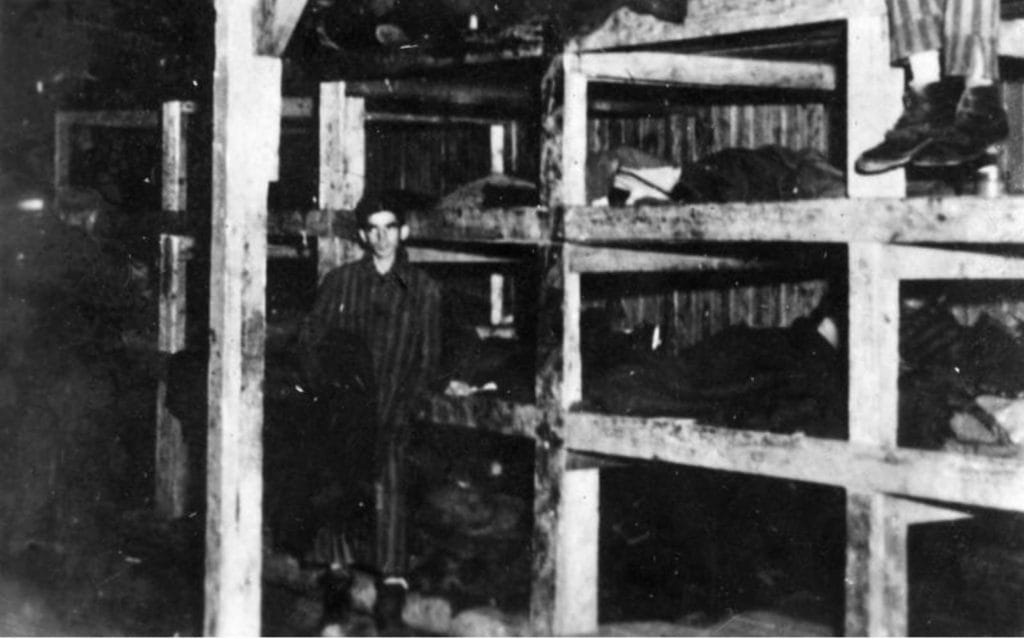
The interior of a barracks at the Buchenwald concentration camp.
Photos
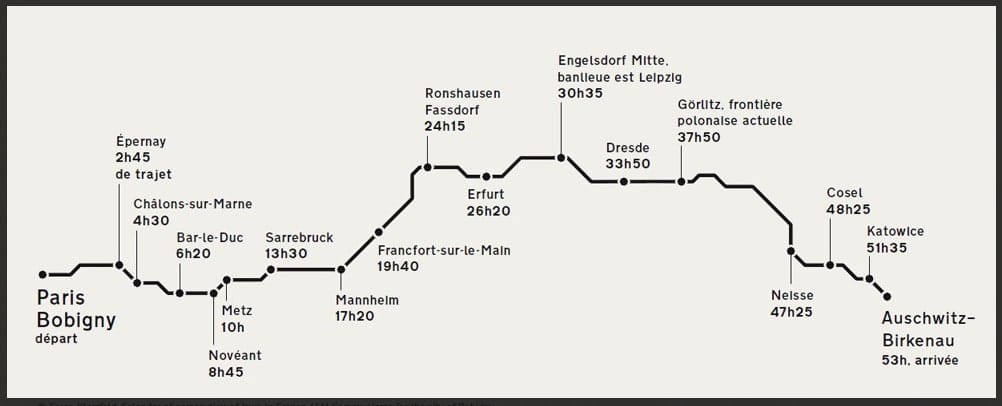
Convoy routes based on the convoy schedules established on November 1. 1943.
Photos
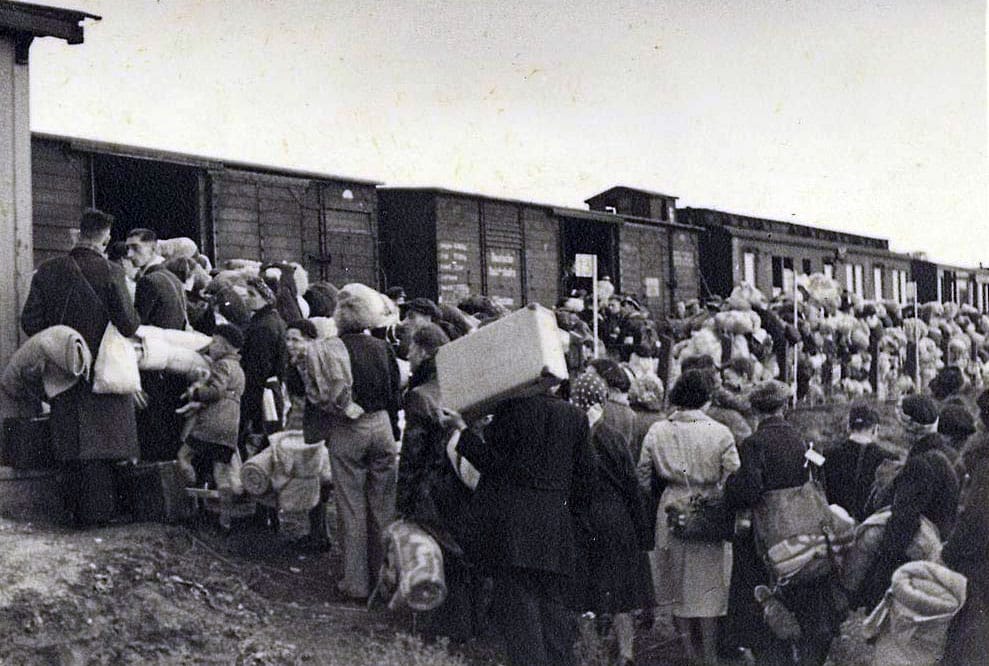
Jews being loaded onto cattle cars bound for a death camp in Westerbork (Netherlands).
Postcards
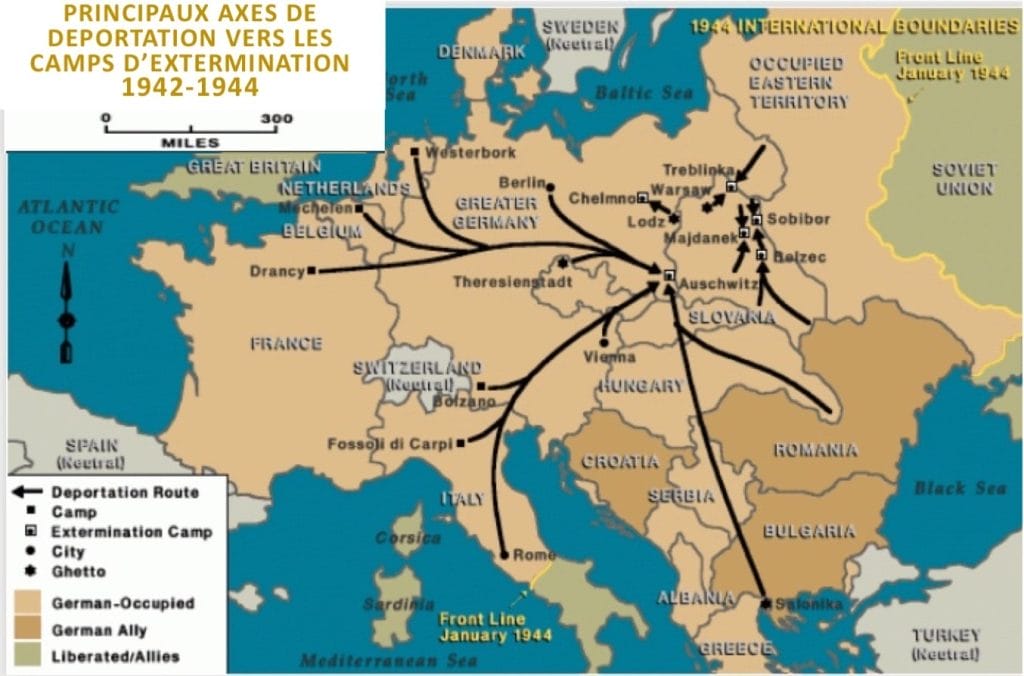
The main routes of deportation to the extermination camps (1942–1944).
Notes
Special Brigades
Photos
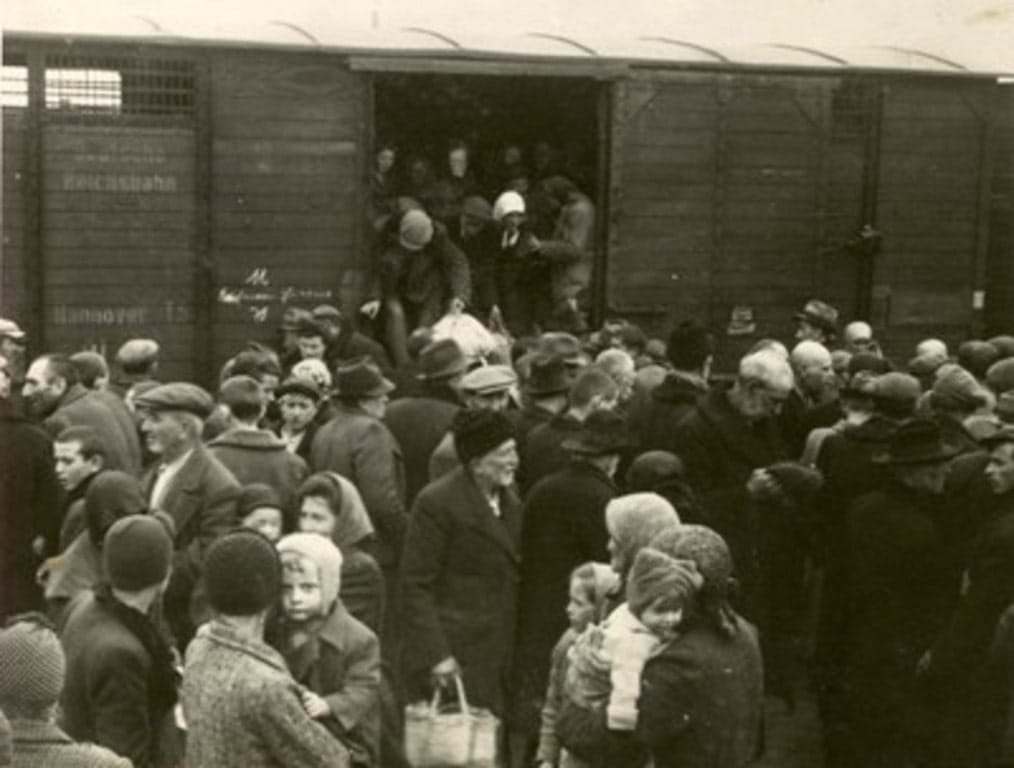
In May 1944, Hungarian Jews who had been deported arrived at Auschwitz-Birkenau. In just eight weeks, nearly 424,000 of them were massacred.
Photos
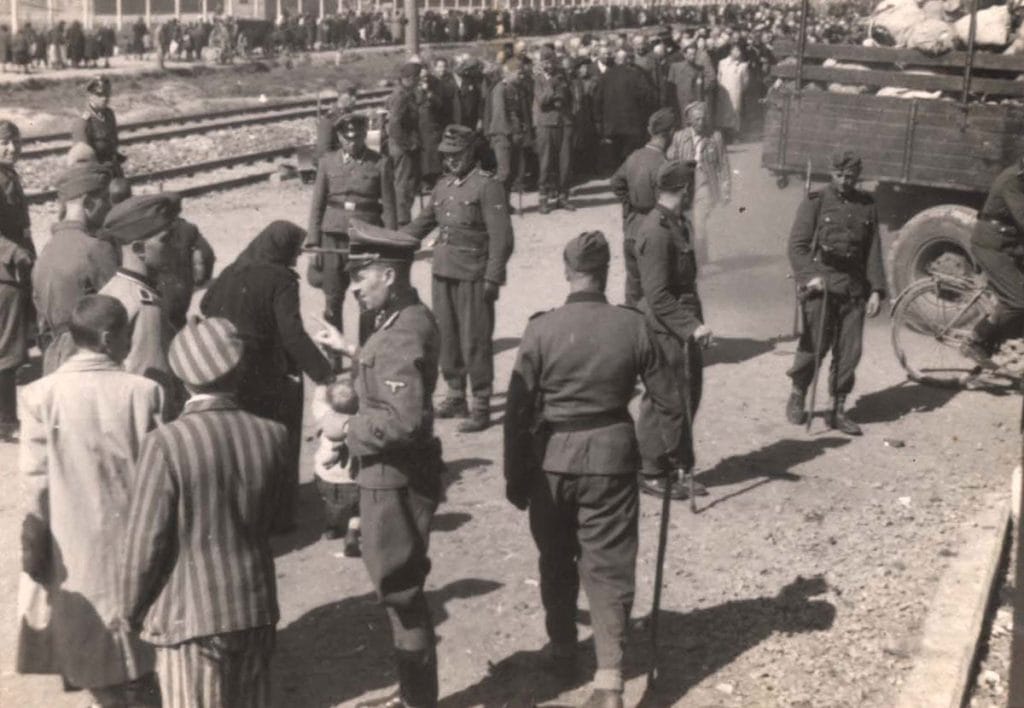
Auschwitz-Birkenau: On the “ramp,” the SS selected the deportees upon their arrival at the camp.
Photos
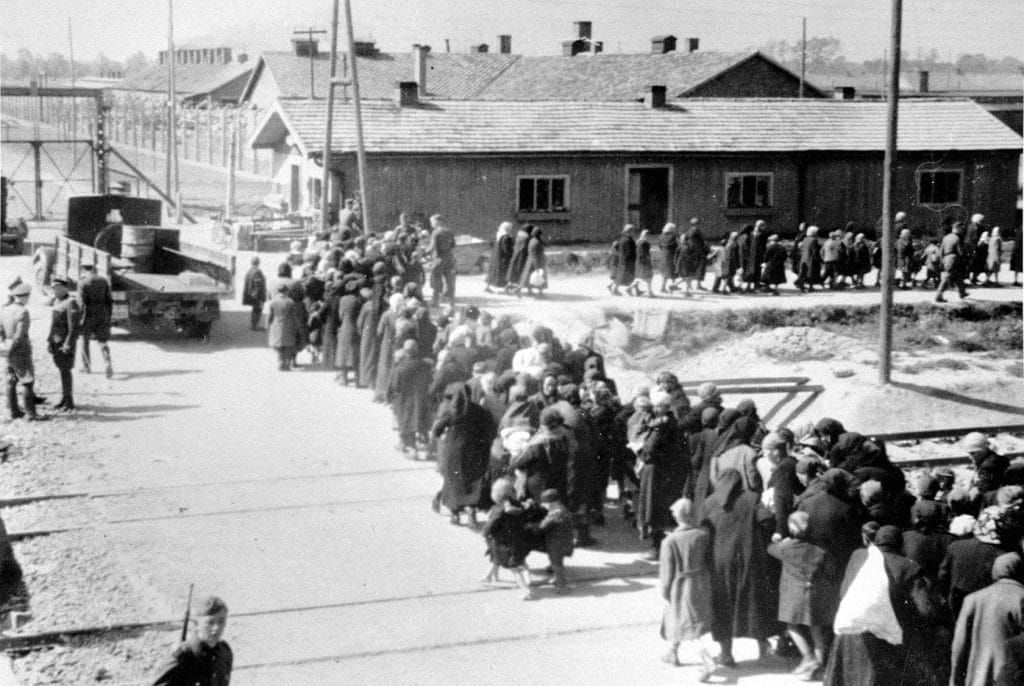
Auschwitz-Birkenau: After the selection, Hungarian Jewish women and children were led to the gas chambers (May 27, 1944).
Photos
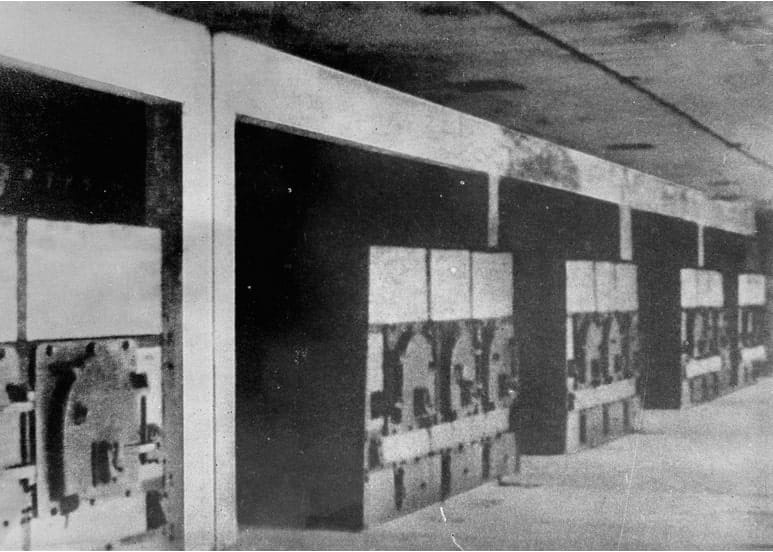
One of the crematorium buildings at Auschwitz-Birkenau (1943).
Photos
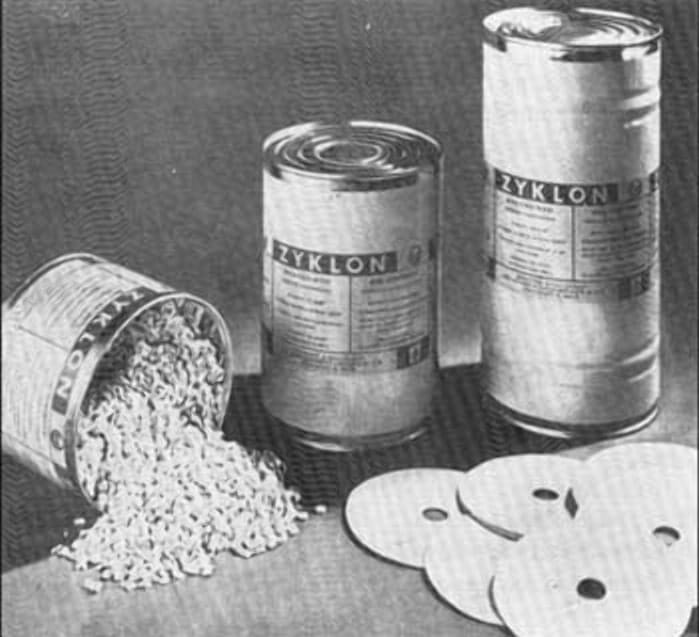
Containers of various sizes, Zyklon tablets, and Zyklon discs used in the gas chambers at Auschwitz.
Photos
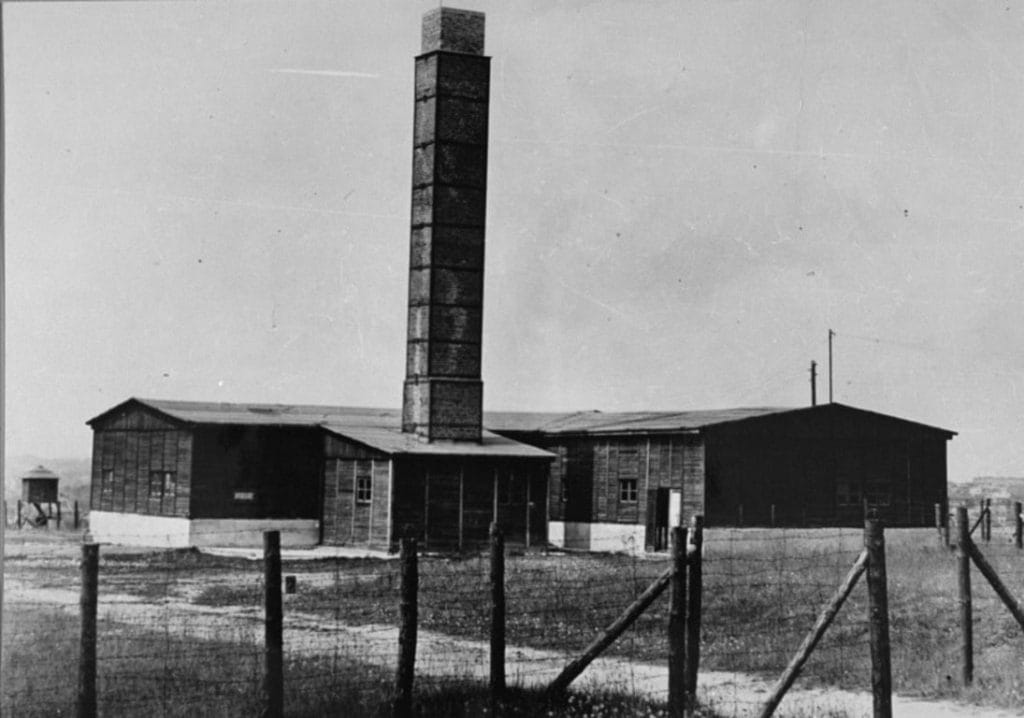
Crematorium at the Majdanek extermination camp (Poland).
Photos
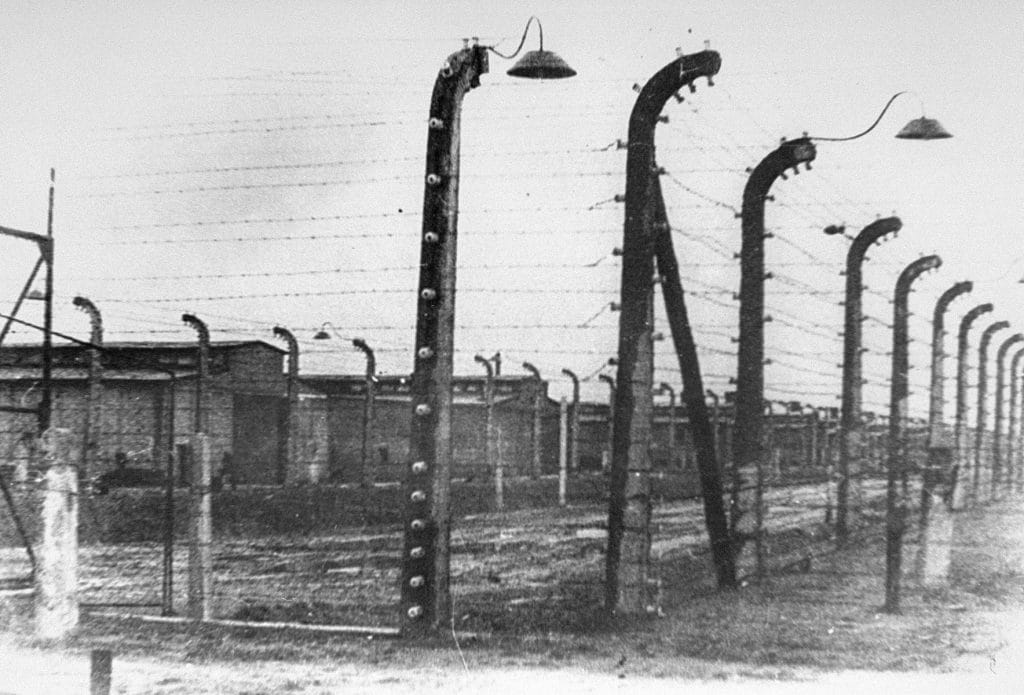
Electrified barbed-wire fences surrounding the Auschwitz camp.
Photos
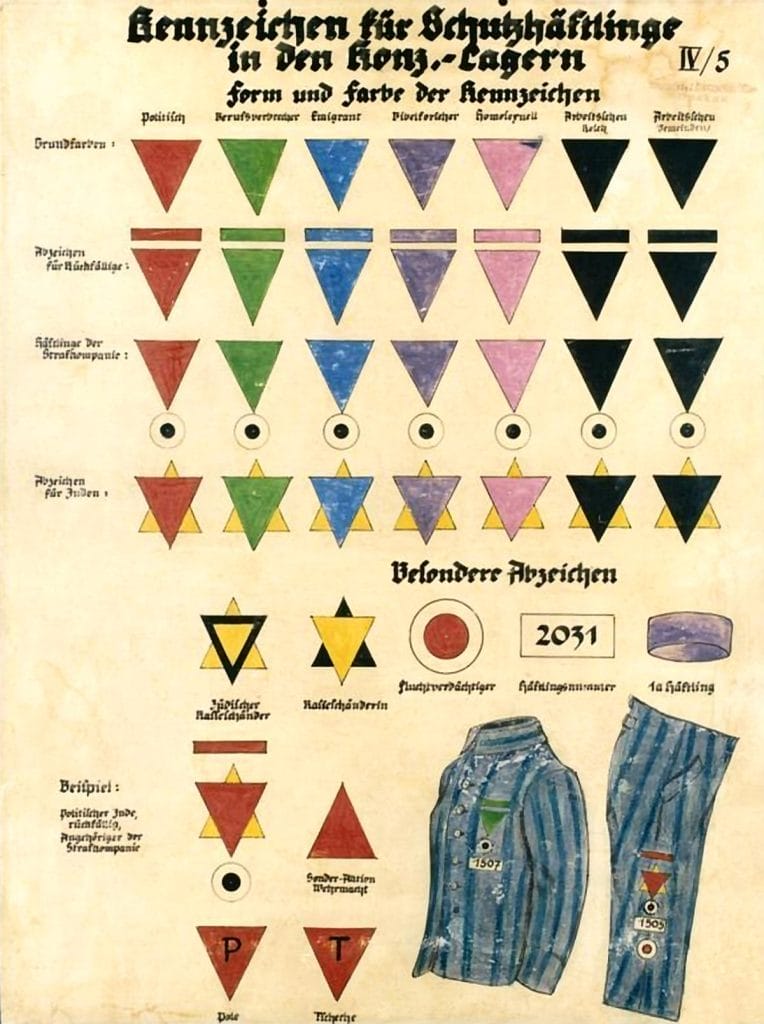
Nazi system for marking deportees: yellow star (Jews), red triangle (political prisoners), green (common criminals), blue (emigrants and stateless persons), black (anti-social elements, prostitutes, lesbians), brown (Gypsies), purple (Jehovah’s Witnesses), pink (homosexuals).
Photos
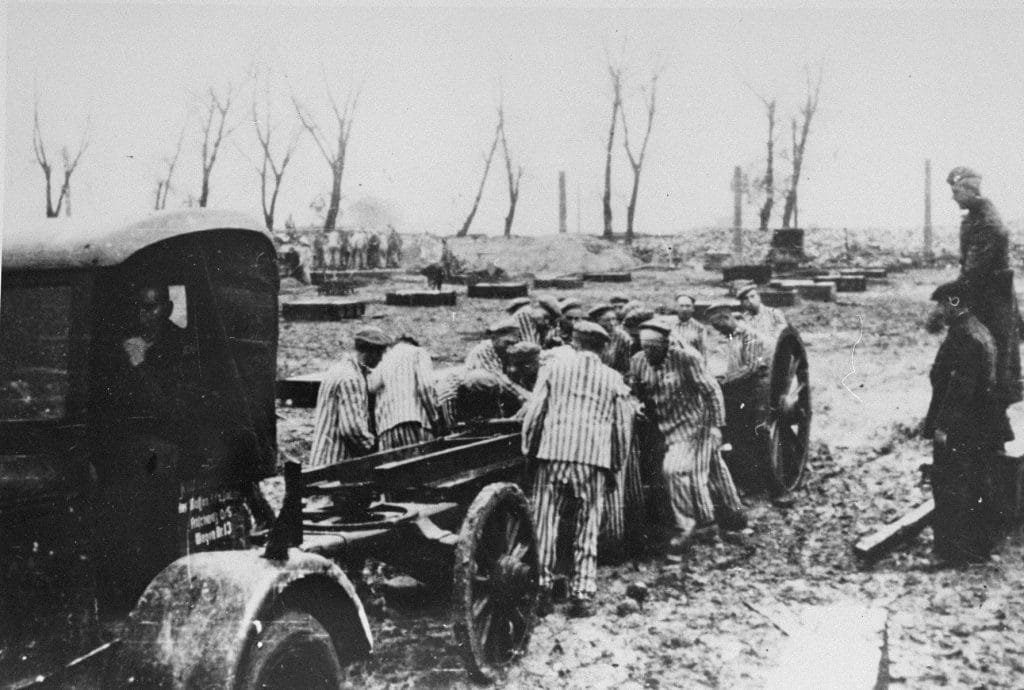
Deported to perform forced labor in one of the Auschwitz kommandos (1942 or 1943).
Photos
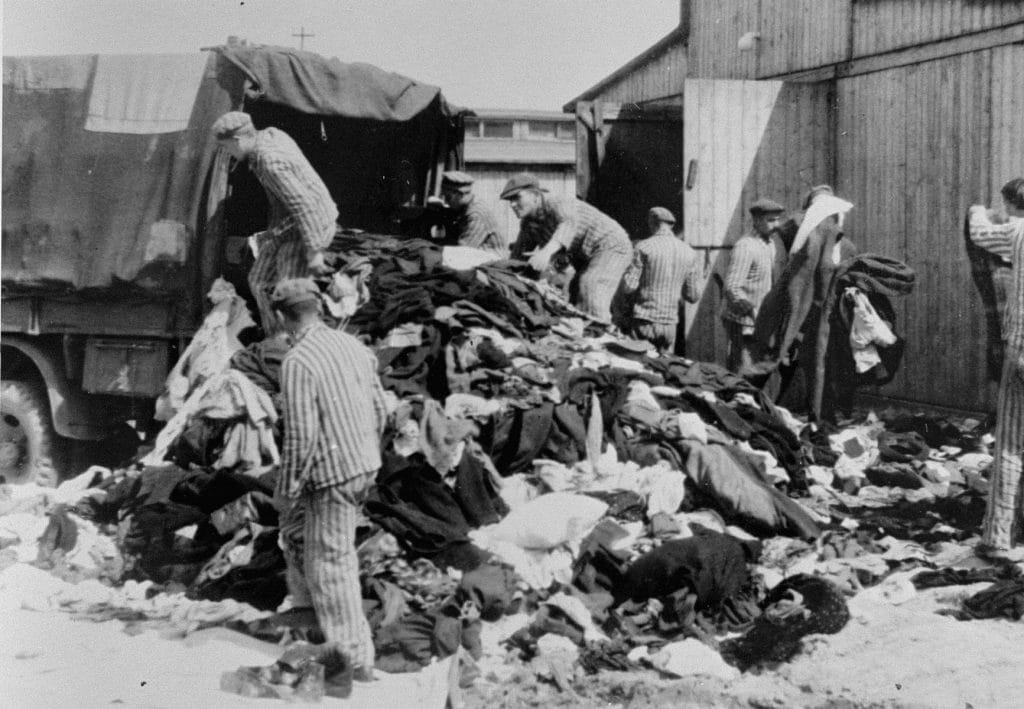
Deportees tasked with sorting through the belongings of those exterminated at Auschwitz
Newspapers
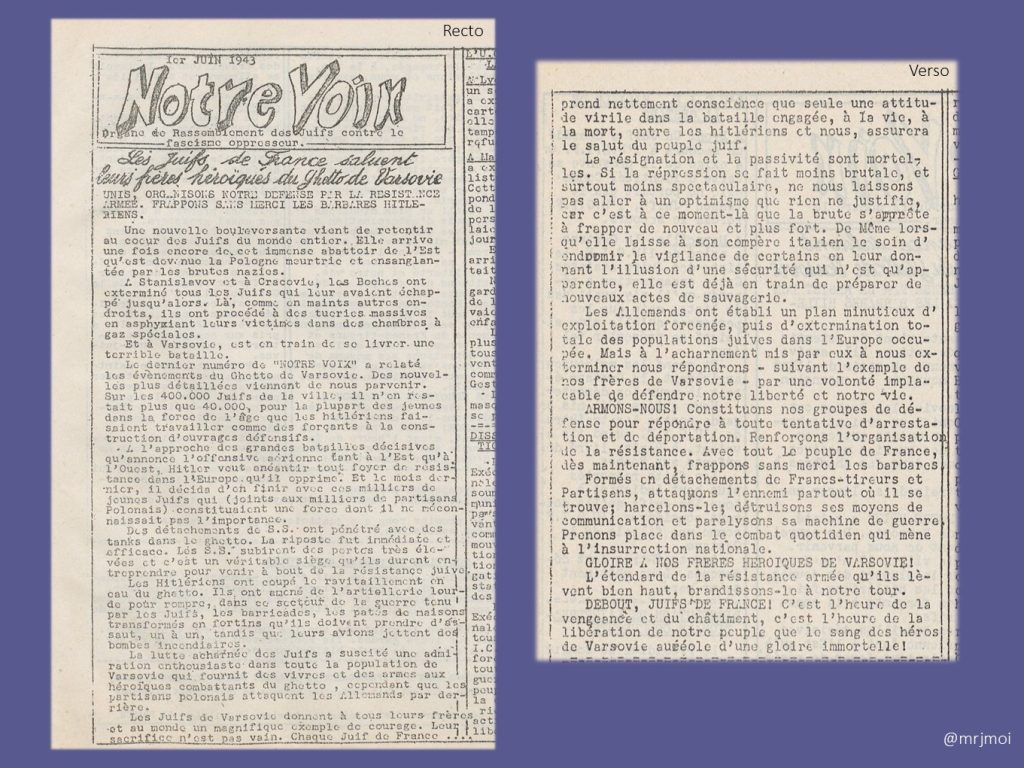
*Notre Voix*
(excerpts) from June 1, 1943—the day after the Warsaw Ghetto Uprising—called on the Jews of France to take up arms against the Nazis as part of the FTP.
Notes
Underground press
Notes
The End of the Jewish Presence in Poland
Newspapers
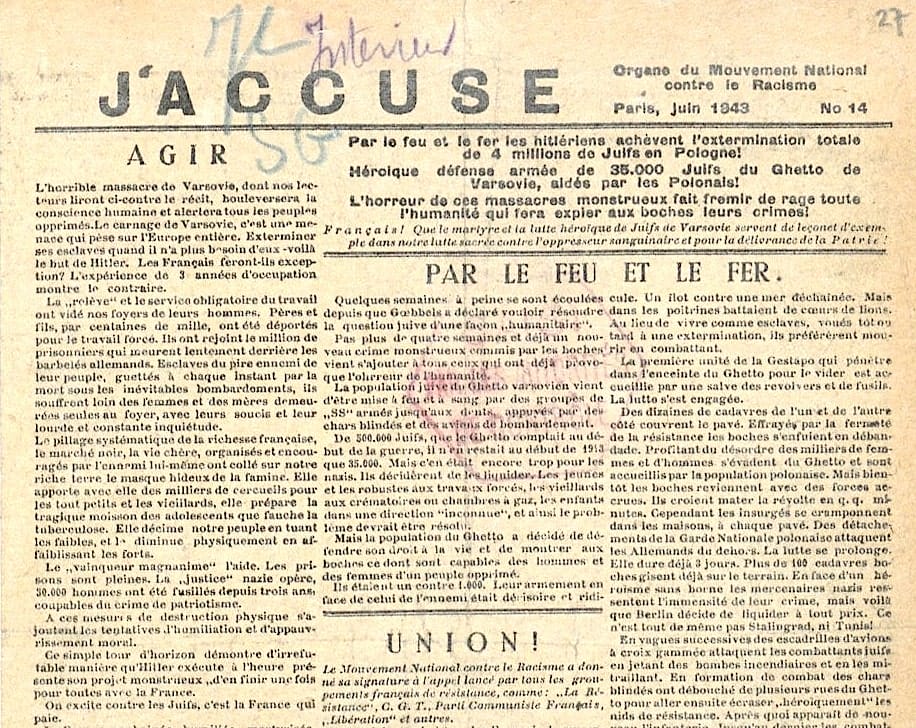
Issue No. 14 of
*J’Accuse*
, from June 1943, praising “the heroic armed defense of 35,000 Jews in the Warsaw Ghetto.”
Documents
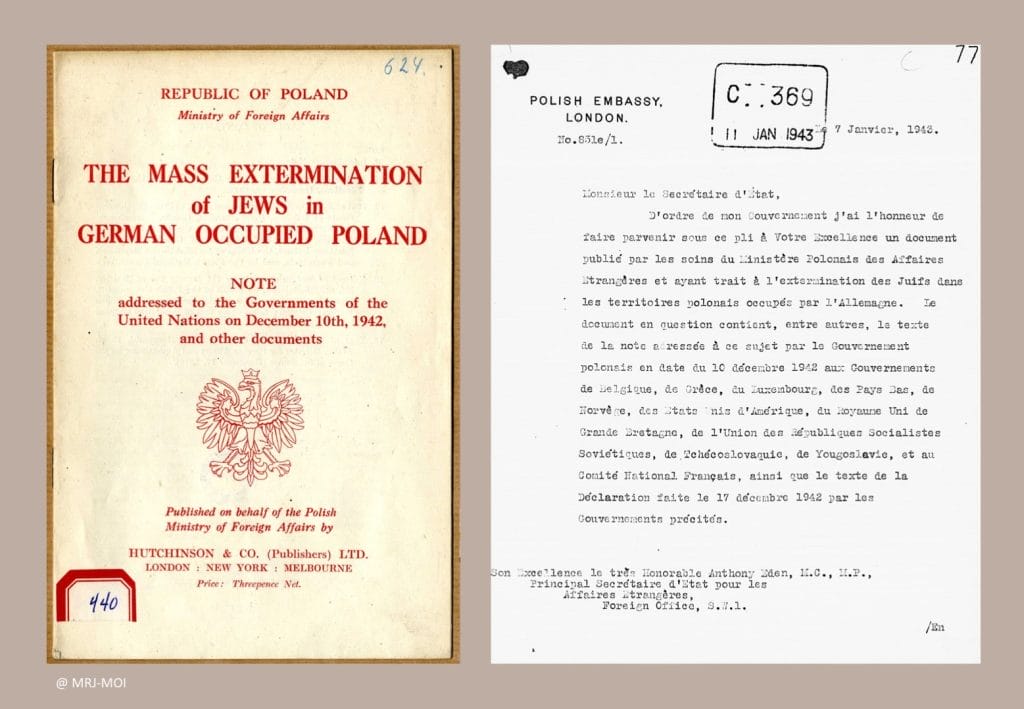
A note dated Dec. 10, 1942, from the Polish government describing the reality of the “massacres of Jews in occupied Poland,” forwarded to the Allied governments.
Photos
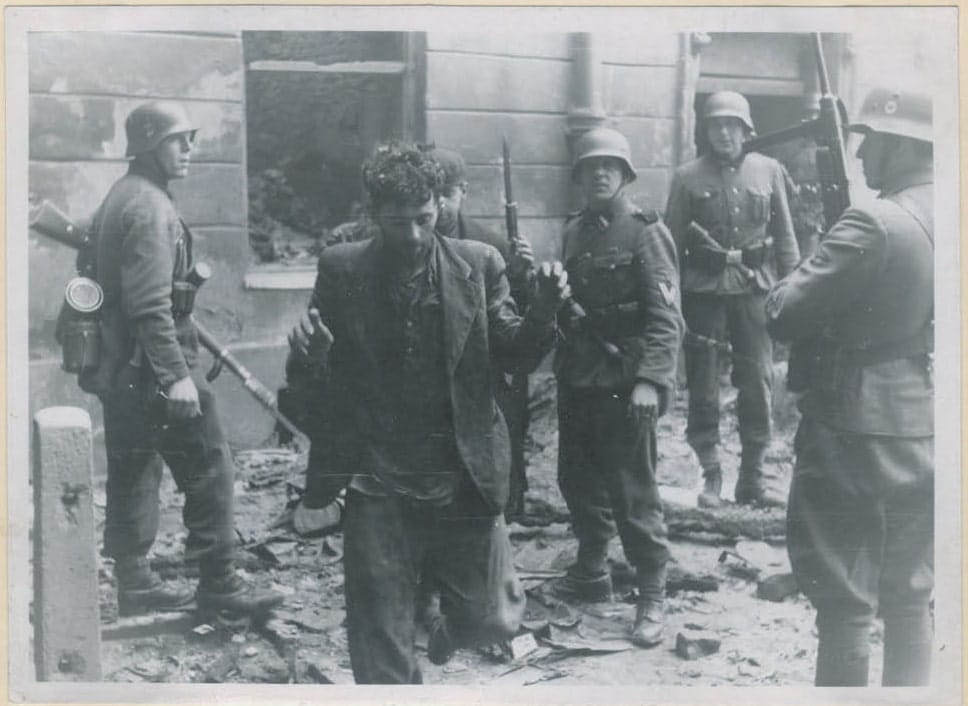
Fighters from the Warsaw Ghetto captured by the Germans (May 1943). Caption in German: “These bandits defended themselves with weapons.”
Documents
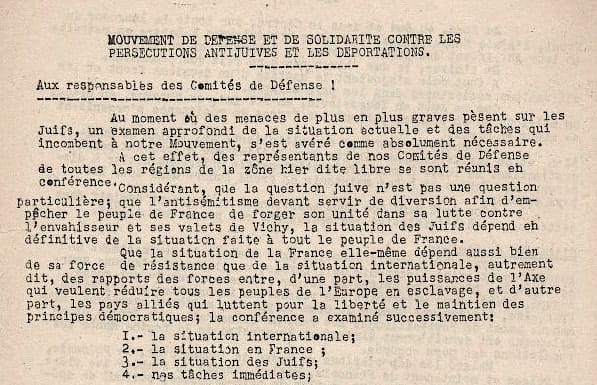
Internal circular from the Movement for Defense and Solidarity Against Anti-Jewish Persecution and Deportations, analyzing antisemitism as a means of “preventing the unity of the Peuple de France” (1943).
Audio
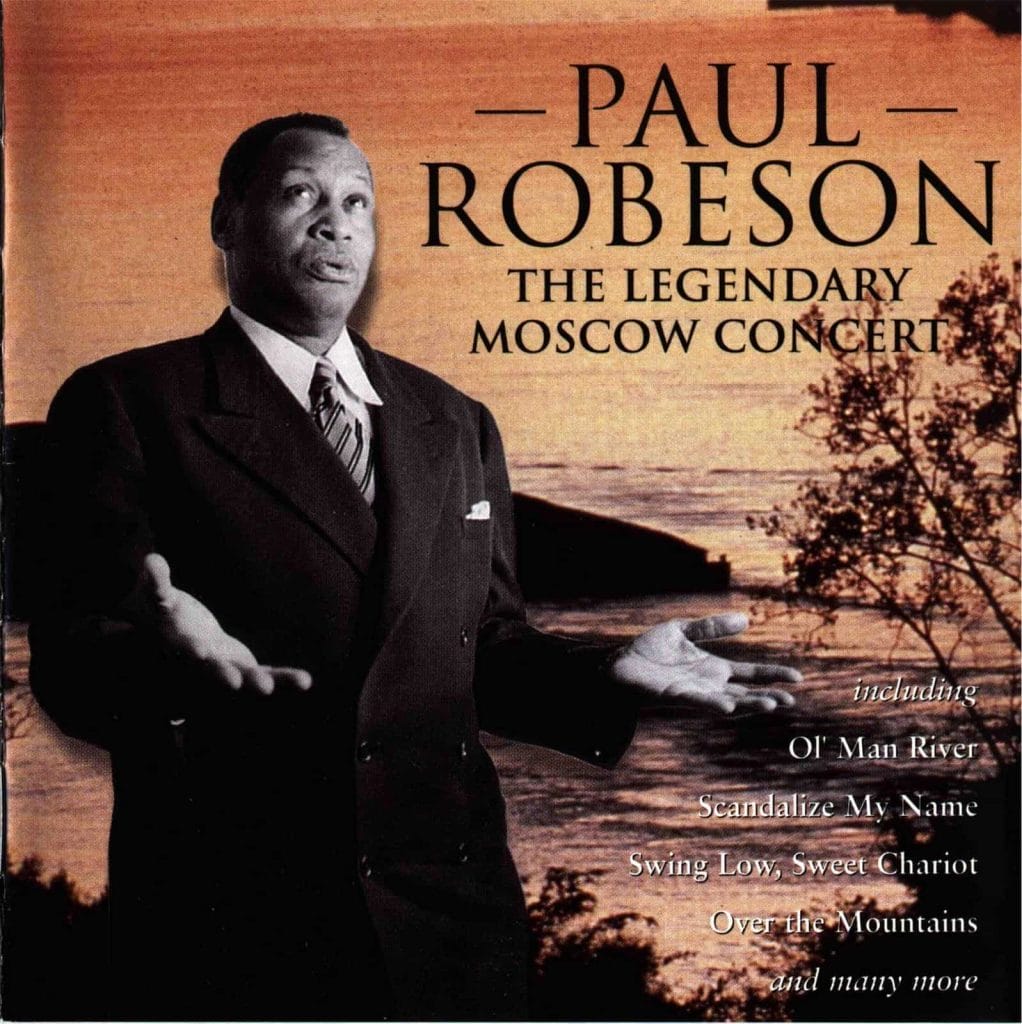
American singer Paul Robeson sings “Zot Nit Keynmol” in Yiddish (a song from the Vilna Ghetto in support of the Warsaw Ghetto insurgents, which became the anthem of all ghettos).
Notes
United Resistance Movements (MUR)
Page
1
Page
2
Page
3