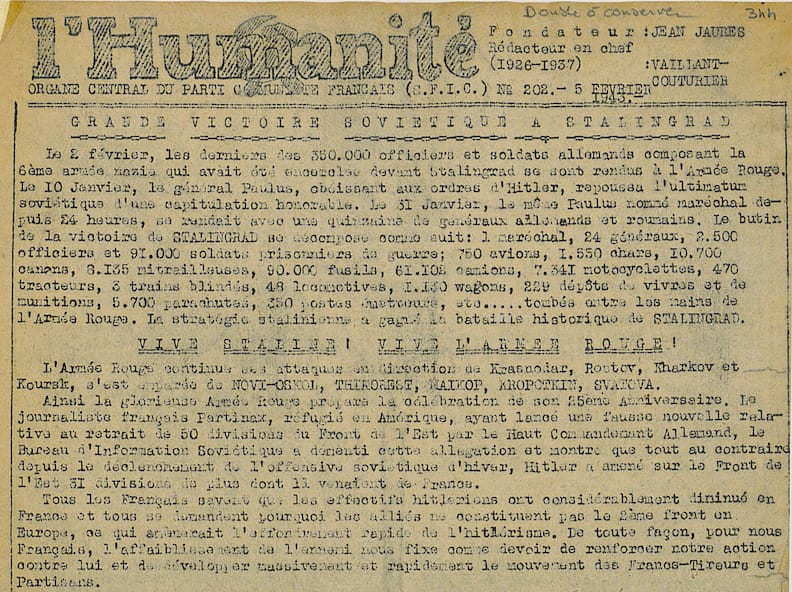
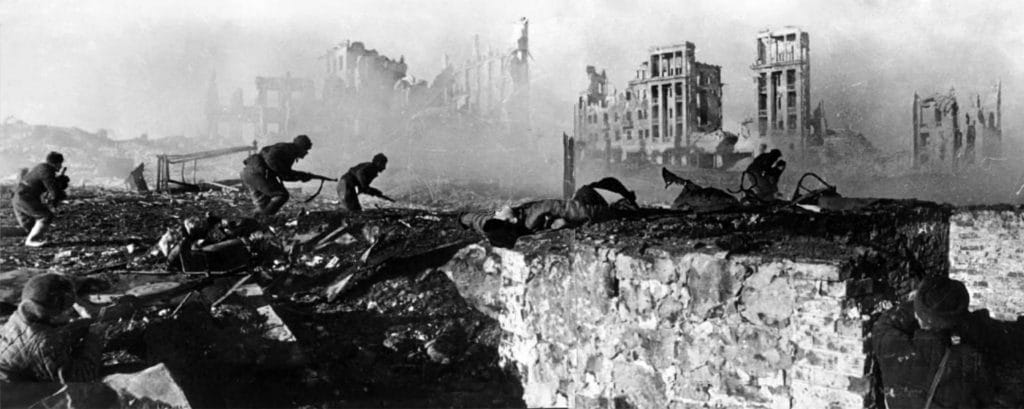
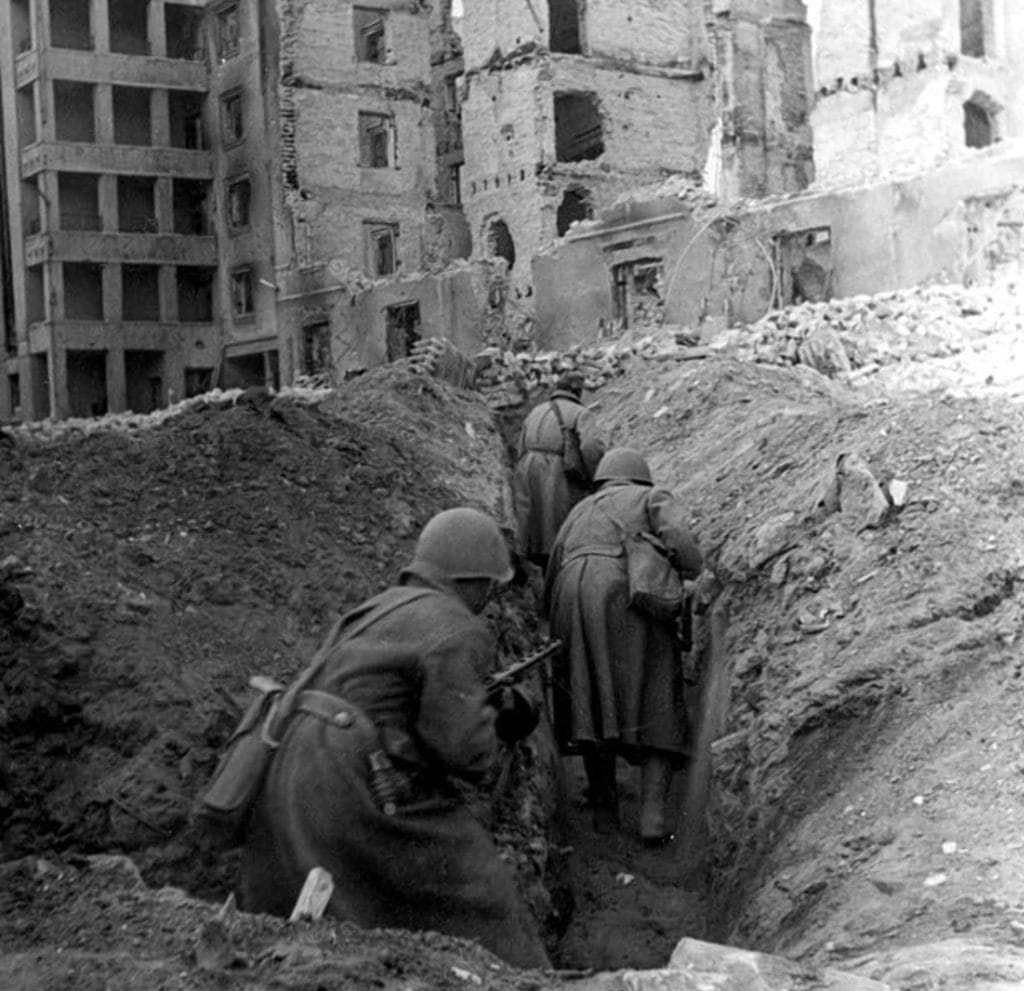
During the “Battle of Stalingrad” (July 1942–February 1943), the German army was defeated by the Soviet army. An irreversible turning point occurred: Nazism was no longer triumphant.
From July 1942 to February 1943, the Soviet “Red Army” and the Wehrmacht (the German army) clashed both outside and inside the Soviet city of Stalingrad. A major industrial center, the city was also a key strategic asset in the energy sector, as it provided access to the Caucasian oil reserves coveted by Hitler. Politically, it symbolized the power of Joseph Stalin, General Secretary of the Central Committee of the Communist Party of the USSR.
The intensity of the fighting, its duration, the number of casualties—both military and civilian—and the freezing weather conditions are extreme.
The defeat of Hitler’s army led the Allied forces to step up their joint efforts against the “Axis” (primarily Germany, Italy, and Japan). The outcome of the Battle of Stalingrad brought about a military, strategic, and political turnaround that would lead to victory over Nazism.
“Before Stalingrad, we were convinced that we could defeat Nazism; after Stalingrad, we were certain of it.”
Robert Endewelt, a member of the M.O.I. Resistance movement and head of the Union of Jewish Youth (UJJ) in Paris.
Reference:
Jean Lopez, Olivier Wieviorka, 2015, *Myths of World War II*. Perrin