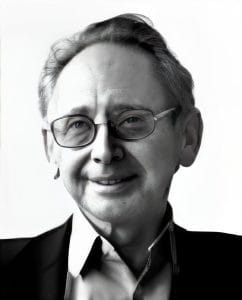
, born Roger Trugman
Roger Trugman, who became Roger Trugnan after the war, was born in Paris to a Jewish family.
His mother is a seamstress ; his father, a cabinetmaker, fled Bessarabia (now Moldova) in 1910 following the pogroms.
His parents joined the Communist Party in 1928. At a very young age, Roger joined the “Pioneers” in Paris’s 11th arrondissement, attended secular youth clubs, and went to summer camps organized first by the Secours Rouge and later by the “Amis de la M.O.I.”
In 1940, he organized the first “triangles” (groups of three Resistance fighters) of the Communist Youth in the 11th arrondissement. These young people distributed leaflets at markets, at subway exits, at movie theaters, and stick butterflies on the walls “to foster a spirit of Resistance against the Occupier among the population.”
His younger sister, Germaine, followed in his footsteps and joined the fight at a very young age.
Louis Gronowski, a national leader of the M.O.I., enlisted Roger Trugnan to help write and proofread leaflets and other texts, notably for a brochure published in 1941 titled “Anti-Semitism, Racism, and the Jewish Question.”
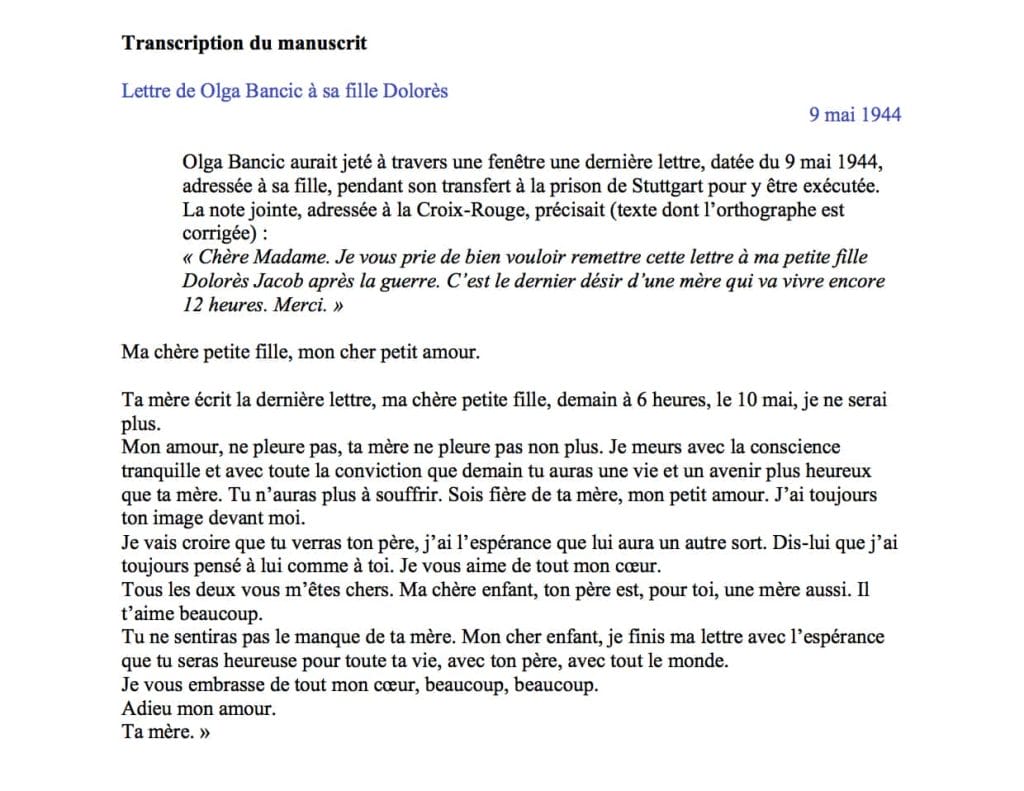
In 1942, Roger Trugnan left for the southern zone to be reunited with hisparents and sister. All three were deported in April 1944; none of them ever returned…
Upon returning to Paris in 1943, Trugnan resumed the fight against the Nazi enemy and reconnected with his comrades in the Jewish Communist Youth (JCJ) of the M.O.I.
They have been “under surveillance” for several months by the Special Brigades (BS). The goal: to track down communists and Jews. Trugnan is listed in the BS files under the alias “Blondinet.”
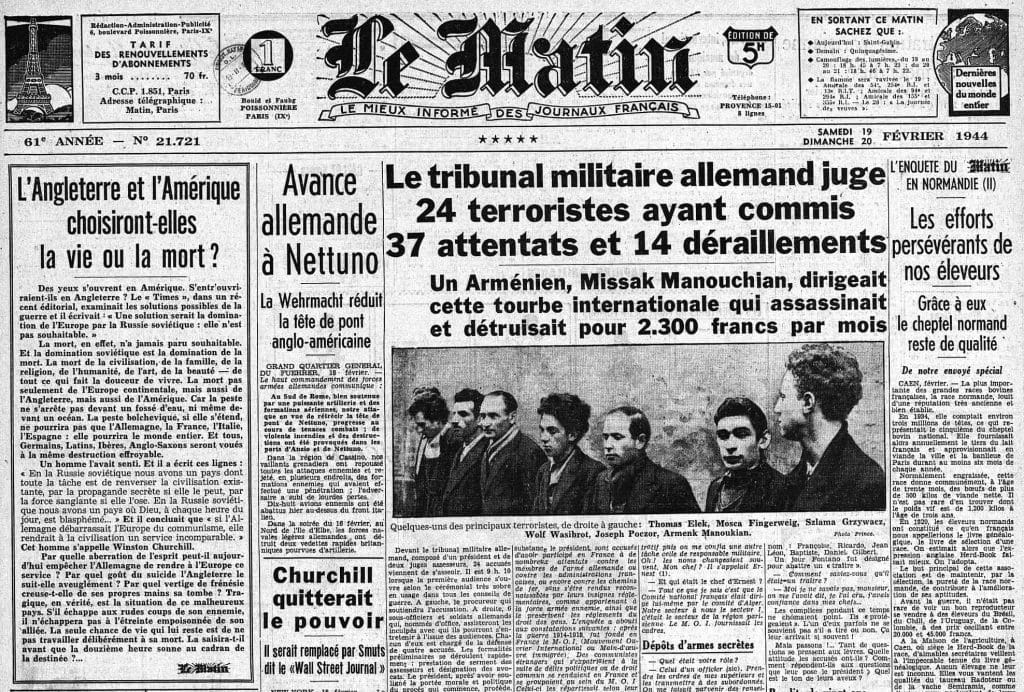
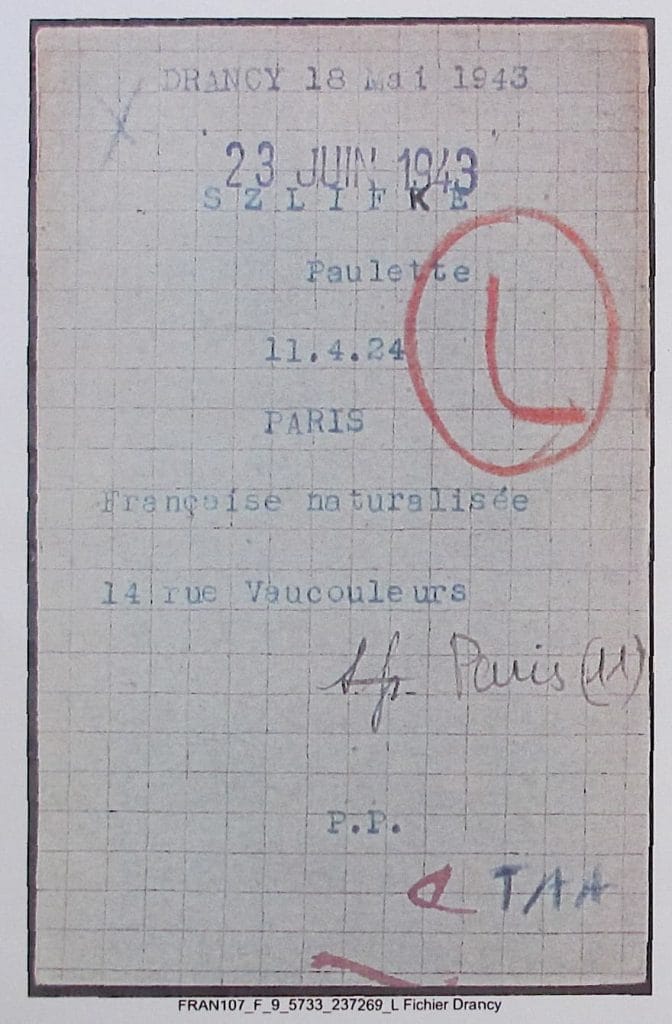
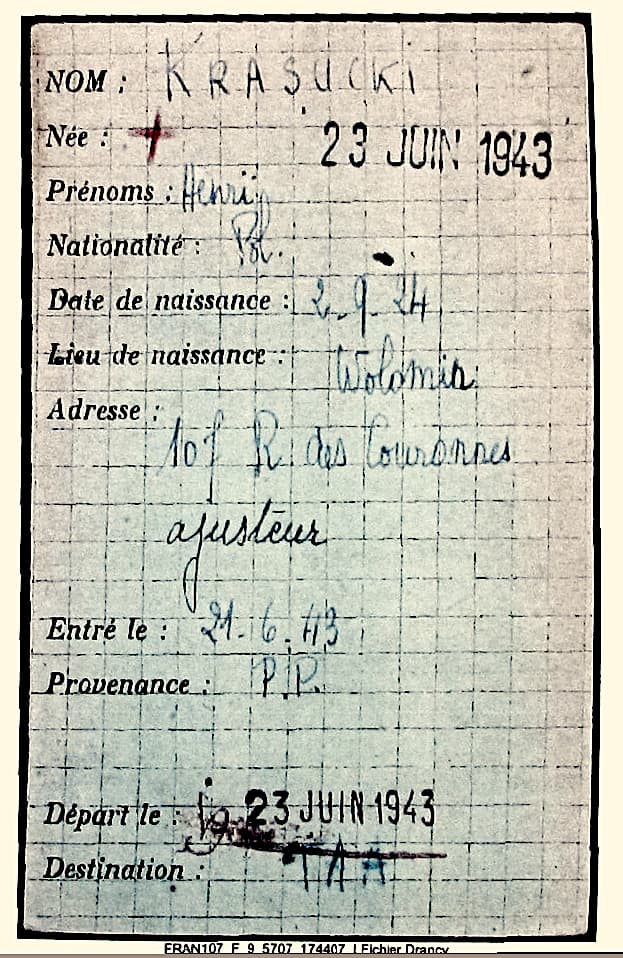
On March 23, 1943, he was arrested along with about fifty young people from the JCJ, including Henri Krasucki and Paulette Szlifke (or Sliwka, later Sarcey).
After being subjected to brutal interrogations, Roger Trugnan was interned at Drancy and then deported to Auschwitz-Birkenau on June 23, 1943.
Only 6 of the 50 young people who were arrested would return from Auschwitz.
Trugnan, along with Henri Krasucki and Samuel Radzinski, was assigned to a work detail dedicated to coal mining in Jawischowitz. Together with his comrades, he organizes acts of sabotage in the mine.
In January 1945, as the Soviet army approached, he was transferred to Buchenwald after a grueling three-day “death march.” Solidarity was essential for him and all members of the Resistance.
On April 29, 1945, he finally returned to Paris, where he learned that his parents and sister had died.
Throughout his life, he remained active in the Communist Party and was involved in remembrance efforts with the AMEJD (Association for the Memory of Deported Jewish Children).
He died in Paris on February 22, 2016.
References:
— *Le Maitron* , 2016, Claude Willard
— Diamant, David, 1971, *The Jews in the French Resistance*. Le Pavillon.
AACCE, 2009, *The Jewish Resistance in France, 1940–1945*. Published by AACCE.
— Photo from a private collection (DR)