(1856-1951)
Philippe Pétain, born on April 24, 1856, was a career military officer. He distinguished himself during World War I, notably during the Battle of the Marne in September 1914 and later during the Battle of Verdun in 1916.
He was promoted to the rank of Marshal of France in 1918.
As commander-in-chief of the French forces, he enjoyed considerable prestige after the war.
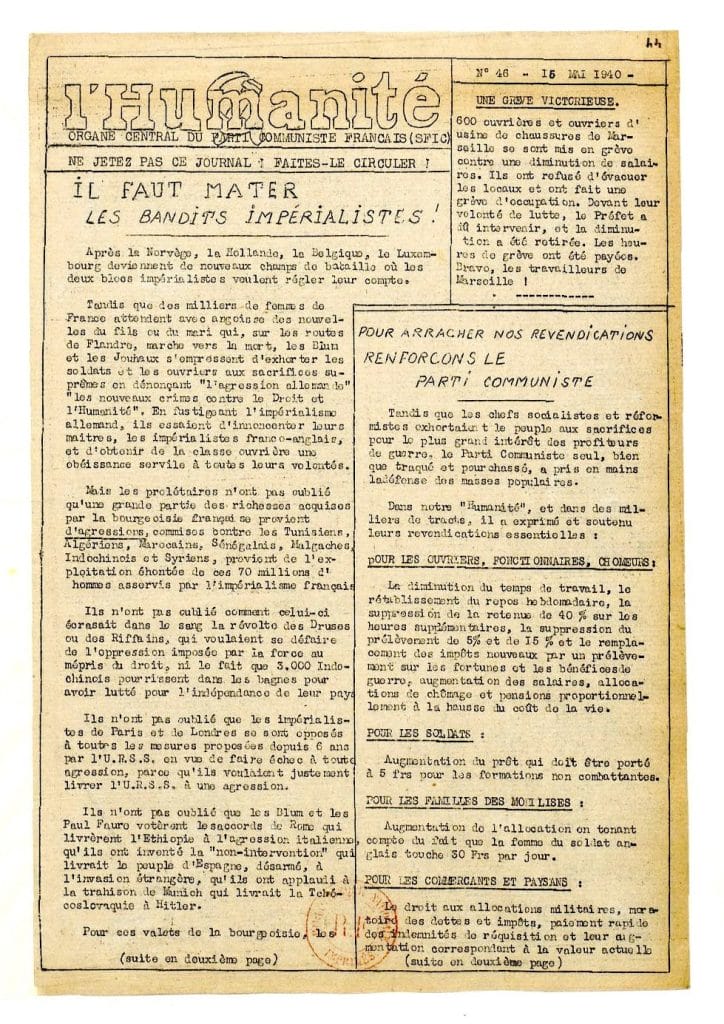
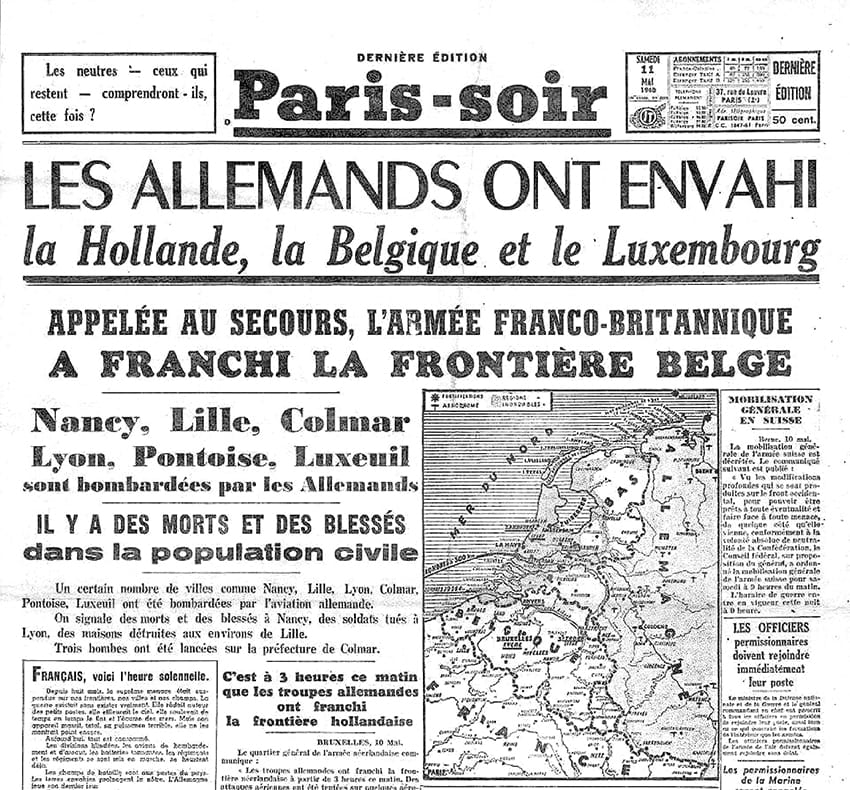
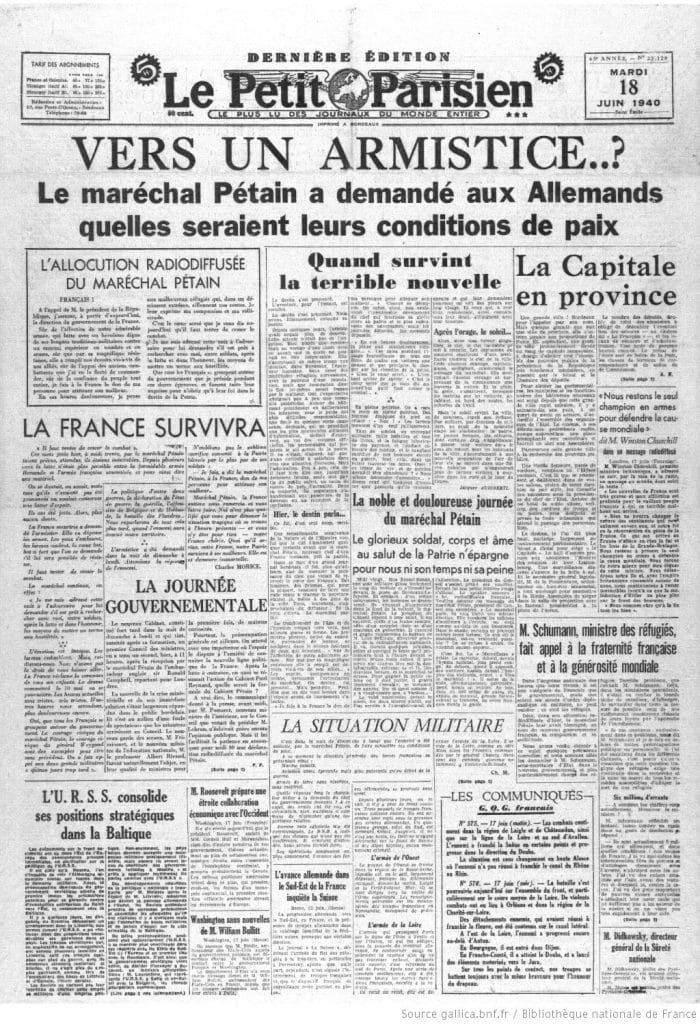
Regarded as a man of the hour at the start of the conflict with Nazi Germany, he was appointed to the government on May 17, 1940, and blamed the Republican forces for the war. On June 17, Pétain, who had just been appointed President of the Council, requested an armistice from Hitler’s Germany. In response, on the 18th, de Gaulle issued his call to the Resistance from London.
The armistice was signed on June 22, 1940. On July 10, Pétain assumed the title of “Head of the French State.” France was, broadly speaking, divided into two zones by the Nazis, who occupied the northern zone. Pétain settled in Vichy, in the southern zone, known as the “Free Zone.” The French Republic was replaced by an authoritarian state that advocated a “national revolution.” Its motto was “Work, Family, Fatherland.” In October 1940, Pétain, together with Hitler, formalized the state’s collaboration with Nazi Germany.
Pétain’s government dismantled all republican institutions. It targeted foreigners, Freemasons, Communists, members of the Resistance, and Jews. It preempted German demands and very quickly enacted anti-Semitic legislation that grew increasingly harsh with each new law. The First Jewish Statute of October 1940 and the Second Jewish Statute of June 1941, modeled after the German Nuremberg Laws, were precursors to deportation. Jews were registered, spied on, threatened, denounced, stripped of their property, and deprived of their jobs.
The Drancy transit camp became the hub of the extermination policy carried out by the Nazis with the complicity of the Pétainist government
Roundups are becoming more frequent. The French police, acting under orders from Vichy, actively participated in—and even took the lead in—these roundups. The “French Militia,” created by the Pétain regime on the model of the Gestapo and at Hitler’s behest, specialized in eliminating members of the Resistance.
The fighters in the Jewish section of the M.O.I. were targeted by the Vichy regime on several grounds: as foreigners, members of the Resistance, communists, and Jews.
After the Allied landings in Normandy, Pétain was arrested in Vichy and transferred to Germany, where he remained until April 1945.
He was extradited to France, brought to trial, and sentenced to death for his crimes. Because of his age (89), his sentence was commuted to life imprisonment.
Sentenced to national disgrace, he was stripped of his military rank and transferred to Fort Pierre-Levée on the Île d’Yeu.
He died in 1951 while under house arrest.
Reference:
Ferro, Marc, 2014, *Pétain*. Fayard.