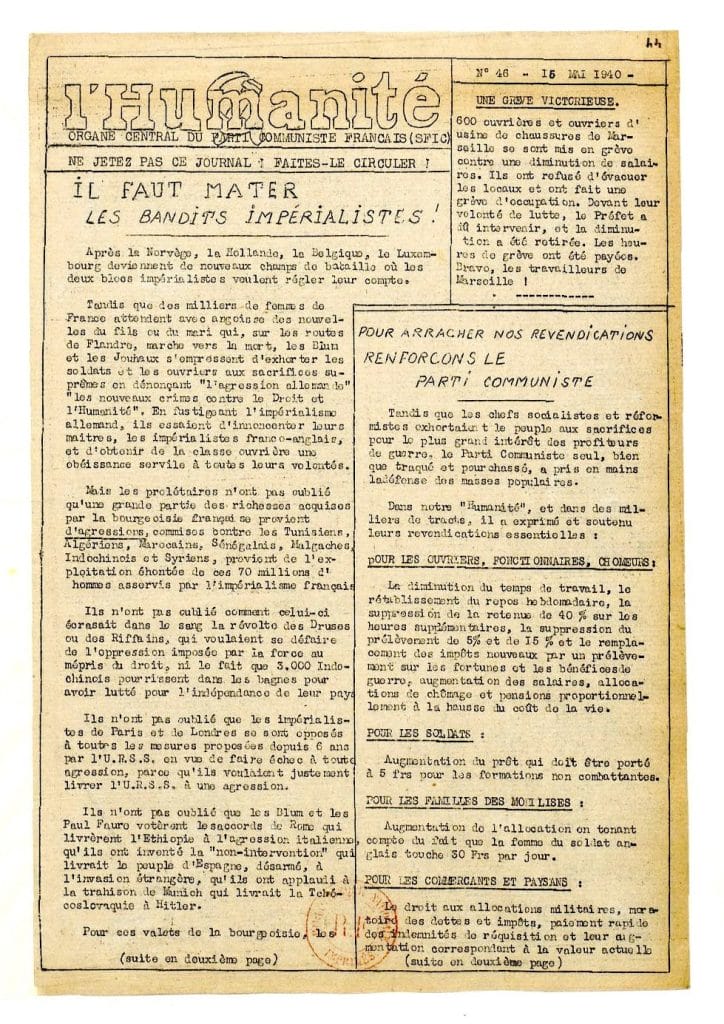
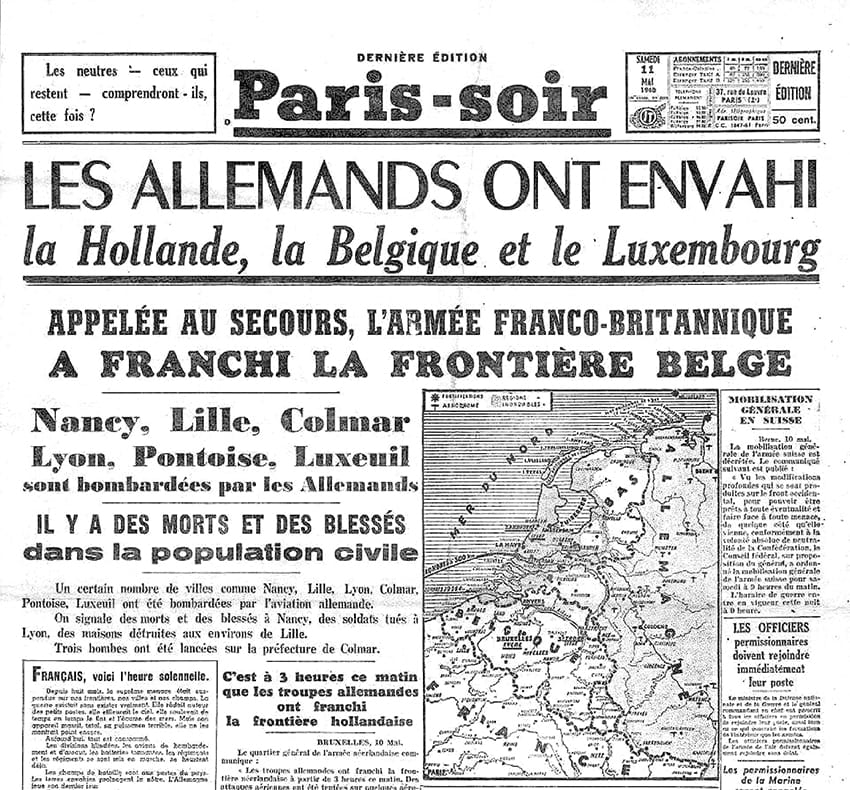
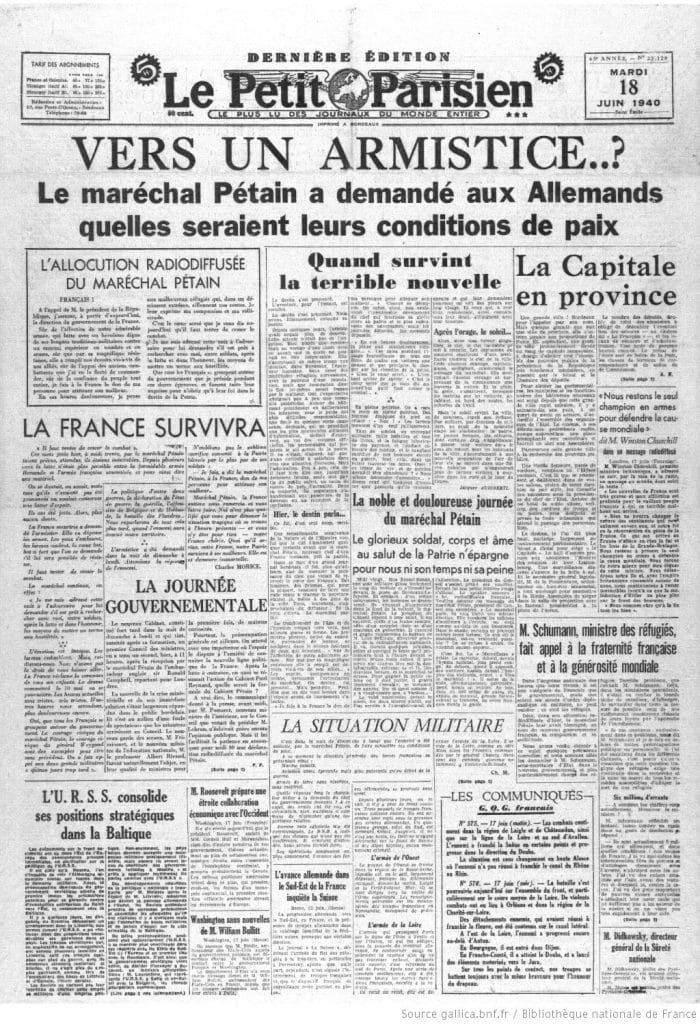
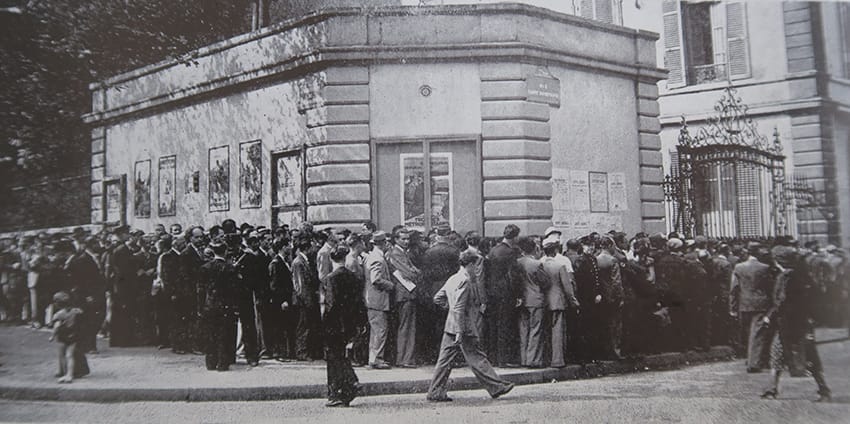
As early as May 1940, the exodus sent entire families—whether they had cars or not—flooding onto the roads, bringing the movement of Allied forces to a standstill.
On June 14, as the Wehrmacht (the Nazi German army) approached Paris, the people of Île-de-France, in turn, fled (two million Parisians, or two-thirds of the population within the city limits). On June 11, the French government had abandoned Paris for Bordeaux.
Under attack from the Luftwaffe’s (the German Air Force) Stukas, which strafed and bombed the columns of fleeing people, many civilians were massacred. The death toll is estimated at 100,000. The exodus also resulted in a large number of families being separated. Many lost children would never be reunited with their parents: the French Red Cross estimated the number of such children at 90,000.
In July, the Vichy government established a repatriation plan, which was complicated by the disorganization of the railways and the demarcation lines. On July 28, the Germans closed the passage to the occupied zone and, on August 1, 1940, imposed regulations classifying refugees into categories. Returns to the occupied zone were authorized except for communists, Freemasons, “Alsatians and Lorrainers who are not of German race,” members of the Belgian and French armed forces, and foreigners. Jews with valid papers were permitted to cross. On February 1, 1941, the government estimated that 7 million French citizens and 1.2 million Belgians, Dutch, and Luxembourgers had experienced the exodus. The cities in the Free Zone were overwhelmed with refugees (denounced by Pétain as “fugitives”), who were soon joined by demobilized soldiers in a country in utter turmoil.
References
— Alary, Eric, 2013, 2018, *The Exodus: A Forgotten Tragedy*, Paris: Perrin, “Tempus” series
— Guéno, Jean-Pierre, 2015, *Paroles d’exode: Letters and Testimonies from French People on the Road, May–June 1940*, Paris: Librio. *Document* series.