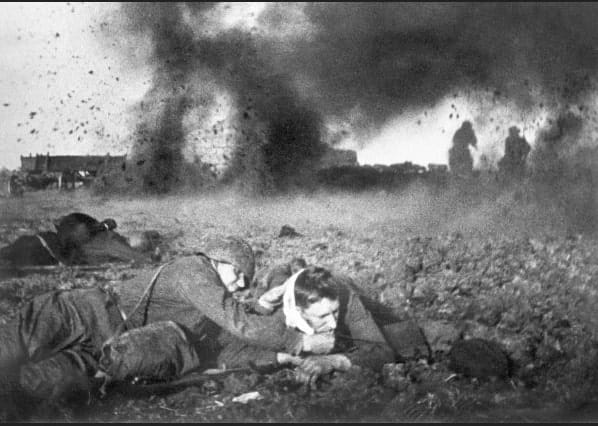
World War II lasted from September 1, 1939 (the date of Germany’s invasion of Poland) to September 2, 1945 (Japan’s surrender). It was the deadliest conflict in history (between 60 and 85 million victims, including 45 million civilians).
This war was also marked by the genocide of the Jews by the Nazis and their collaborators. It ended with the fall of Nazism and the emergence of two major rival powers: the United States of America (USA) and the Union of Soviet Socialist Republics (USSR).
World War II was preceded by a series of conflicts that foreshadowed it: Japan’s invasion of China, the Spanish Civil War, the Soviet defeat of Japanese aggressors in Mongolia, and the Winter War in Finland, which the Soviets fought with great difficulty…
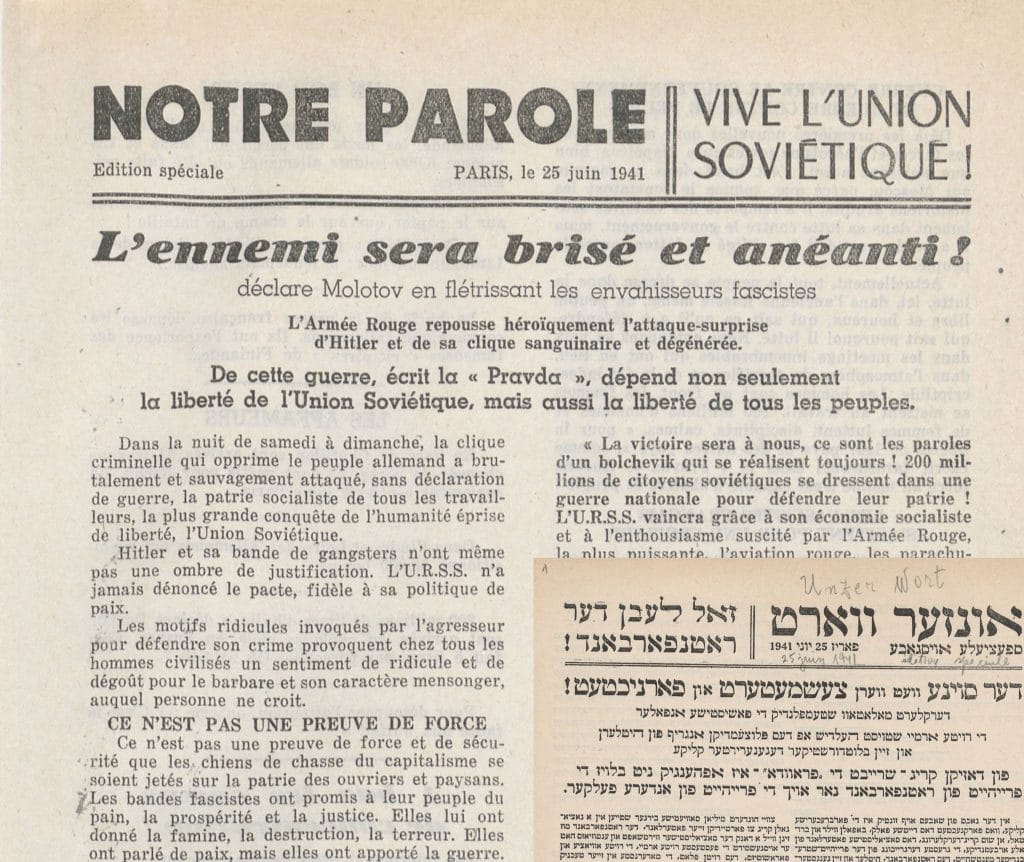
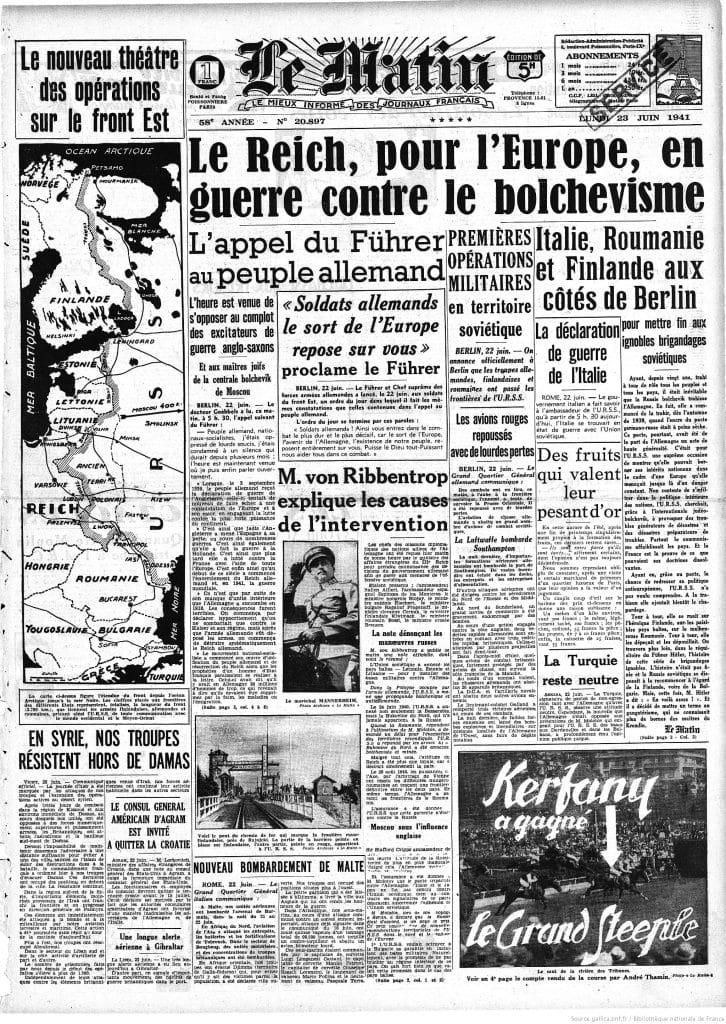
In Europe, Germany first attacked Poland (September 1939), carried out Occupation of Denmark and Norway, then France (May 1940), and went on to face Great Britain. At the same time, Hitler’s Italian ally suffered a defeat in Greece; Germany was forced to intervene in that country and in Yugoslavia. Hitler’s grand plan, once France had been defeated, was to conquer “living space” to the east: on June 22, 1941, Operation Barbarossa (the invasion of the USSR) began.
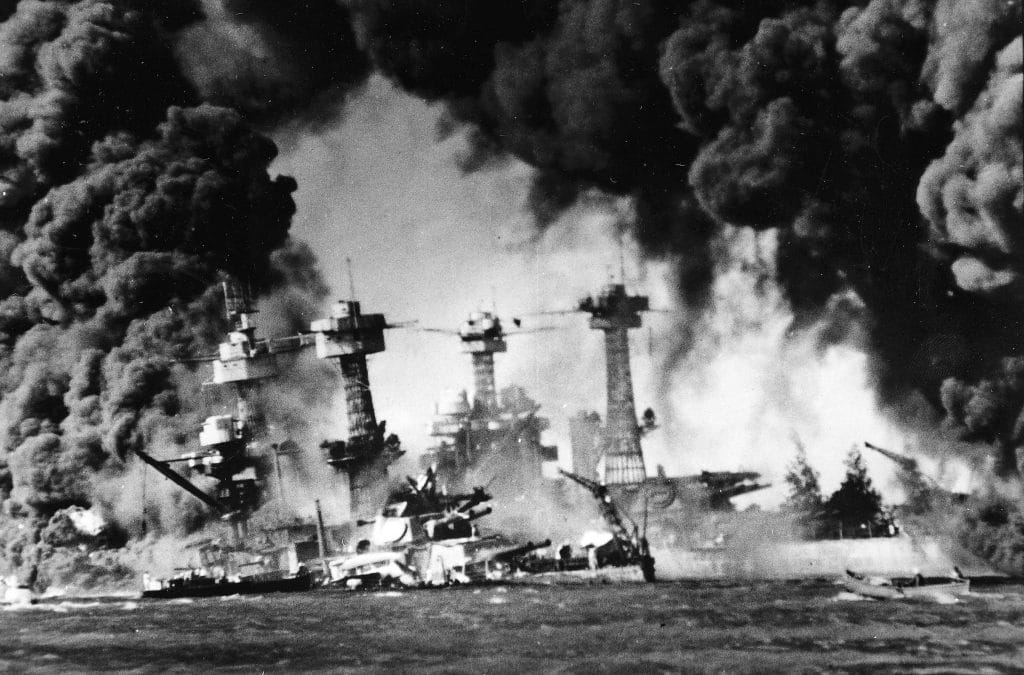
For its part, Japan, another of Hitler’s allies, sought to eliminate U.S. naval forces from the Pacific: on December 7, 1941, a surprise attack was launched on the U.S. naval base at Pearl Harbor.
From that point on, with the United States’ entry into the conflict, the war truly became a global one: in Europe, Africa, the Middle East, China, Southeast Asia, and the Atlantic and Pacific Oceans.
The Axis powers (primarily Germany, Italy, and Japan) underestimated the Soviet and American powers. After the long and bloody Battle of Stalingrad, which the USSR won against Hitler, the Axis was no longer able to win the war.
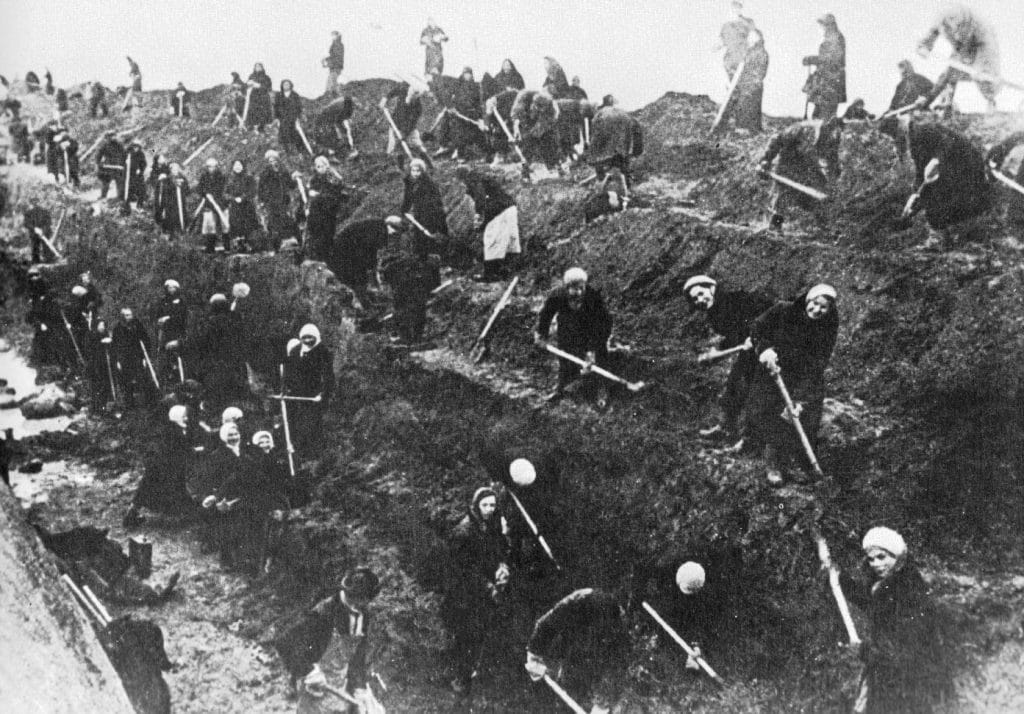
World War II is characterized by the number of civilian casualties: aerial bombings of cities (25,000 dead in Dresden), reprisals against civilians suspected of aiding the partisans, a relentless crackdown on Resistance fighters in France, and the genocide of Roma (150,000 to 200,000) and Jews (6 million) throughout Europe.
In August 1945, the Americans tested the atomic bomb against Japan (in Hiroshima and Nagasaki).
A new era began: the Cold War between the two major victors, the United States and the USSR, which the creation of the United Nations (UN) was unable to prevent.
References:
— Keegan, John, 1988, *World War II*, Perrin.
— Ferro, Marc, 2010, Questions on World War II, “History” series.