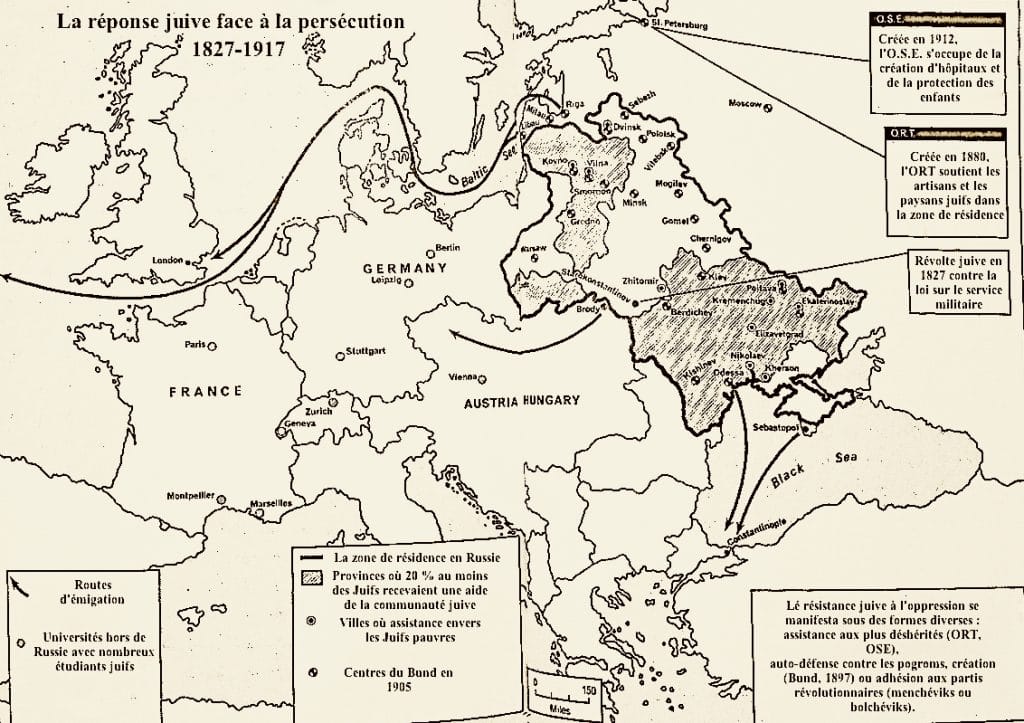
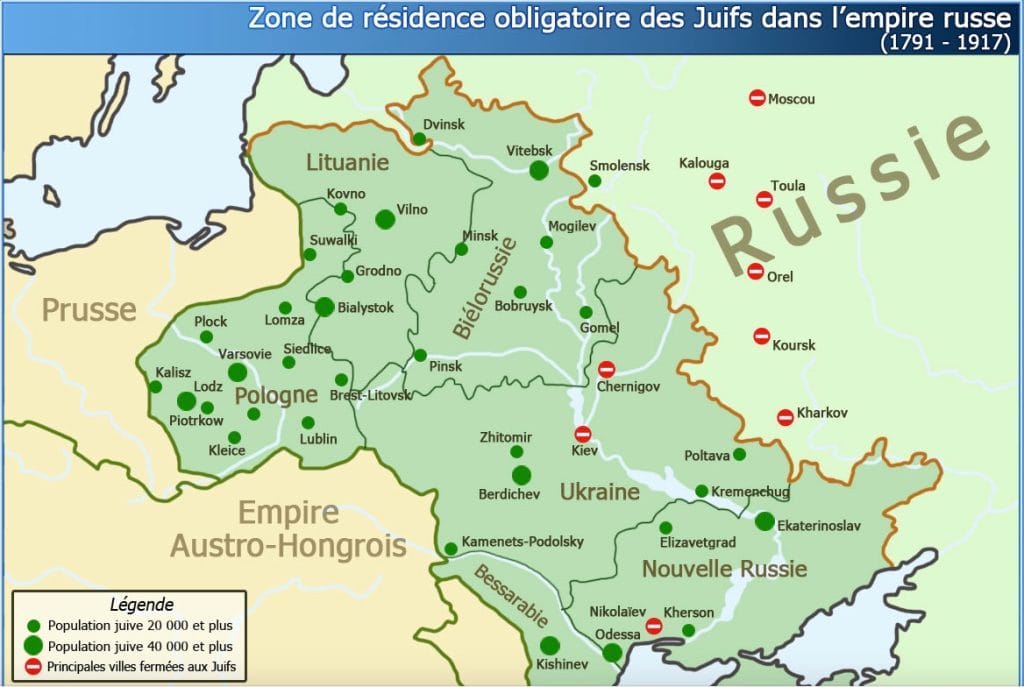
The word “pogrom” (of Russian origin) means destruction and looting. It is used to describe the attacks and massacres carried out and organized by local populations—sometimes with the encouragement of the government and the police—against Jews in Russia and Poland beginning in 1881.
The first wave of pogroms took place between 1880 and 1884: the most significant ones occurred in Elisabethgrad, Kyiv, Odessa, Balta, and Warsaw. The Russian government used the pogroms as a pretext to restrict the rights of Jews.
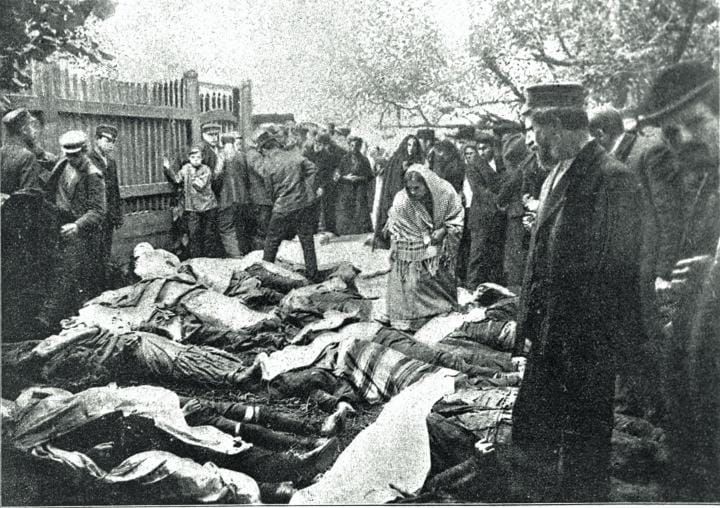
The second wave of pogroms occurred in the midst of the revolutionary crisis, between 1903 and 1906, and was marked by the pogroms in Kishinev, Zhytomyr, and Bialystok.
The third wave, the most brutal, took place during the Russian Civil War (1917–1921). Independent Ukraine was the main theater of these events: bands of peasants fighting against the Red Army massacred Jews, led by Cossack chieftains and supported by Ukrainian troops and Prime Minister Symon Petliura. In Russia, Denikin’s White Army organized several pogroms, notably in Fastov. The Red Army’s victory put an end to these atrocities.
A total of 887 major pogroms and 349 “minor” pogroms have been documented, reportedly resulting in more than 60,000 deaths.
Reference:
Nahon, Gérard, “Pogrome or pogrom,” https://www.encyclopaedia-universalis.fr