The Yiddish language, derived from German, is enriched with Romance elements and vocabulary from Hebrew, Aramaic, and Slavic languages. It has been spoken by Jewish communities in Central and Eastern Europe since the Middle Ages. The Yiddish language has evolved over the centuries and has produced a rich body of literature. It is written using the Hebrew alphabet. The extermination of 6 million European Jews during World War II led to the gradual decline of this language and its literature.
The origins of Yiddish date back to the year 1000. During their wanderings, the Jews followed the route of the Roman legions and crossed France to settle in the Rhine region.
They speak, then, in Romance dialects, and their language gradually blends with the Germanic dialects of the Middle Ages.
In addition to the basic Germanic elements, they incorporate Romance elements and add Hebrew and Aramaic terms.
Gradually, beginning in the 14th century, a distinct, independent language emerged, with new sounds; its grammar was related to that of German, but it evolved according to its own rules.
An important literary work from the Middle Ages attests to this.
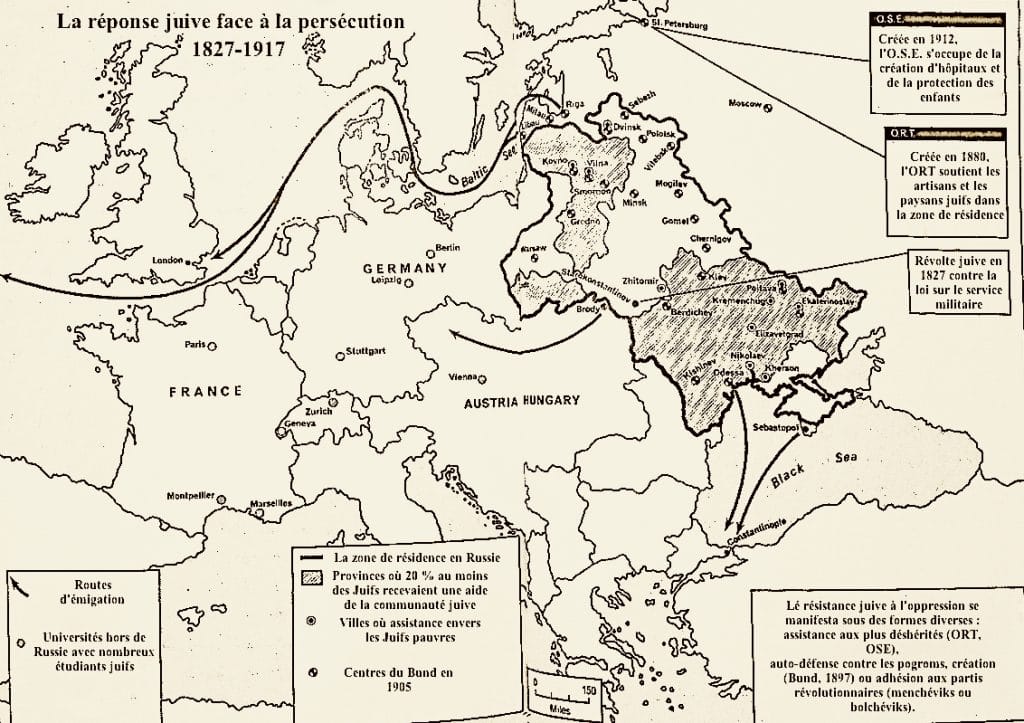
After 1348–1349, following massacres that partially decimated their numbers (they were blamed for the Black Death!), a massive exodus drove the Jews toward Prague and Poland.
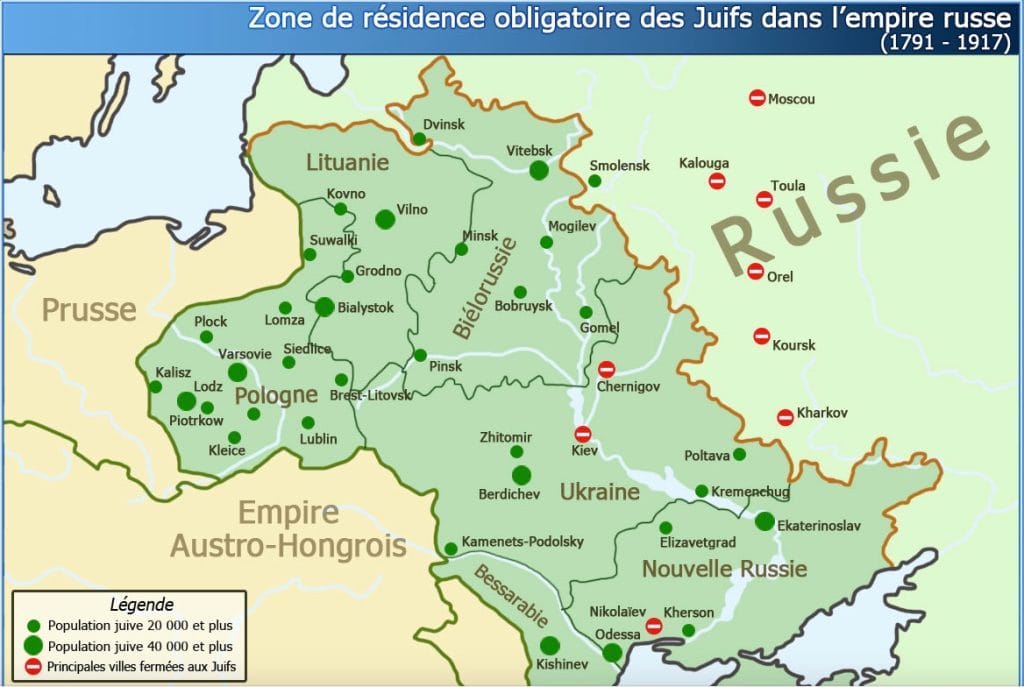
This migration of Jewish populations from central to eastern Europe took Yiddish out of the Germanic sphere of influence. The language flourished in the Slavic countries and became entirely unique and independent.
Pronunciation evolved under the influence of Polish, Ukrainian, and Czech elements, but the fundamental change concerned syntax. Slavic, Germanic, and Hebrew influences intertwined. Yiddish broke free from complicated forms.
In the mid-18th century, scholars of Hebrew, who were hostile to “jargon,” gradually came to embrace Yiddish. In the 19th century, Yiddish-language writers established a modern language and paved the way for classical Yiddish literature.
In Wilno (now Vilnius), the YIVO, the Jewish Cultural and Scientific Center, standardized the language.
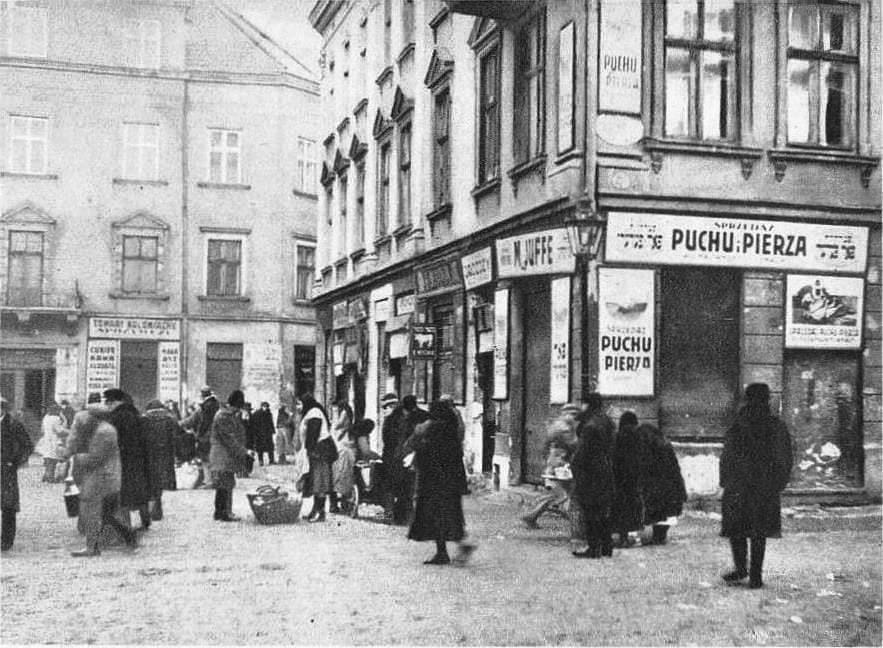
Until 1939, a rich and diverse body of Yiddish literature bore witness to the extraordinary vitality of this language, which served both as a tool for struggle and a means of communication.
References:
— Cécile Cerf, (1959), “The Yiddish Language,” published by Europe and Editeurs Français Réunis, EUROPE magazine, September 1959, pages 18–27.
— Cécile Cerf, (1974), Perspectives on Yiddish Literature, Academy of History, Paris
Note: The English spelling, “Yiddish,” is now the standard.