The Organisation Spéciale (OS) was founded in 1940 by the Communist Party, which had been operating underground since its dissolution in September 1939.
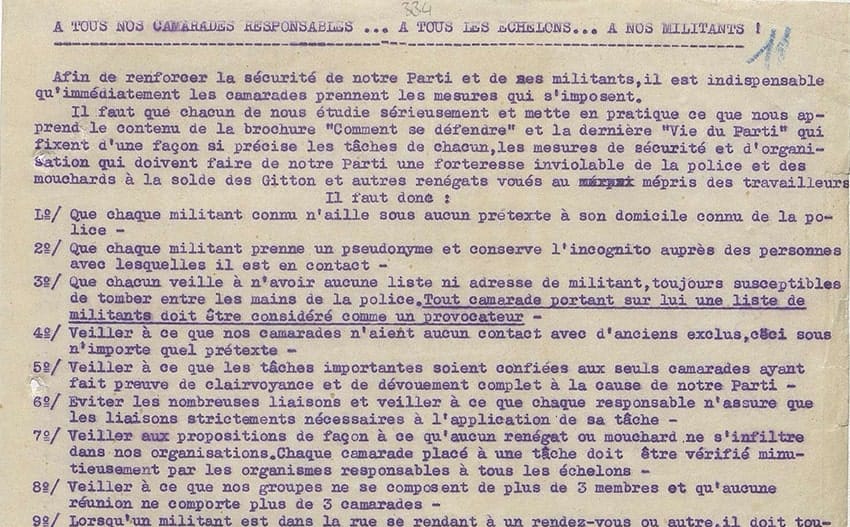
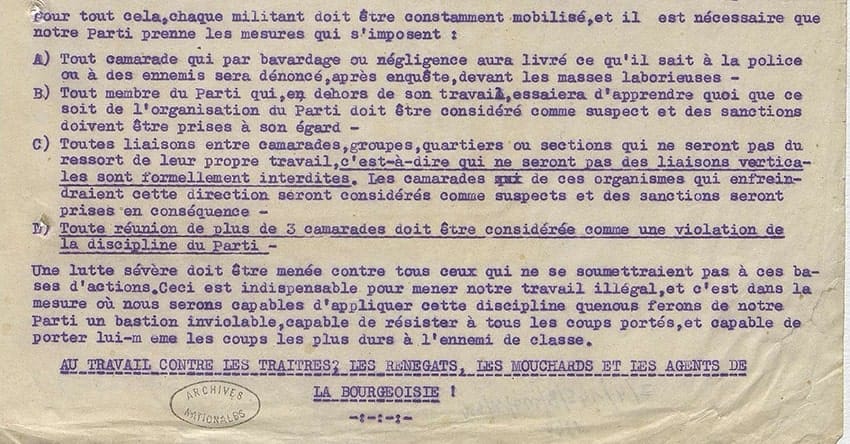
Composed of seasoned members, its primary task is to protect leaders and ensure the safety of activists during demonstrations, public speeches at markets, and leafleting. It also works to build up stockpiles of weapons. Jews who have immigrated are involved in these efforts.
The PCF decided to launch an armed struggle against the German occupiers following the invasion of the USSR and in accordance with the directives received from the Communist International.
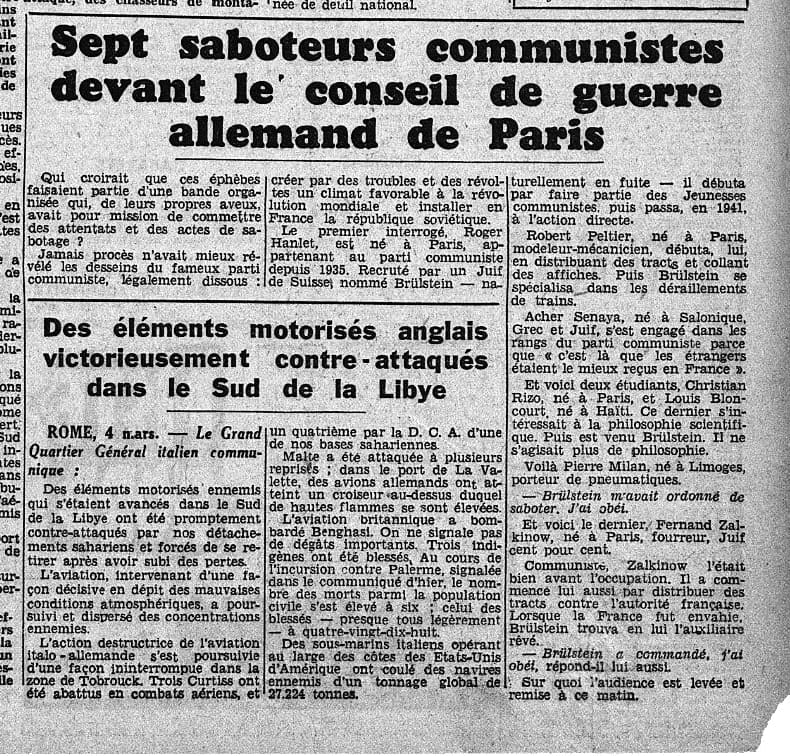
It was members of the OS, bolstered by the recruitment of young communists (the future Youth Battalions), who carried out the first attacks against the occupying forces, during which German officers were killed: the Barbès attack in Paris carried out by Pierre Georges (the future Colonel Fabien) on August 21, 1941; the Nantes attack carried out by three OS members who had come from Paris—Gilbert Brustlein, Marcel Bourdarias, and Spartaco Guisco, on October 20, 1941; and the Bordeaux attack carried out by Pierre Rebière on October 21, 1941.
Given the scale of the German reprisals—which included the execution of numerous hostages—and the negative public reaction they provoked, the Communist leadership did not publicly claim responsibility for these OS actions at the time.
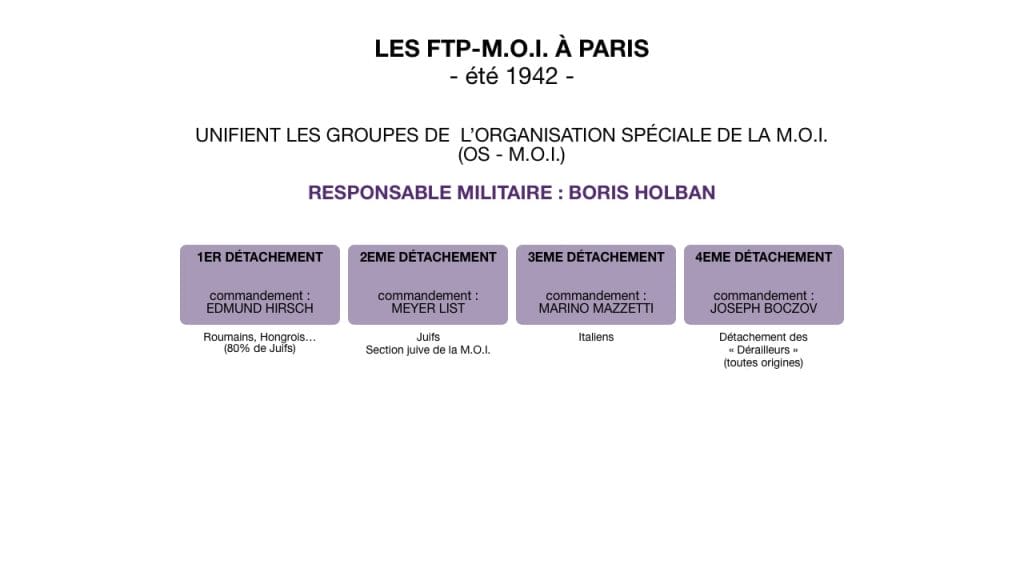
However, the armed struggle continued and grew stronger. A milestone was reached in April 1942 with the merger of the OS, the Youth Battalions, and the armed groups of the M.O.I. into a new armed organization: the Francs-tireurs et partisans (FTP and FTP-M.O.I.).
References:
— Alain Guérin, 2000 *Chronicle of the Resistance*, Éditions Omnibus (also published in 1972–1976 by the Livre-Club Diderot).
— Daix, Pierre, 2013, *Les Combattants de l’impossible: The Hidden Tragedy of the First Communist Resistance Fighters*, Paris: Robert Laffont.