“Operation Torch” was the code name given to the British and American Allied landings on November 8, 1942, in Morocco and Algeria. The Occupation of Algiers proceeded peacefully thanks to the local Resistance.
In July 1942, the Allies decided to open a second front in North Africa, with two objectives: to relieve the pressure the German army was exerting on the Soviets and to attack the “Afrika Korps ” —the German headquarters commanding armored tanks—which was threatening the Suez Canal. The ultimate goal, for both the Americans and the British, was to establish a base from which to advance into southern Europe.
The operation was codenamed “Operation Torch.” Despite the presence of Resistance fighters, particularly in Algiers, the biggest unknown remained the reaction of the Vichy African Army. “Operation Torch” was launched on November 8, 1942. In Algiers, 400 Resistance fighters (mostly Jews) occupied strategic locations early in the morning and apprehended General Juin, commander of the African Army, and Admiral Darlan, commander-in-chief of the Vichy forces, who was in Algiers at the time.
These arrests paved the way for the success of the Allied landing. For three days, fierce fighting raged between American forces and troops of the African Army in Oran and Casablanca.
“Operation Torch” had numerous consequences:
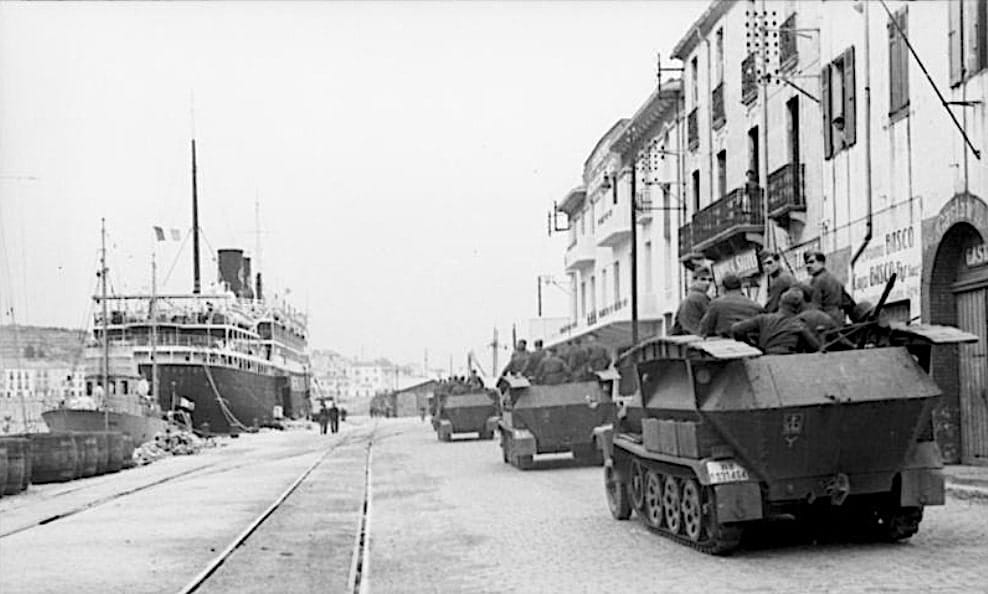
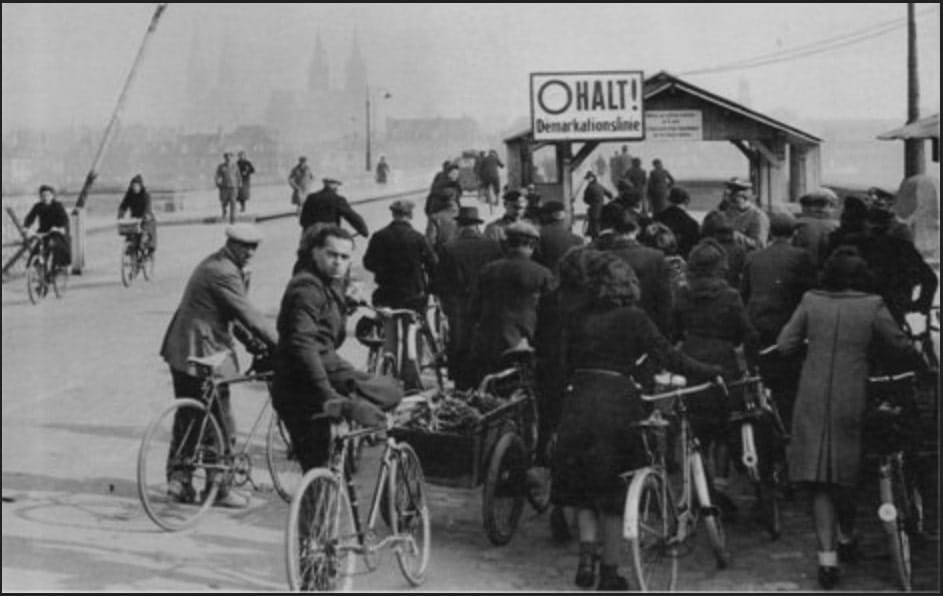
- November 11, 1942: Hitler’s reprisals and the Occupation of southern France by the Germans and Italians.
- On November 27, 1942, the naval fleet was scuttled in Toulon to prevent its capture by the German army.
- Opening a second front against the “Afrika Korps” in Tunisia.
- In the longer term, the Anglo-American landing in Sicily and, in 1943, the Italian campaign led by the Allies (notably the British, Americans, Canadians, Australians, and others) against the fascists. “Free France” took part in the fighting.
After Darlan’s assassination on December 24, 1942, power was transferred to Army General Henri Giraud, who was supported by Roosevelt—the American ally—who was suspicious of de Gaulle.
Kept in the dark about “Operation Torch,” General de Gaulle, leader of the overseas Resistance—“Free France”—rushed to Algiers and forced Giraud to form the French National Liberation Committee (CFLN). The colonies in sub-Saharan Africa that were still loyal to the Pétain regime then rallied to “Free France.”
The Casablanca Conference, held from January 14 to 24, 1943, brought together Roosevelt, Churchill—the British ally—de Gaulle, and Giraud, and definitively brought France into the war on the side of the Allies.
The agreement between Giraud and General de Gaulle led to the merger of the Free French Forces (FFL) with the African Army to form the French Liberation Army (AFL) on August 1, 1943.
Reference:
“L’Histoire” – Journal, No. 379,1942: “Operation Torch: The Allies Land in North Africa.” Société d’Editions scientifiques.