As a totalitarian system, National Socialism—or Nazism—does everything in its power to bring society into line. It assigns a central role to propaganda. Nazism promotes its ideology in all areas of life and works to eradicate all opposition to the regime.
As early as 1924, in *Mein Kampf*, Hitler set forth his theory: “Propaganda aims to impose a doctrine on an entire people.” Joseph Goebbels, a high-ranking Nazi official, added: “National Socialism must one day become the state religion of the Germans.” Hitler’s rise to power on January 30, 1933, was followed on February 2 by the banning of opposition newspapers and the creation of theNazi regime’s Ministry of Public Enlightenment and Propaganda, headed by Goebbels.
For its part, the Nazi party had its own propaganda apparatus. In addition to traditional media (newspapers, leaflets, posters, etc.), Nazi propaganda relied on spectacular nighttime torchlight parades and massive rallies that were filmed and screened in movie theaters.
It also resorted to book burnings: the Nazis burned thousands of books that did not conform to National Socialism—and, in particular, those by Jews—in public squares.
In August 1936, the XIth Olympic Games were used as a propaganda tool to present the Third Reich to the world as a peaceful and tolerant nation. The athletic achievements of the “Aryans” were glorified in the film *The Gods of the Stadium* by filmmaker Leni Riefenstahl.
The broadcast media are also involved:
- By 1937, Goebbels controlled all radio stations. Propaganda thus found its way into every German home.
- On September 12, 1933, Hitler established a Film Department within the Propaganda Office. Germany became the largest film producer in Europe. In addition to Leni Riefenstahl’s films (in *Triumph of the Will*, Hitler is portrayed as a god), Goebbels demanded, in late 1938, the production of anti-Semitic films such as the famous *The Jew Süss*, which was seen by more than 20 million viewers. Documentaries were produced for foreign propaganda purposes, such as *Theresienstadt*, filmed in the summer of 1944 at the concentration camp of the same name to convince the Red Cross that Jews were being treated well there.
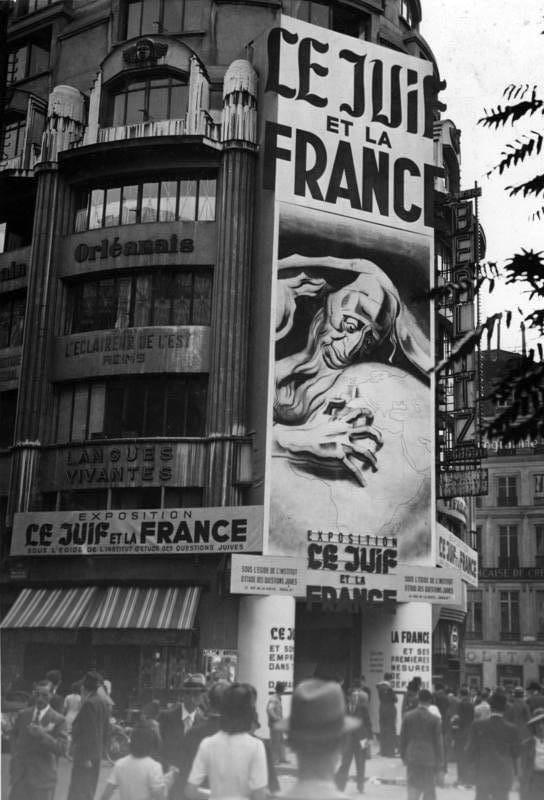
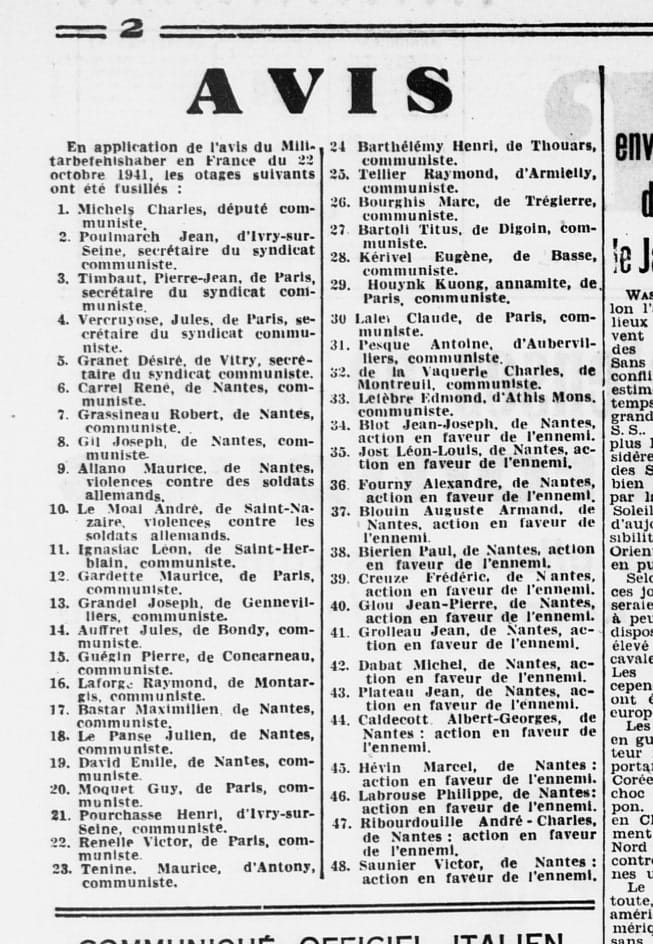
In occupied France, the Nazis spread their propaganda and controlled, without exception, all media outlets. The violently anti-Semitic exhibition “The Jew and France,” which ran from September 5, 1941, to the summer of 1942, was funded by the Institute for the Study of Jewish Questions (IEQJ) and represented the pinnacle of Nazi propaganda.
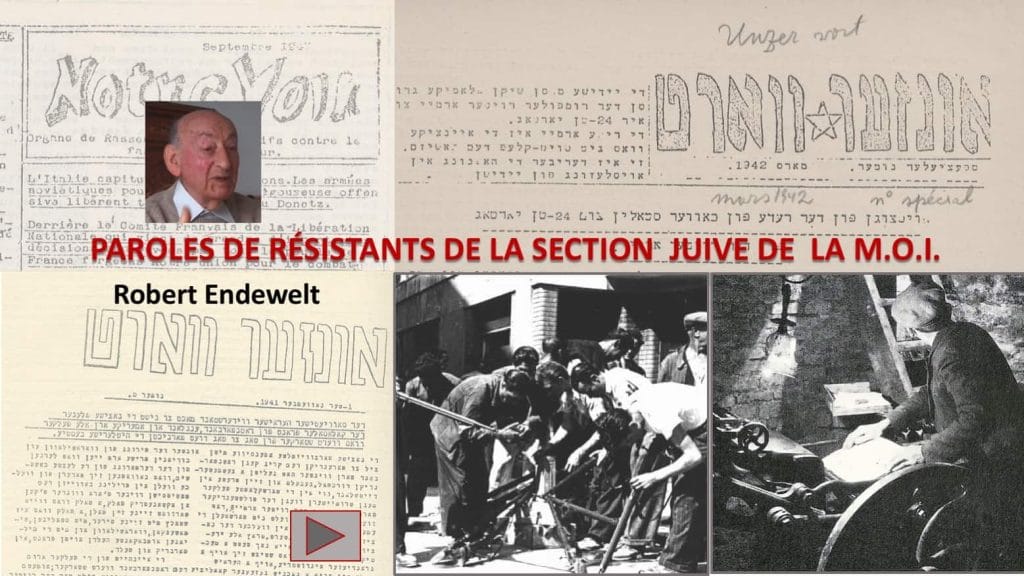
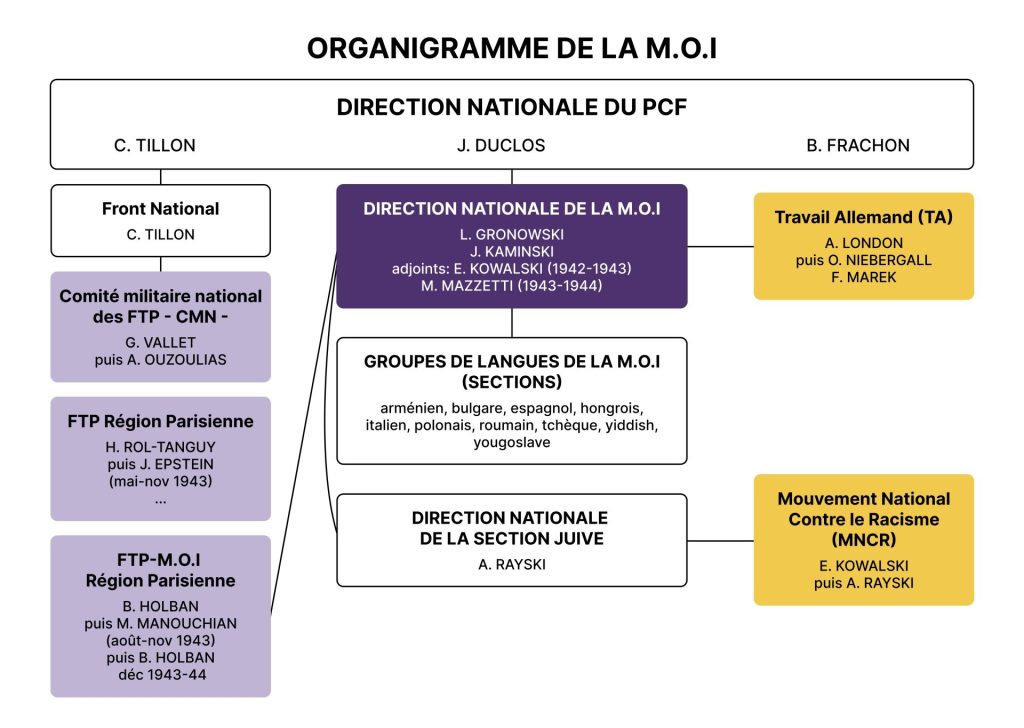
The Jewish section of the M.O.I. denounces, in its numerous underground newspapers and leaflets, the barbarity of this propaganda.
Reference:
Herf, Jeffrey, 2011, *The Jewish Enemy: Nazi Propaganda, 1939–1945*, Paris: Éditions Calmann-Lévy, “Mémorial de la Shoah: History” series