The danger posed by fascism and the menacing Nazi ideology led activists from the Jewish section of the M.O.I. to establish, in France, *La Naïe Presse* (NP), a secular Yiddish-language daily newspaper that championed democratic values.
The first issue of *Naïe Presse* (*New Press*) was published on January 1, 1934. The newspaper provided extensive coverage of the political events and struggles of the time (the Popular Front, the Spanish Civil War against Francoism).
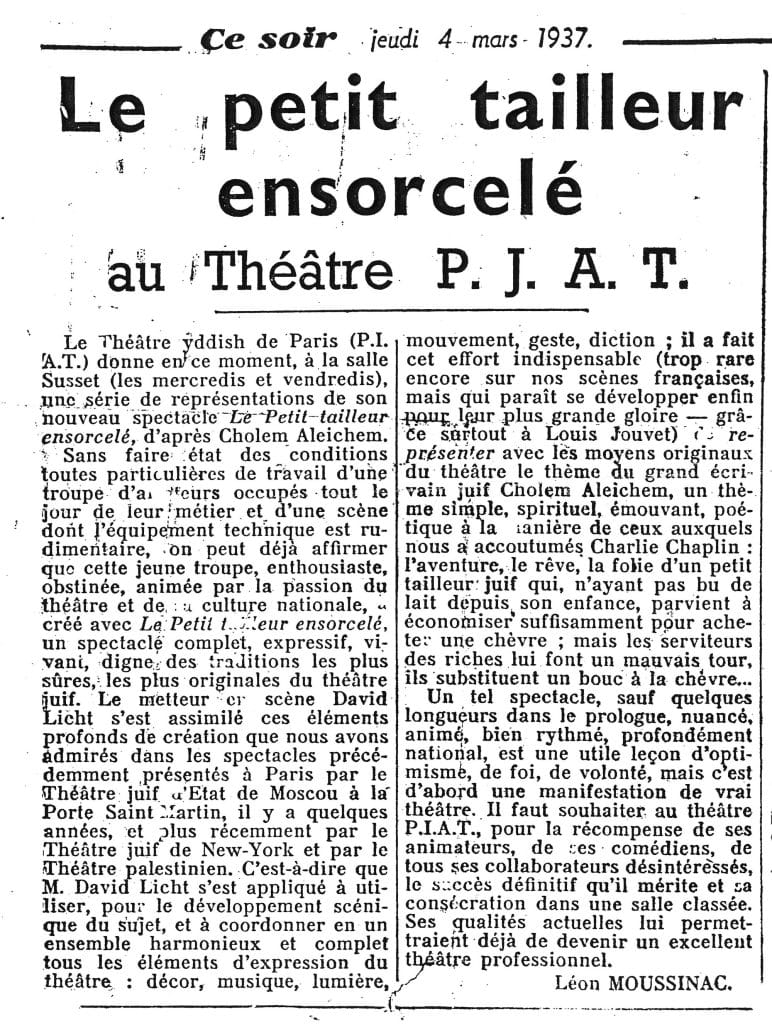
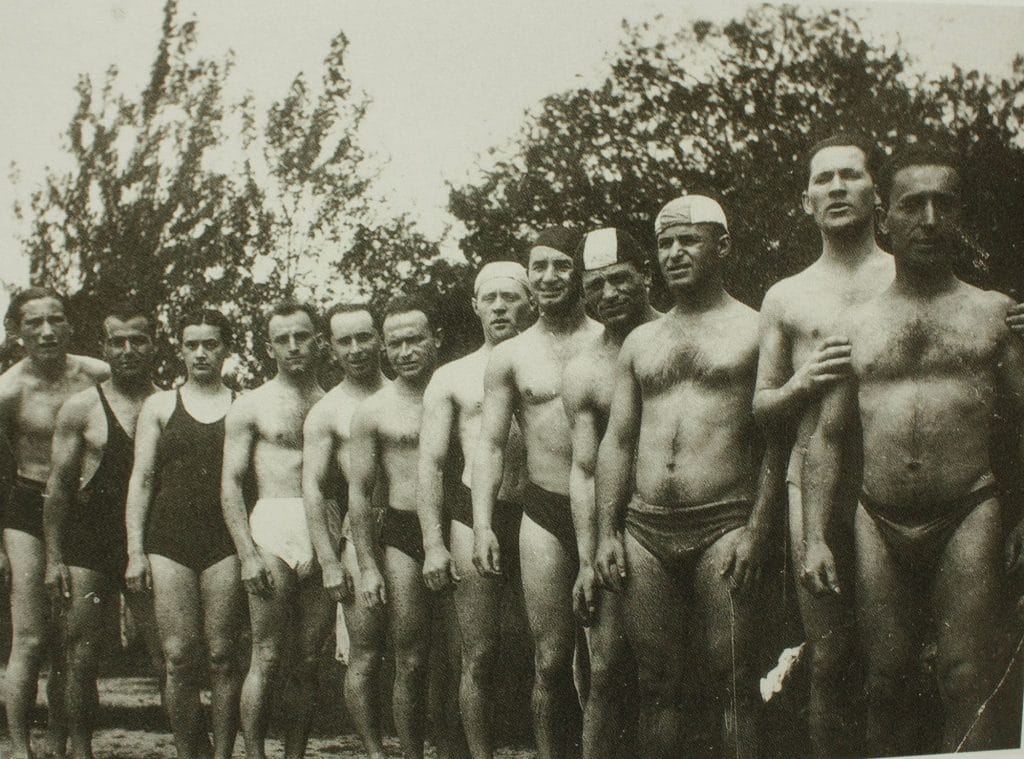
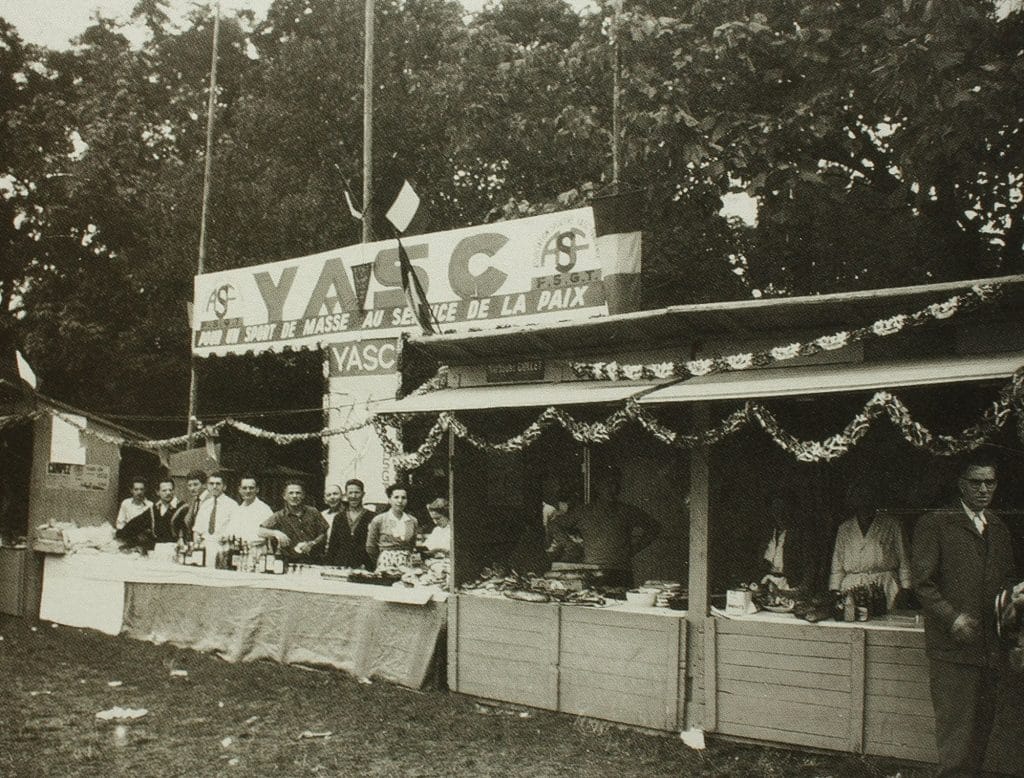
While the newspaper’s priority was the fight against fascism, it also featured numerous reports focused on the dynamic network of cultural and social organizations within the Jewish section of the M.O.I. *Naïe Presse* became the most widely read Yiddish-language daily newspaper in Europe. The editorial team included, among others, Mounié Nadler, Israël Hirszowski, Louis Gronowski, G. Kenig, and Adam Rayski. The association “Friends of Naïe Presse” distributed and supported the newspaper.
During World War II, *Naïe Presse* stood, as always, “alongside the French people.” After being banned, it reappeared briefly on July 15, 1940, under a new title, Unzer Wort ( or (Unzer Vort). Starting on September 29, 1940, and throughout the Occupation, 90 issues Underground publications were regularly issued in Yiddish under this title, which was translated into French as *Notre parole au nord* and *Notre voix au sud*. The newspaper disseminated safety instructions, reported on the crimes of the Nazis and the Vichy regime, and called for armed struggle within the Resistance.
For example, *Unzer Wort*, *Notre parole*, and *Notre voix* highlight the Warsaw Ghetto Uprising—which has been overlooked in France—and call for intensifying the fight against the Nazis.
As the mouthpiece of the clandestine Resistance organization “Solidarité”—which emerged from the Jewish section and later from the Union of Jews for Resistance and Mutual Aid (UJRE)— *Naïe Presse* (later renamed *Unzer Wort*) fell victim to Nazi persecution. Many of its leaders, editors, printers, and distributors were tortured, executed, or deported.
La Naïe Presse, a progressive newspaper, was relaunched after the war under its original title and reached the Yiddish-speaking Jewish population who had survived the war and were sympathetic to the ideals of the Resistance. A page in French was soon added to the daily edition.
In May 1965, Marceau Vilner launched a publication entirely in French: *La Presse nouvelle hebdo* (PNH), which became the monthly *La Presse nouvelle magazine* (PNM) in 1982.
With no readers left who could still read Yiddish, *Naïe Presse* ceased publication in 1993.
Reference:
Cukier, Simon; Decèze, Dominique; Diamant, David; Grojnowski, Michel, 1987, Revolutionary Jews, Messidor/Éditions Sociales.