(1878-1953)
————————
Joseph Vissarionovich Dzhugashvili, known as Stalin, was born on December 18, 1878, in Gori, Georgia. In 1898, he joined the Russian Social Democratic Labor Party (RSDLP). He joined the Bolshevik Communist faction and adopted the pseudonym Stalin, derived from the Russian word “stal,” meaning steel. He led the Union of Soviet Socialist Republics (USSR) beginning in 1922. Lenin, the communist revolutionary leader, recommended before his death in 1924 that Stalin be removed from the leadership of the Communist Party. Stalin established a personal dictatorship marked by bloody “purges” that claimed millions of victims, who were either murdered or deported to the Gulag (the network of forced-labor camps).
The purges in the army weakened the USSR in the face of Germany.
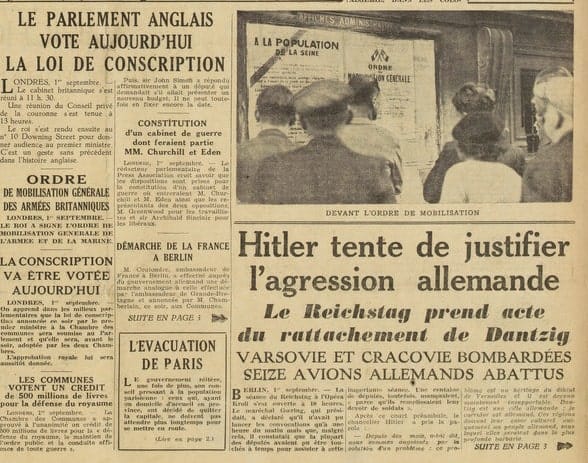
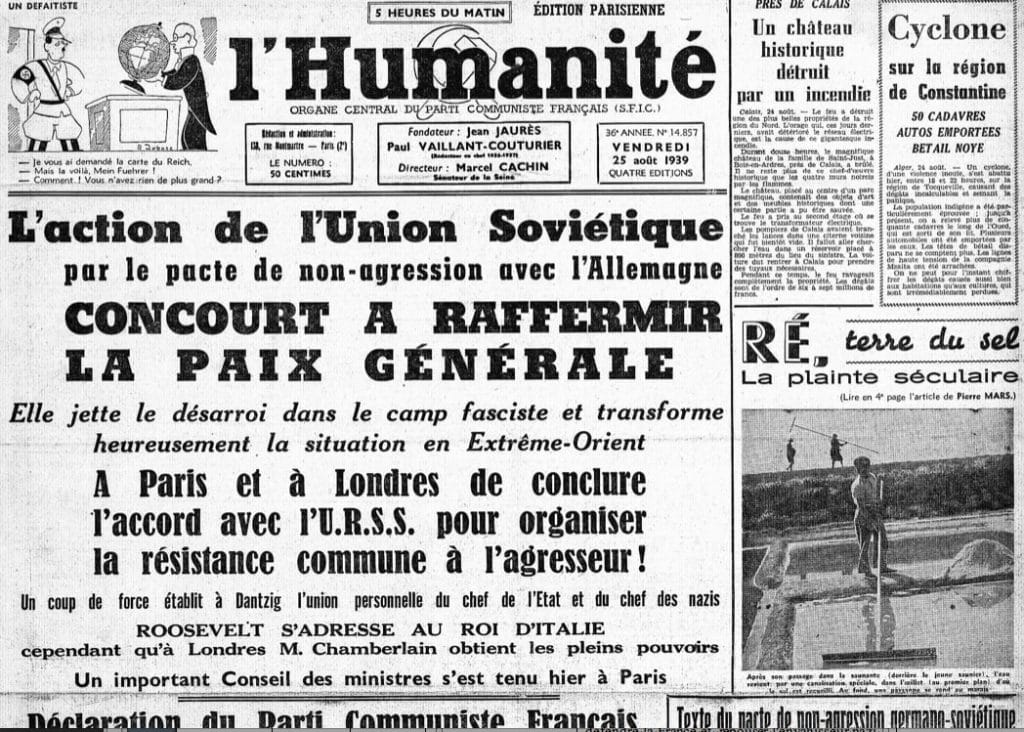
In 1939, Stalin sought to buy time before the inevitable conflict with Hitler. The Munich Agreement, which marked the democracies’ capitulation in the face of Nazism, and the signing of the German-Soviet Pact in August 1939—which sealed an unnatural alliance—were signs of Stalin’s blindness to the Nazi threat. In France, the Pact caused deep unease among many communists and activists in the Jewish section of the M.O.I.
However, at the end of the deadliest conflict in history, the battles of Stalingrad and Kursk in 1943 cemented Soviet military power and heralded Hitler’s downfall.
Soviet troops liberated the Auschwitz extermination camp on January 27, 1945.
Stalin, the USSR, and Soviet communism gained international prestige, which was quickly tarnished.
After the war, Stalin launched a new series of “purges,” including the so-called “White Coats Plot”—a conspiracy targeting the Jews who worked as doctors for Soviet leaders.
State-sponsored anti-Semitism was thus on the rise in the USSR and its satellite states. Jewish intellectuals and artists were among the victims of these “purges,” along with all opponents of the regime.
Stalin died in Moscow on March 5, 1953.
During the 20th Congress of the Communist Party of the Soviet Union in 1956, Nikita Khrushchev, attributing Stalin’s errors and crimes to the “cult of personality,” initiated the process of “de-Stalinization.” It was not until another leader, Mikhail Gorbachev, came to power that Stalinism was denounced in its entirety in the late 1980s.