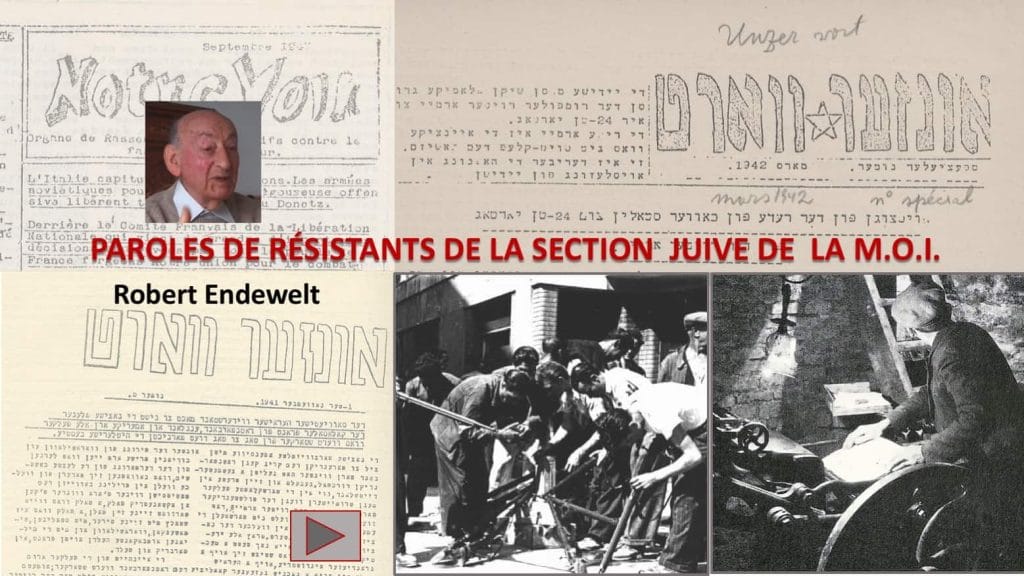
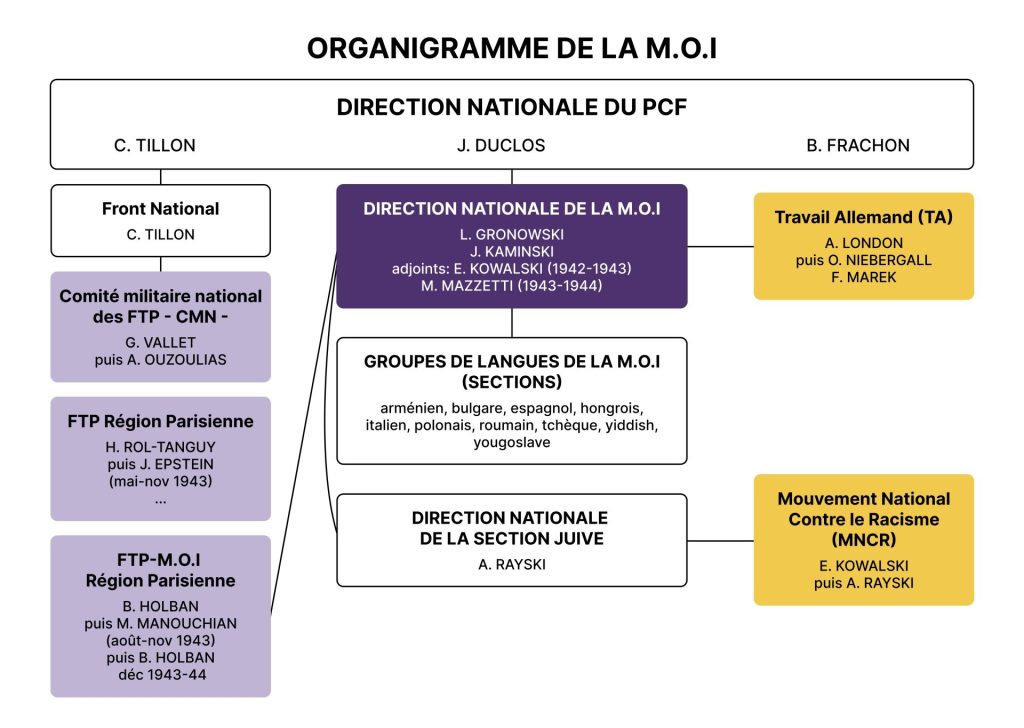
The Communists—and in particular the combat groups of the Jewish section of the M.O.I., who had become involved in the armed Resistance at an early stage—opposed the strategy of waiting for the right moment, as advocated by General de Gaulle.
For de Gaulle, who had taken refuge in London and was the leader of the overseas Resistance, the central role of the Resistance fell to the Free French Forces—that is, to the French troops fighting, in particular, alongside the British and Americans.
According to Charles de Gaulle, the role of the Internal Resistance is:
- to maintain opposition among the population to the Germans and the collaborationist Vichy government,
- to keep London informed of the domestic situation.
While attacks against Nazi occupation forces were legitimate, according to General de Gaulle, they were not advisable, given the balance of power and the human cost they entailed. With this in mind, members of the internal Resistance were called upon to wait for the Allied landings before participating militarily in the Liberation in 1944.
The Communists as a whole—and the Jewish section of the M.O.I. in particular—rejected the policy of “waiting for the right moment.” They became involved in the armed struggle early on, beginning in 1941. The French Francs-Tireurs and Partisans (FTP) and the FTP-M.O.I. were operational as early as 1942.
Their struggle against the occupying forces will continue until hostilities end.
Reference:
Olivier Wieviorka, 2013, *History of the Resistance*, Paris , Perrin