The French Communist Party (PCF) was formed following a split within the Socialist Party (SFIO) at the Tours Congress on December 30, 1920. Two-thirds of the members voted in favor of joining the “Communist International” (CI), which brought together the communist parties supporting the new Soviet regime.
The New French Communist Party, the French section of the Communist International, continues to strive for the creation of a classless society where equality and social justice prevail.
The Communist Party has always aimed to establish social justice in a classless society through the communal ownership of the means of production. This dream of “universal brotherhood” appealed to many Jews who had taken refuge in France, having fled poverty, anti-Semitism, and fascism in their countries of origin.
But the worsening international situation, the rise of the far right in Germany, and the consolidation of Mussolini’s power in Italy were causing increasing concern for the Soviet Communist Party and the Communist International (Komintern in Russian), which guided the policies of all communist parties.
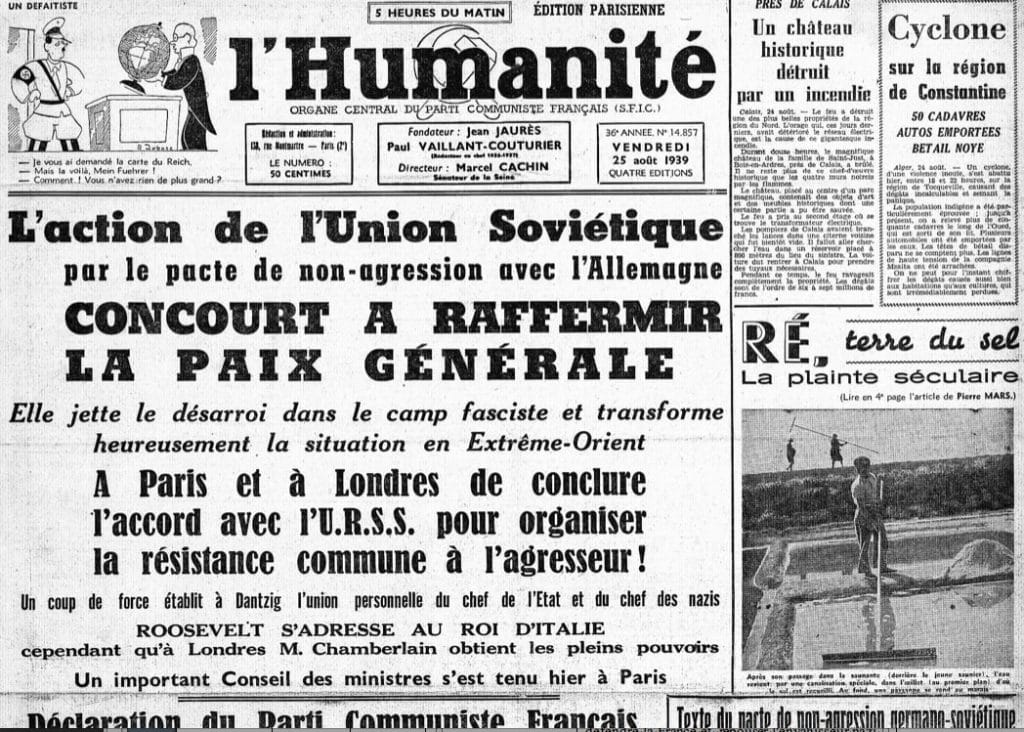
In the summer of 1934, the PCF launched a new policy of openness and chose to emphasize the “French nation,” identified with the Revolution of 1789–1793 and the Popular Front, which quickly became divided during the Spanish Civil War. In France, amid a climate of heightened social violence, anti-communism mingled with anti-Semitism and xenophobia. The PCF nevertheless attempted to embody the enduring spirit of the Popular Front. But by the end of 1939, the Party—isolated and forced underground—was thrown off balance by the signing of the German-Soviet Pact.
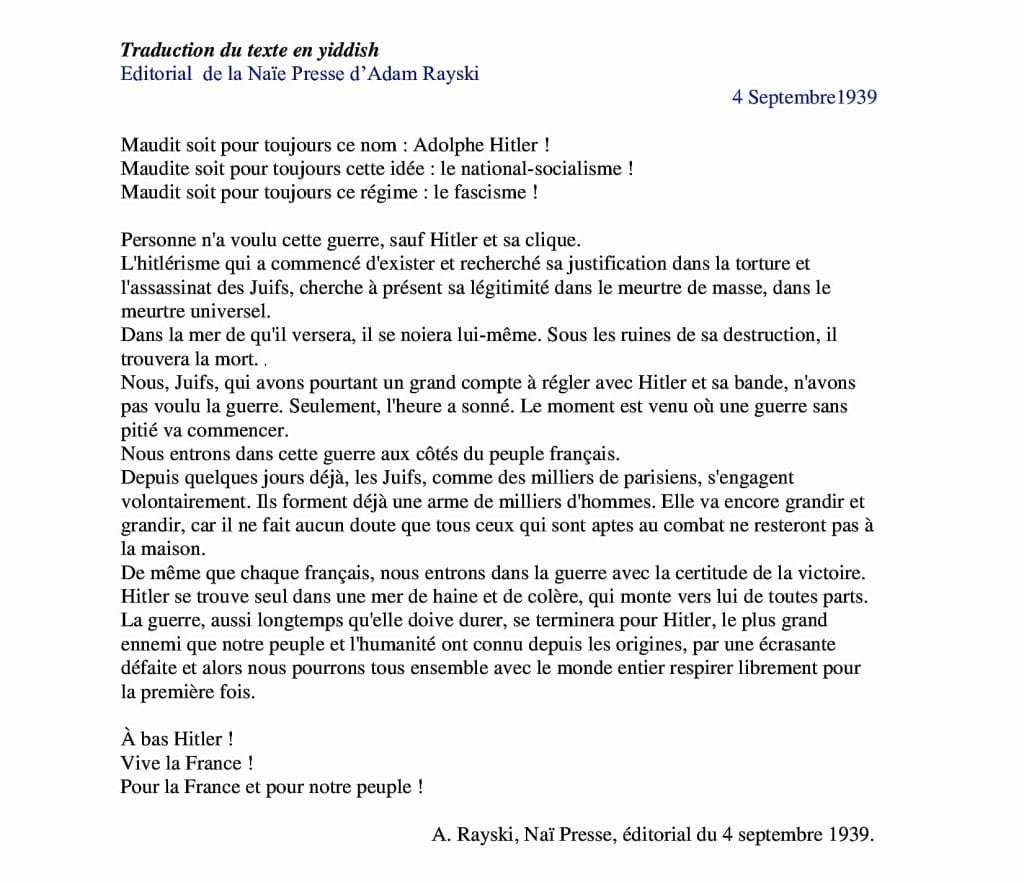
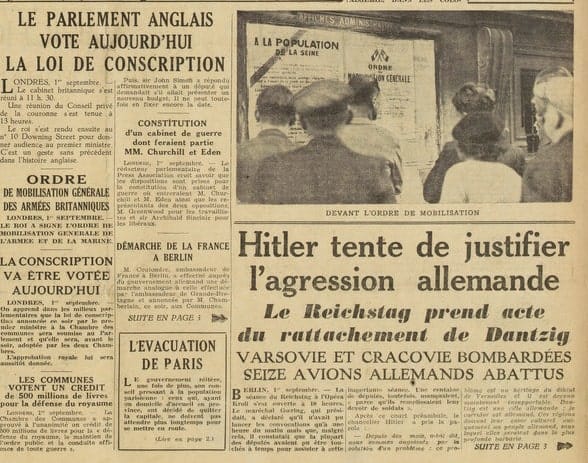
The PCF initially advocated continuing the “anti-fascist struggle against the aggressors and, above all, German fascism,” but in early September 1939, the Comintern imposed a new official line describing the war as a conflict between “imperialist” powers that did not concern the peoples. The PCF disseminated this line among its members.
In July 1940, the Party—now operating underground—emphasized national independence and issued an appeal titled “To the Peuple de France!” A year later, it called for the formation of “a broad national front” against the occupying forces.
After the German-Soviet Pact was broken in June 1941, the PCF, along with its Organisation Spéciale (OS) groups and the Communist Youth, launched an armed struggle against the Nazis. In 1942, its FTPF and FTP-M.O.I. detachments developed a highly structured armed struggle.
The PCF committed to a policy of uniting the domestic Resistance—from the Communists to the Republican right—when the CNR was established in 1943.
Throughout the struggle against the Nazis, the underground Communist Party was at the heart of the Resistance movement, embodying both the social dimension of the struggle and national demands.
After the Nazi Occupation, the PCF played a role in the democratic and social reconstruction of France and, by the end of the war, had come to occupy a central place in French society.
References:
— Denis Peschanski in: F. Marcot (ed.) 2006, Historical Dictionary of the Resistance. Robert Laffont.
— Martelli, Roger; Vigreux, Jean; Wolikow, Serge, 2020, *The Red Party: A History of the PCF, 1920–2020*. Armand Colin