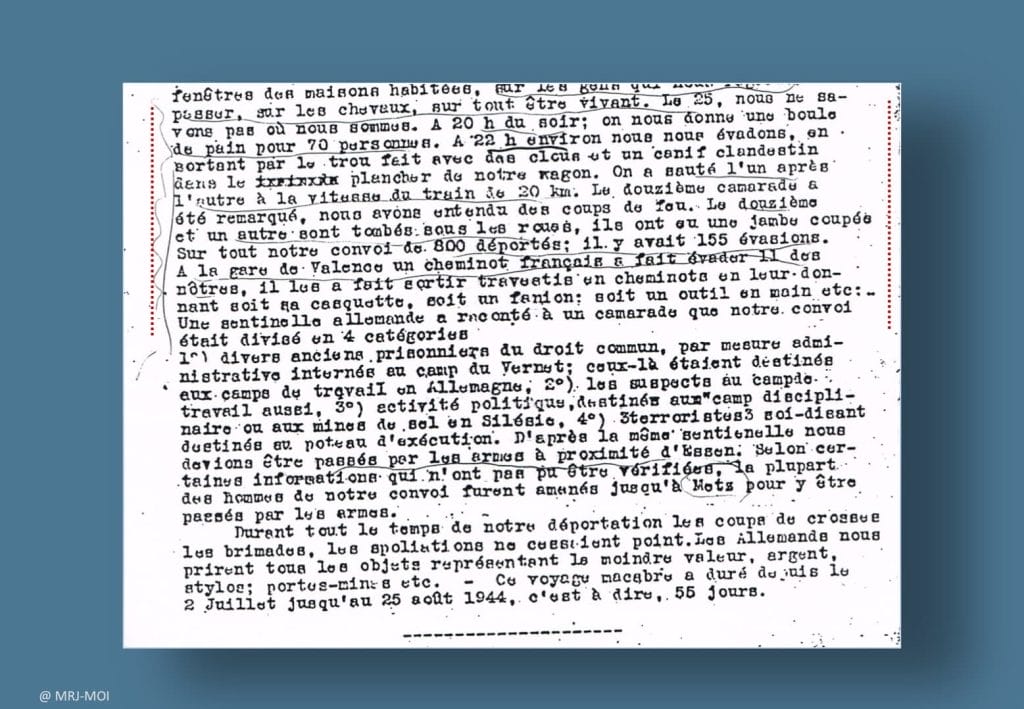
On June 26, 1933, Theodor Eicke, a longtime member of the SS, was appointed camp commander by Himmler, a high-ranking Nazi official. A regime of terror was established at Dachau, and the foundations of the Nazi concentration camp system were put into place there.By 1940, the number of inmates had reached 10,000 and continued to grow steadily. Initially, those interned were opponents of Nazism, mainly communists; followed by Bavarian Jews, Roma, anti-Nazi clergy, homosexuals, and Soviet prisoners of war. The unused gas chamber was replaced by a firing squad: those sentenced to death were shot in the back of the neck.
The camp’s entrance gate bears the inscription ” Arbeit Macht Frei ” (Work Sets You Free)…
“Free” workers—a forced, enslaved, and abused labor force—kept German companies running. Living conditions were appalling (scientific experiments on prisoners, abuse, poor hygiene, malnutrition, disease, and epidemics) and led to a very high mortality rate.
A clandestine “International Committee” was made up of prisoners representing the various nationalities interned at the camp. In April 1945, a German Communist prisoner on the Committee managed to help a few men who were still able-bodied escape. Informed by them of the camp’s location, American soldiers discovered 1,600 prisoners in Dachau who had been reduced to skeletal remains.
References:
— Stanislav Zámečník (translated from Czech by Sylvie Graffard), 2013, *That Was Dachau: 1933–1945*. Published by Cherche midi, “Documents” series.
— Rayski Adam, supplement to *La Lettre des Résistants et Déportés Juifs*, No. 46