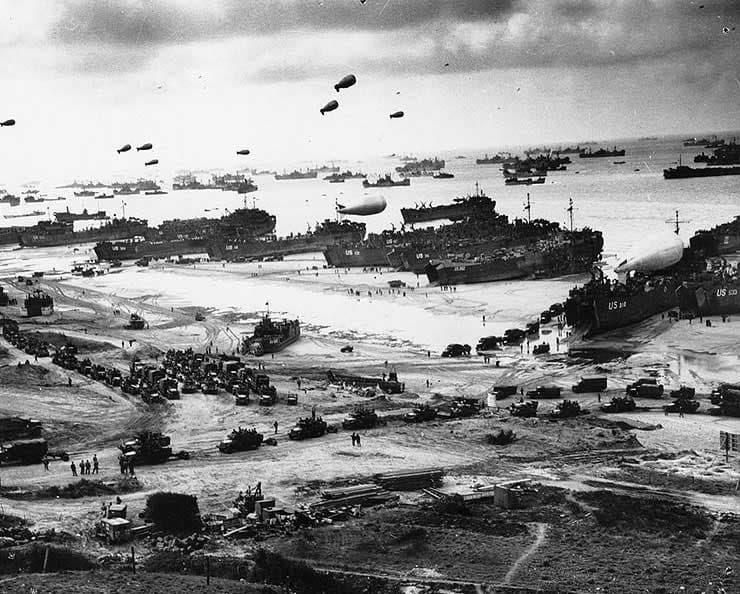
The Normandy landings (codenamed “Operation Overlord” by the Allies) were one of the largest military battles fought by Allied forces during World War II. The operation was launched at dawn on June 6, 1944, against the German army. Its goal: to open a front in Western Europe and relieve the Soviet military effort.
“Neptune” was the first phase of “Operation Overlord,” which was primarily aimed at opening a new front, as desired by the Soviets. On June 1, 1944, the BBC broadcast a coded message to the Resistance networks warning them of the landing ; the message was taken from a line in a poem by Verlaine : “Les sanglots longs des violons de l’automne.”
On the evening of June 6, General de Gaulle called for “action by the Resistance forces.” Thousands of men joined the maquis.
The Francs-tireurs et Partisans (FTP), the Corps Francs, and the Maquis did not wait for “D-Day” to launch their armed struggle. Eight months earlier, on October 4, 1943, Corsica had already liberated itself through an uprising by the Resistance.
Across the country, the plans drawn up in London were put into action on the evening of June 5, 1944, a few hours before the D-Day landings. The “Green Plan” called for the sabotage of railroad lines, the “Turtle Plan” aimed to disrupt or hinder road traffic, and the “Violet Plan” targeted telecommunications. The goal: to cut off German communications and delay the arrival of reinforcements as much as possible. The Resistance played a key role by sabotaging enemy railroads and telephone lines. The launch of the operations was announced on the BBC through various messages, such as: “The carrots are done, ” “The cat is out hunting,” and “Wound my heart with a monotonous languor.”
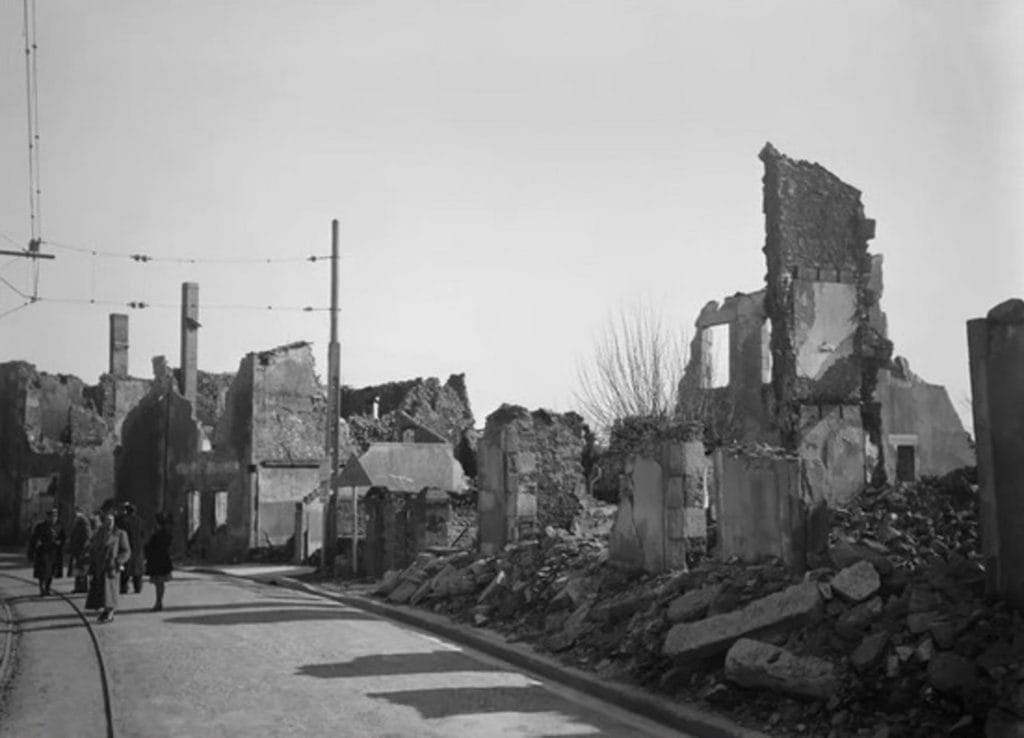
More than 1,000 railway lines were cut during the summer of 1944, reducing train traffic by half. Local resistance groups provided valuable intelligence on the location of German troops and their equipment. In retaliation for the sabotage operations, the Germans executed 650 members of the Resistance and hostages from Normandy.
According to General Eisenhower, commander of the Allied forces in Europe, “the FFI played a significant role in the preparations for the Allied landings in Normandy and in the liberation of France.”
The Allied landings in Normandy—both amphibious and airborne—accelerated the unification of the Resistance forces, which liberated major cities, such as Paris on August 24.
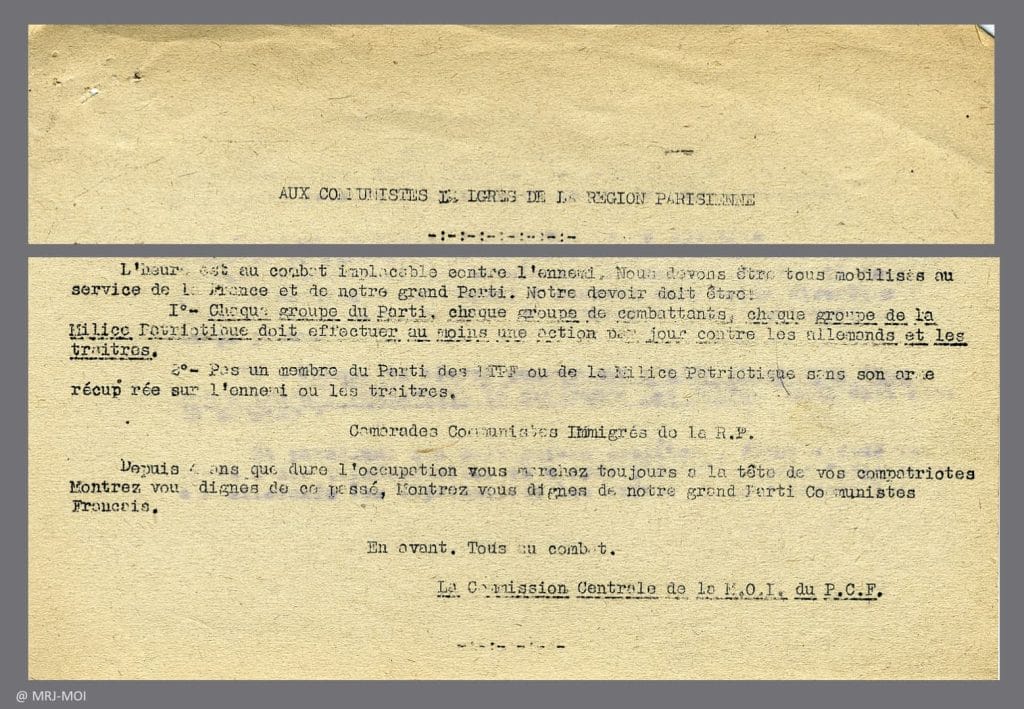
The FTP-M.O.I., which had been integrated into the Francs-tireurs et partisans (FTP) since May 1943, played a key role in the liberation of France’s cities.
References:
— Christian Bougeard, 2006, “June 6, 1944: The Normandy Landings,” in F. Marcot (ed.), *Historical Dictionary of the Resistance*, Éditions Robert Laffont.
— Olivier Wieviorka, 2007 , History of the Normandy Landings. From the Origins to the Liberation of Paris (1941–1944), Éditions du Seuil