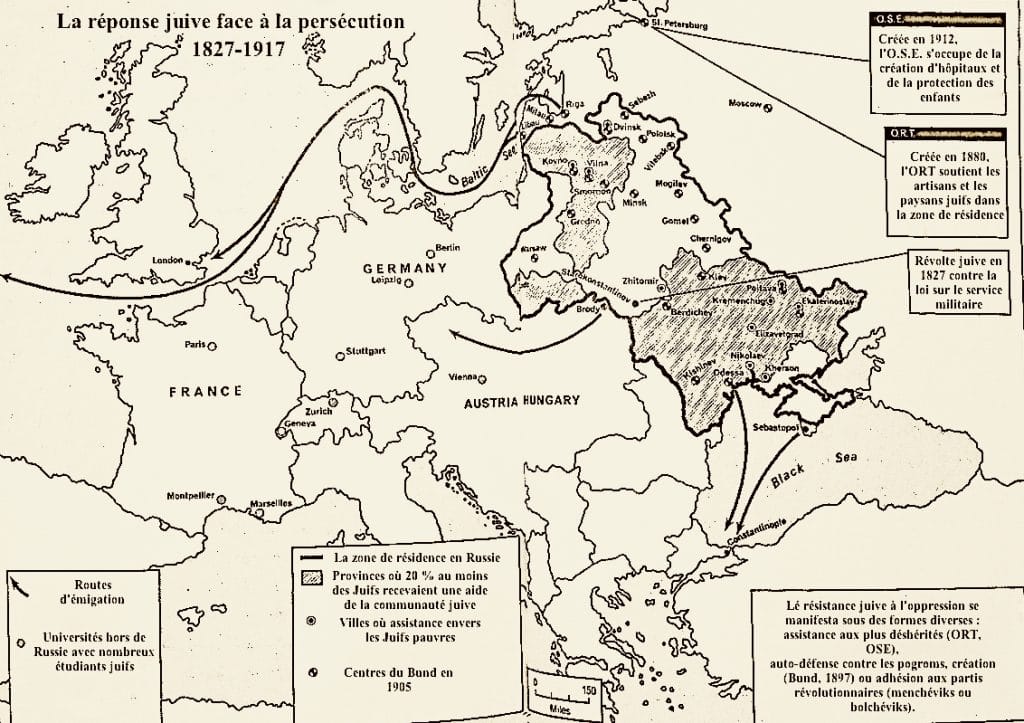
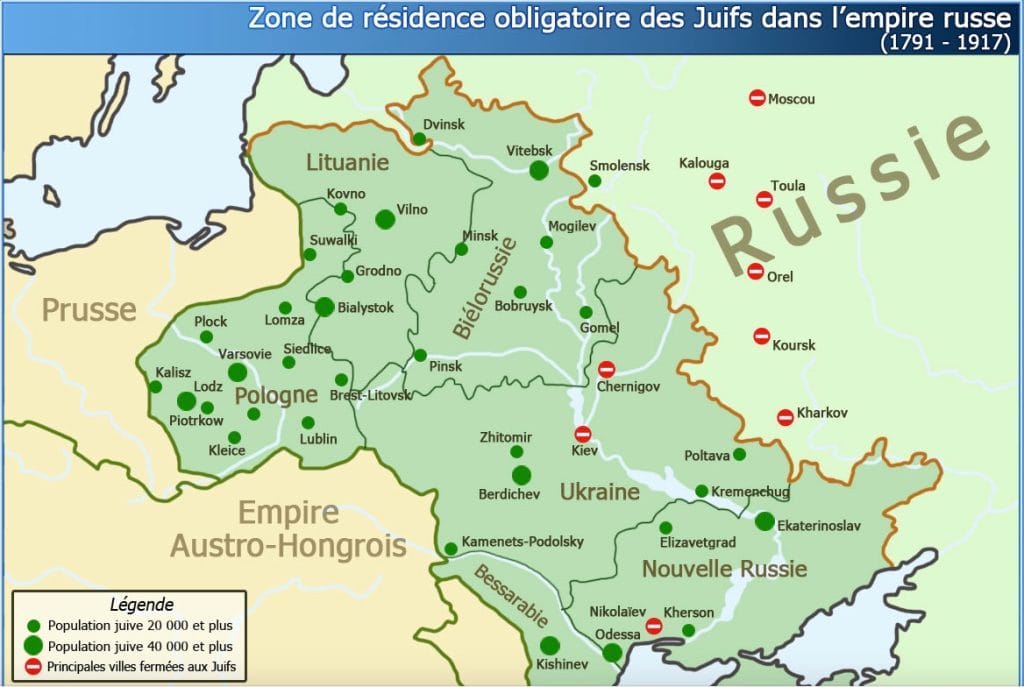
These regions and countries, with their turbulent histories, were broken up and reconfigured in the wake of the upheavals caused by World War I and the Bolshevik Revolution. Many Jews from Eastern Europe were forced to emigrate. Others remained in the new sovereign states that now divided Central and Eastern Europe, having emerged from the partition of the former empires (Germany, Austria-Hungary, Russia).
In the wake of the peace treaties of 1919–1920, Europe took on a new configuration with the emergence of new states: Poland, Czechoslovakia, Hungary, Yugoslavia, the Baltic states, and Finland. Ukraine and Belarus became part of the Soviet Union. All of these states had a significant Jewish population, ranging from 10% to 25% of the total population.
These are divided into Ashkenazim, who speak primarily Yiddish (hence the term “Yiddishland”), and Sephardim, who live in Greece and Bulgaria and speak mainly Judeo-Spanish (or Ladino) and the language of their country. Not all Hungarian Jews speak Yiddish.
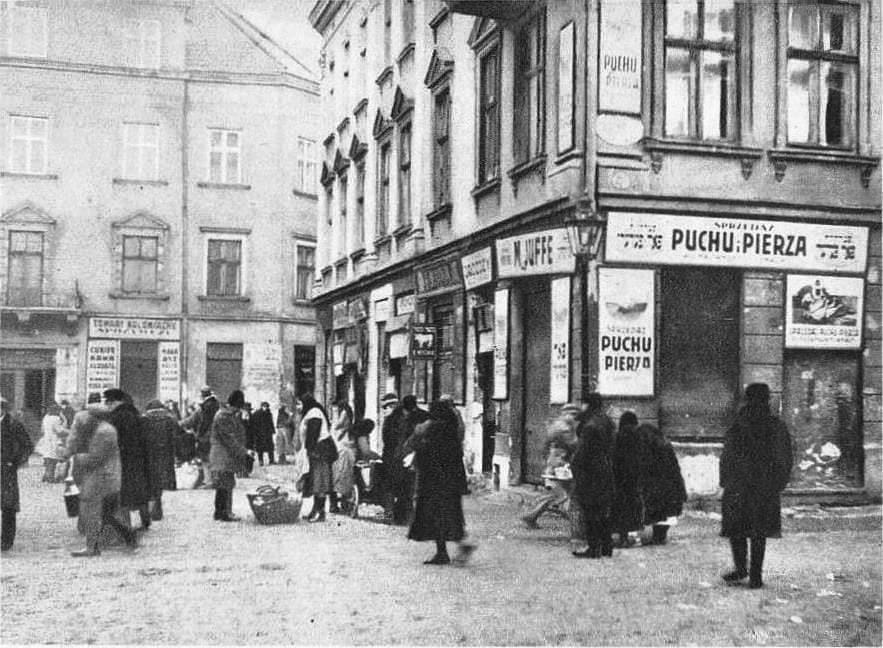
Before World War II, these communities included a Jewish bourgeoisie holding prominent positions in commerce, finance, and the press, as well as an intellectual elite. This Mittel Europa (Central Europe) produced some of the greatest names in literature and music. Vienna shone at the center of the extraordinary artistic revival of the interwar period. Czernowitz (in Bukovina under Romanian control, now in Ukraine) saw intense literary and artistic production marked by German-Yiddish bilingualism. Similarly, in Lithuania, under Polish rule, Wilno—known as the “Jerusalem of the North”—was a brilliant center of Yiddish culture.
In all these countries of Central and Eastern Europe, the participation of many Jews in the revolutionary events fueled the theory of “Judeo-Bolshevism” and an alleged international Jewish conspiracy. As early as 1920, Admiral Horthy’s Hungary enacted its first legislation restricting the civil rights and freedoms of Jews.
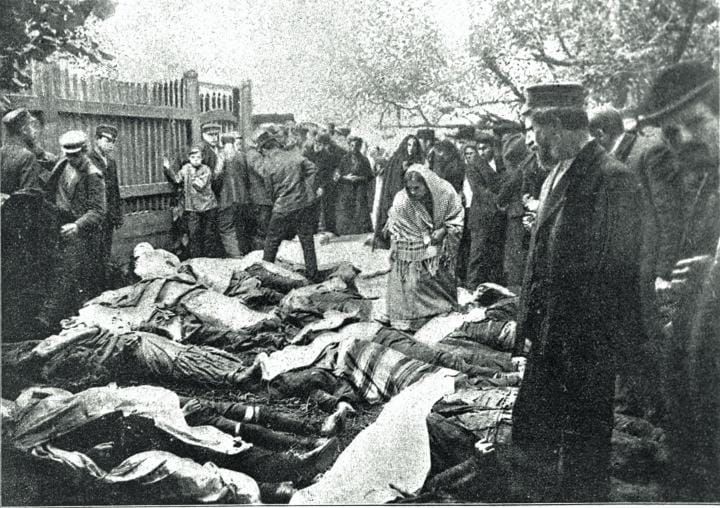
Anti-Semitism surged under authoritarian and fascist regimes (the Arrow Cross Party in Hungary, the Iron Guard in Romania, the Colonels’ regime in Poland, etc.). They subjected Jews to the full brunt of policies of exclusion and repression, often accompanied by violence and pogroms.
Reference:
Sellier, André & Sellier, Jean, (2014), Atlas of the Peoples of Central Europe, Éditions La Découverte, Paris.