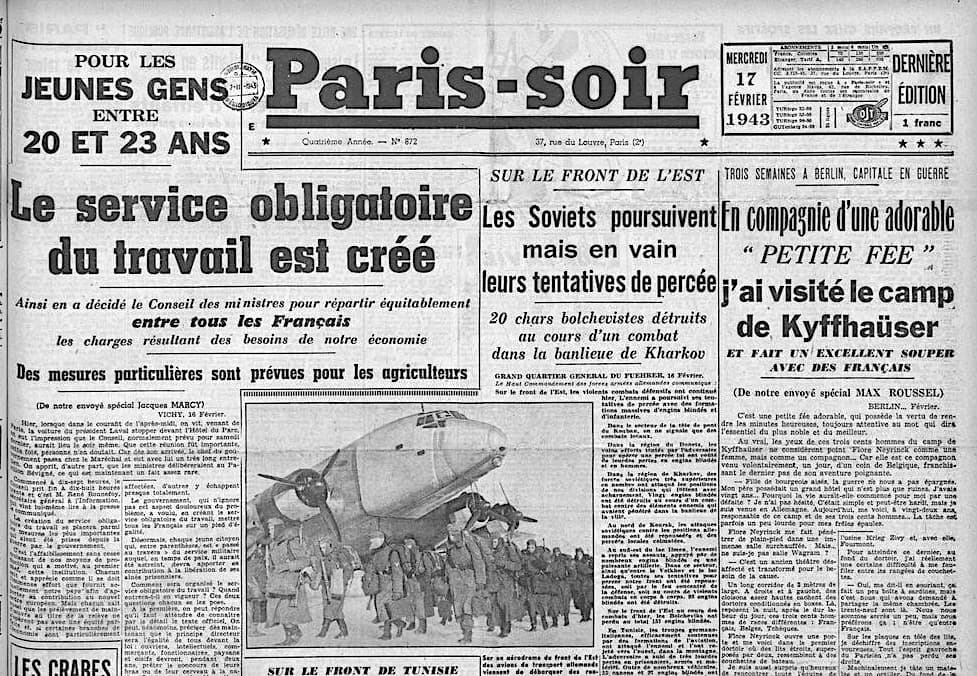
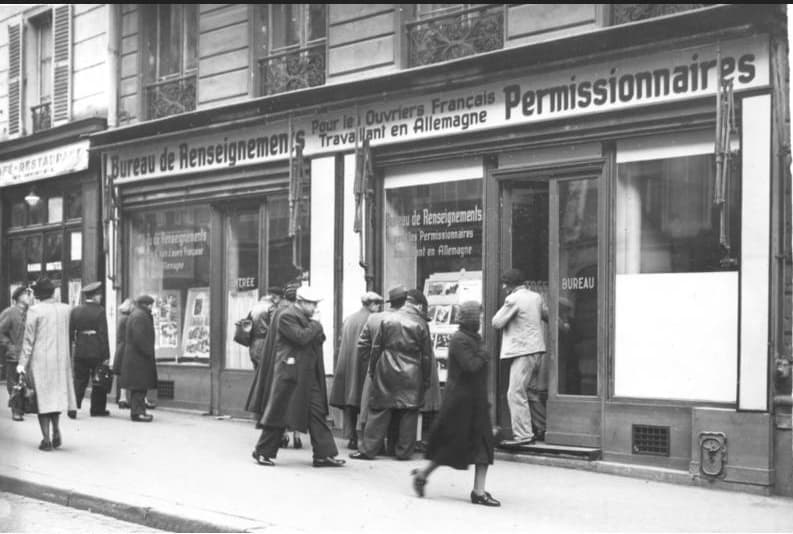
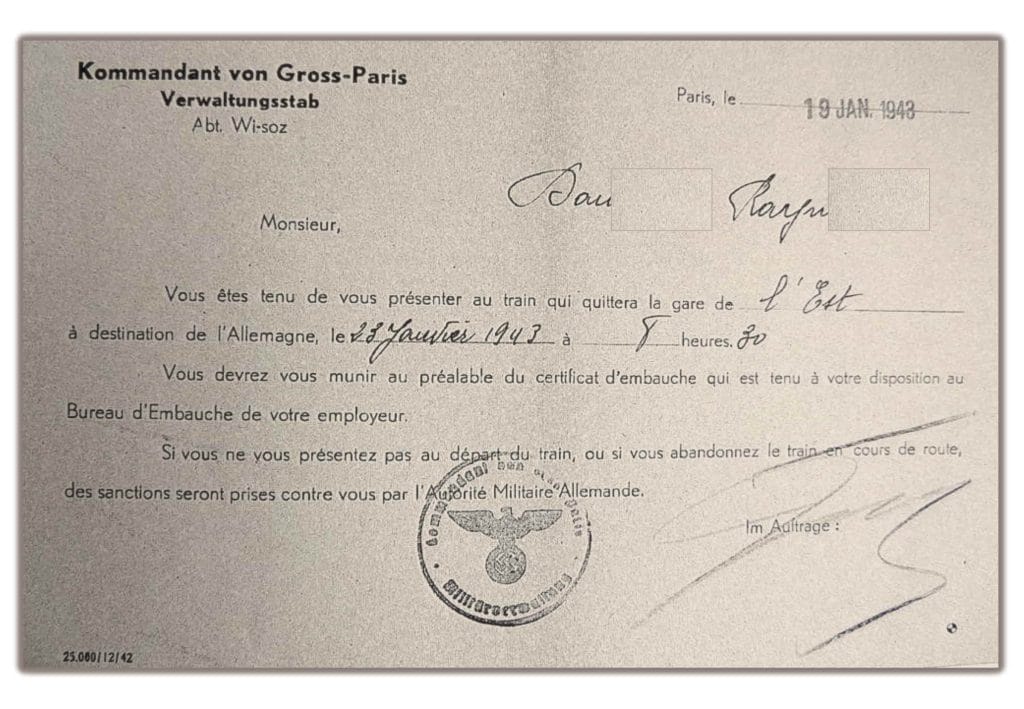
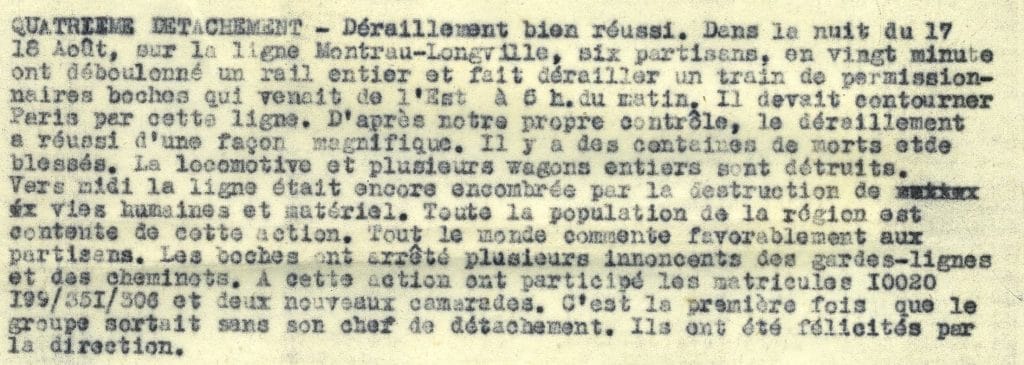
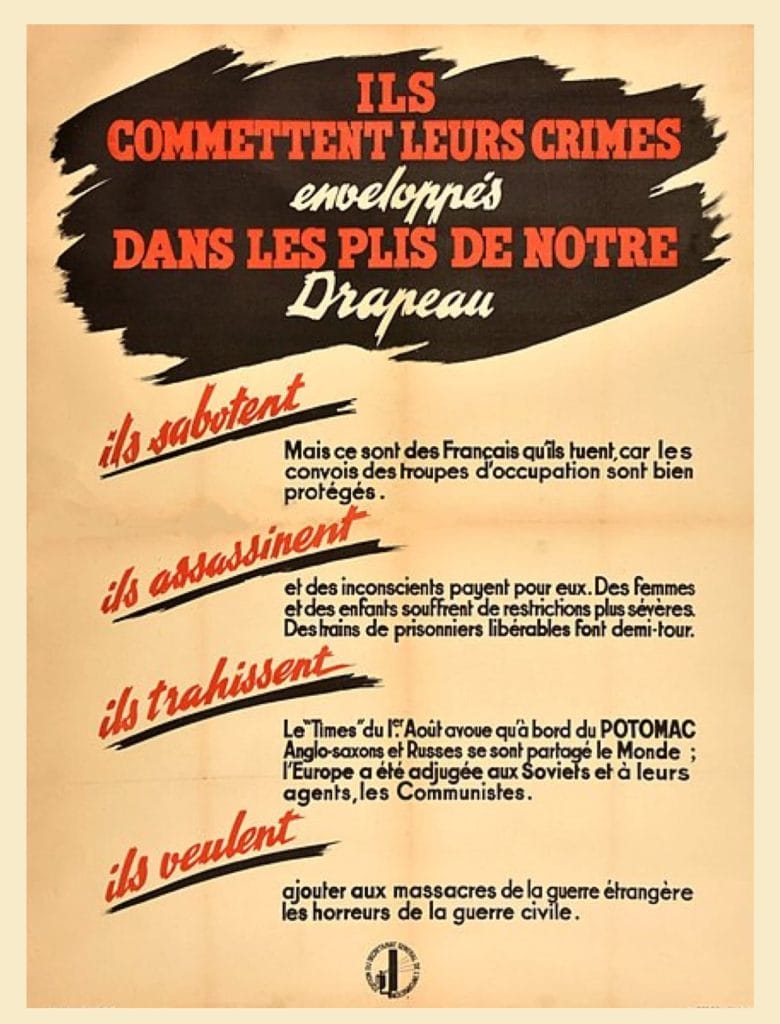
The STO was the conscription of several hundred thousand French workers forced to work in Germany. Established by the law of February 16, 1943, the STO had a clear objective: to support the struggling German economy with a young and skilled workforce.
The STO, established by the law of February 16, 1943, was intended, during the German Occupation of France, to conscript several hundred thousand French workers, who were quickly transferred to Germany. According to the Nazis and their Vichy collaborators, young French people were expected to provide skilled labor and contribute to Germany’s war effort, as its troops were suffering setbacks on the Eastern Front.
Following the limited success in 1942 of the “Relève” program (150,000 skilled workers sent to Germany in exchange for the return of 50,000 prisoners of war), the Occupation forces became increasingly demanding. On February 16, 1943, Pierre Laval, head of the Vichy government, established the Compulsory Labor Service (SOT). The acronym SOT, which drew ridicule, was replaced by STO (Compulsory Labor Service). Once again, the Vichy regime preempted the Occupier’s demands. Unlike other Europeans under Nazi rule, French workers were conscripted by a law of their own state and not by a German order.
Panicked by what they call “deportation,” the young people turn to members of the Resistance, who provide them with fake papers, smuggling routes, and “hideouts.”
The demands of the Nazi, Fritz Sauckel, who was in charge of the STO, were growing. Nicknamed the “slave trader of Europe” for organizing the transfer of workers from all the countries under Hitler’s Occupation to Germany, he came into conflict with his superiors, who no longer supported him. Nazi leaders in France feared that the French economy—from which they were profiting—would dry up, and they dreaded public discontent.
Beginning in the summer of 1943, of the 200,000 young French people who refused to participate in the STO, approximately 50,000 chose to join the underground resistance and became part of new organizations known as the maquis. Inthe eyes of a large part of the population, the Resistance would come to enjoyunquestionable support and legitimacy.
Cristina Boïco, head of the FTP-M.O.I. intelligence service in the northern zone, planned an assassination attempt against SS officer Julius Ritter, Fritz Sauckel’s representative and head of the STO in France. Ritter was shot and killed on September 23, 1943, by a team led by Missak Manouchian and consisting of Léo Kneler, Marcel Rayman, and Celestino Alfonso.
On February 25, 1944, the Paris offices of the General Commissariat for Compulsory Labor were set on fire, and 200,000 worker records went up in smoke.
It is estimated that 1,500,000 French citizens—including those conscripted into the STO, prisoners of war, and volunteers—provided labor to Germany. Due to the zeal of the Vichy regime, France was the third-largest supplier of forced labor to Nazi Germany, surpassed only by the USSR and Poland.
On October 16, 2008, in France, former STO conscripts were officially recognized as “victims of forced labor in Nazi Germany.”
References:
— Arnaud Patrice, 2010, *Les STO: A History of the French Conscripts in Nazi Germany*, Paris, CNR Éditions. Reprint, series, 2014, Paris, Biblis.
— Raphaël Spina, 2017, *History of the STO*. Perrin