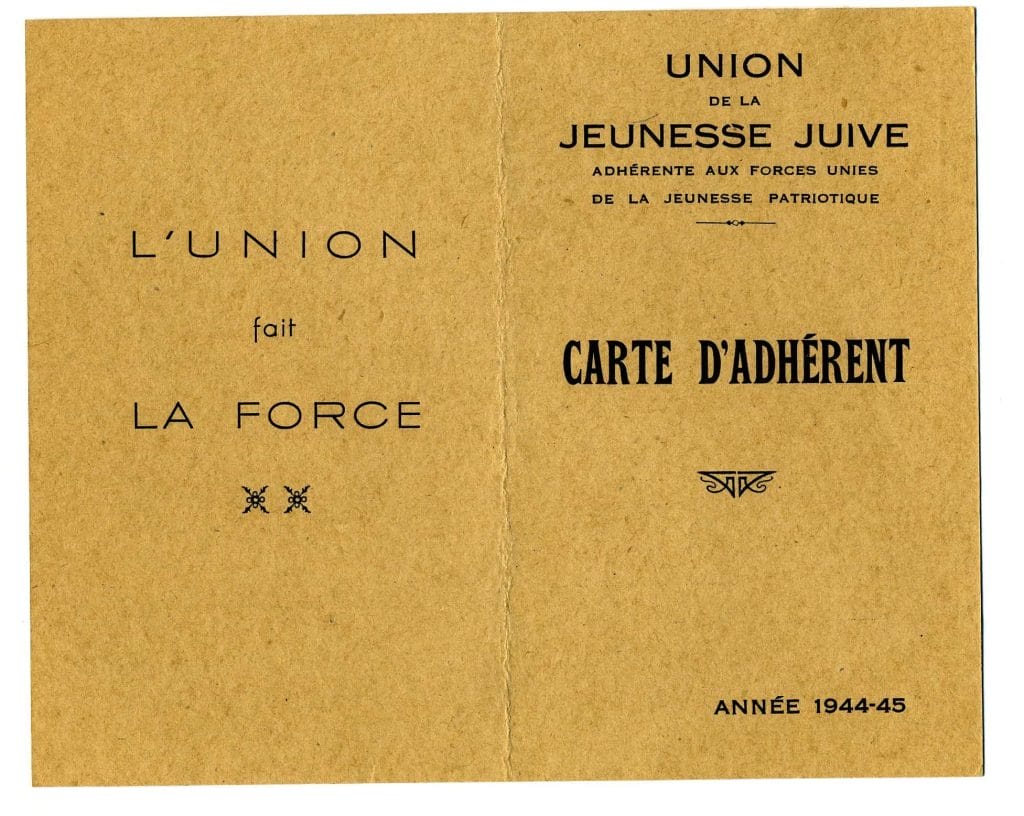
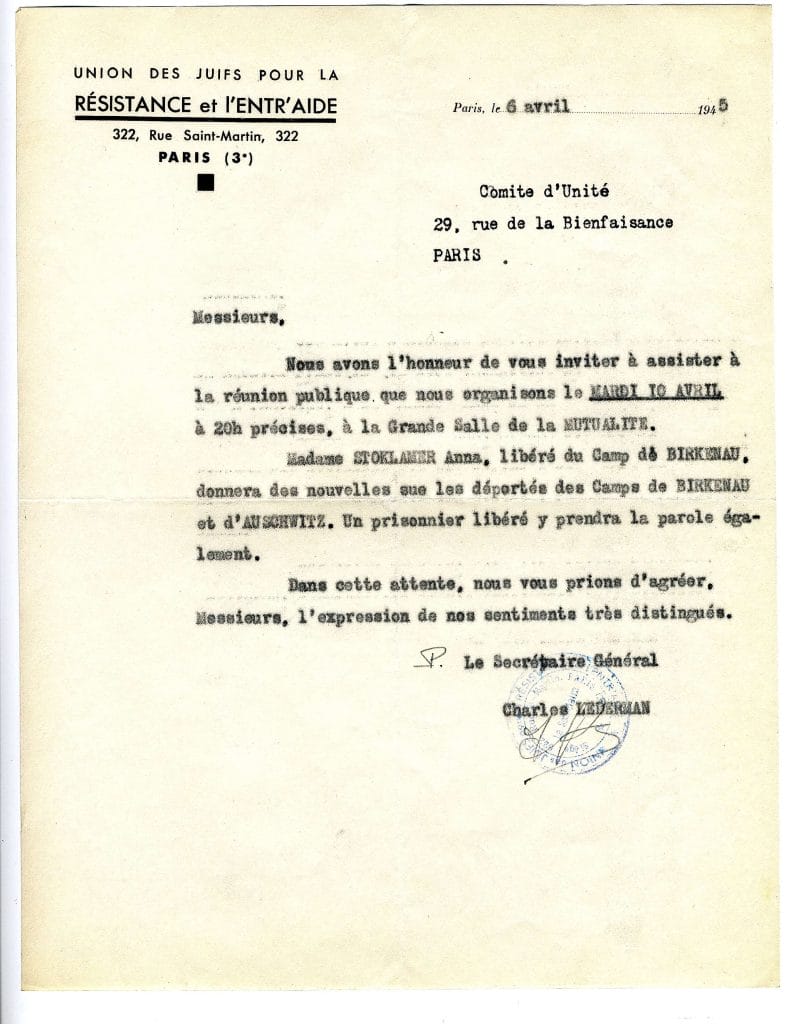
An organization founded in 1945 by the Union of Jews for Resistance and Mutual Aid (UJRE), tasked with caring for Jewish orphans whose parents had been exterminated during the war.
As soon as hostilities ended, the first committee of leaders tasked with caring for Jewish orphans was led by Joseph Minc. It consisted of four former M.O.I. resistance fighters—Cécile Cerf, Sczmulek Farber, Jeanne Pakin, and Sophie Schwartz—and two educators, Isidore Bernstein and Louba Pludermacher. The new organization, founded in 1945, was named the Commission Centrale de l’Enfance under the UJRE and the Union of Jewish Women. It became known, more colloquially, as the CCE. In 1946, Joseph Minc, the secretary-general, was succeeded as head of the CCE by Sophie Schwartz and then by Anna Vilner until the Commission was dissolved.
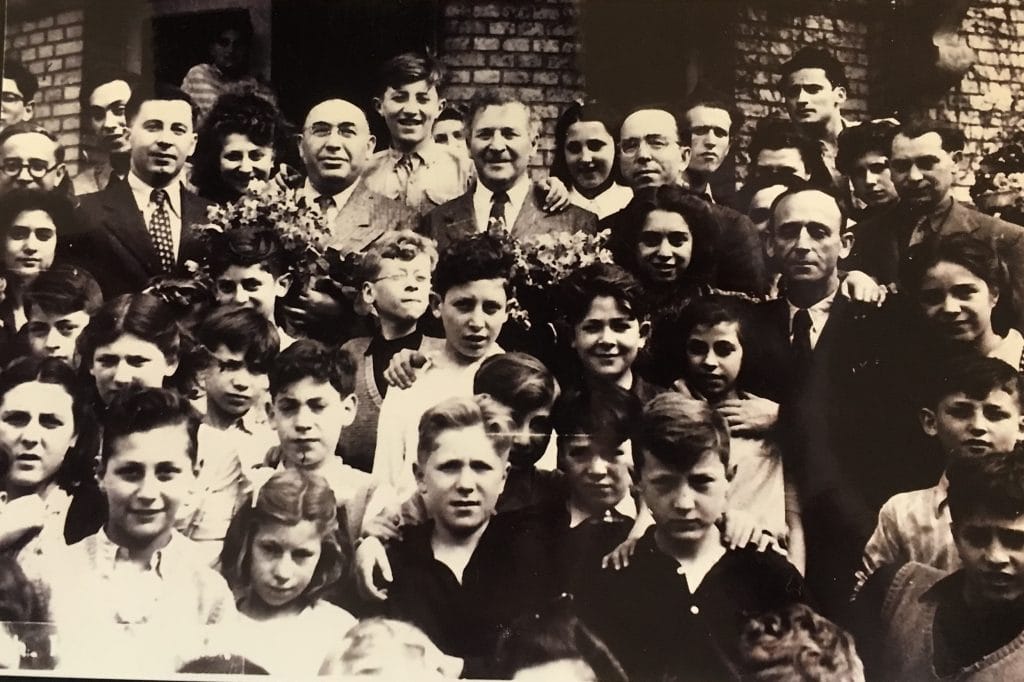
The first home for children of those who had been executed or deported initially took in orphans in Montreuil-sous-Bois (in what is now Seine-Saint-Denis), but very soon, eight other children’s homes, known as “foyers,” were established between 1945 and 1956. The last home closed in 1958. The most iconic was the Denouval manor in Andrésy, in the Paris region.
These nine homes provide shelter for Jewish orphans, ranging in age from infancy to adolescence. Between 500 and 600 children are cared for and educated there. The homes operate thanks to numerous fundraisers and one-time donations.
A progressive spirit animates the CCE’s children’s homes: a revolutionary and secular ideal, innovative pedagogy (close to the ideas of Makarenko, Korczak, Montessori, and the Éducation Nouvelle movement), and a celebration of the heroes of the Resistance, embodied by the fighters of the Jewish section of the M.O.I. Summer camps are located throughout France. Each year, 2,500 Jewish children—both orphans and non-orphans—attend these camps, where they are introduced to the great Yiddish-language writers and inspired to dream of a “bright future.” One of the most representative camps is the one in Tarnos (Landes), which was established for health reasons.
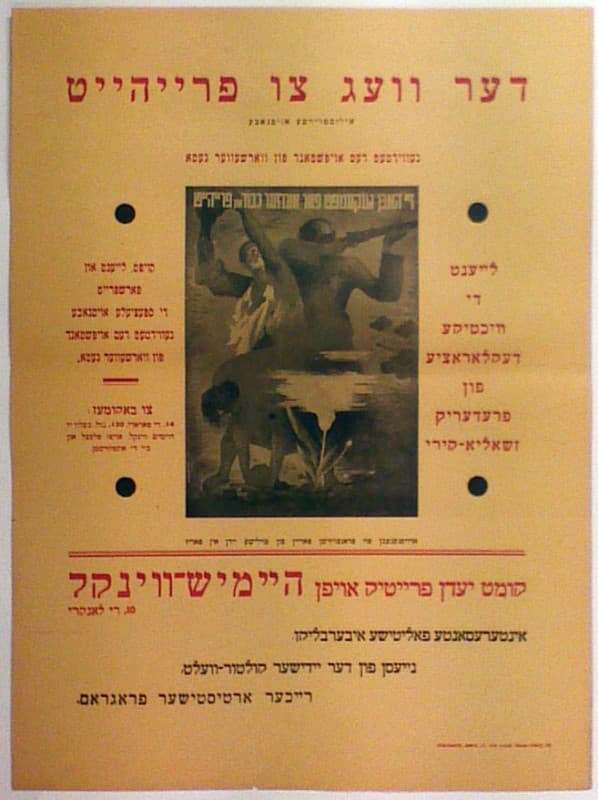
At the same time, the CCE organizes patronage events while the Yiddish language still echoes at its headquarters on Rue de Paradis (10th arrondissement, Paris).
A large festival is held every year to benefit social and charitable causes. At the CCE, a committed belief in a just and democratic world goes hand in hand with a commitment to ahumanistic Jewish identity, free from any form of communalism.
The CCE ceased operations in 1988.
Alumni of the children’s homes founded the AACCE (Association of Friends of the Commission Centrale de l’Enfance) in 1989–1990 to preserve the legacy of the CCE and keep alive the memory of this unique educational experience.
References:
– Collective work, 2022, The Commission Centrale de l’Enfance, *From Tears to Laughter: The History and Legacy of a Jewish, Secular, and Progressive Organization, 1945–2020*. Published by Le Cherche Midi-AACCE.
– Wolikow, Serge, and Lassignardie, Isabelle, 2015, *Growing Up After the Shoah*, Ed. de l’Atelier.
– Hazan, Katy, 2003 , *The Orphans of the Shoah: Houses of Hope (1944–1960)*. Published by Les Belles Lettres.