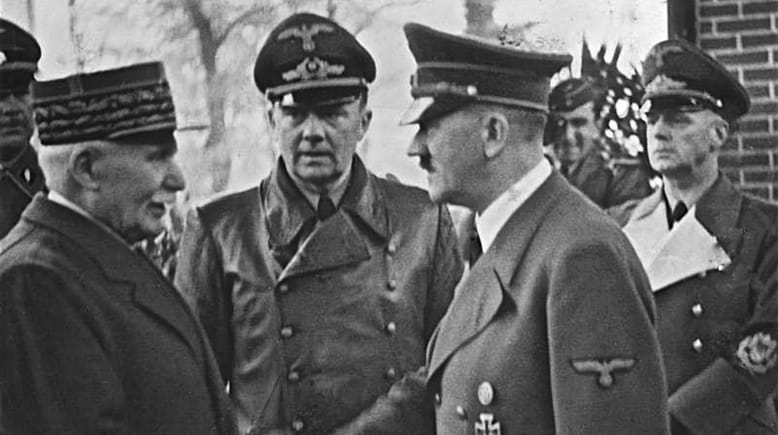
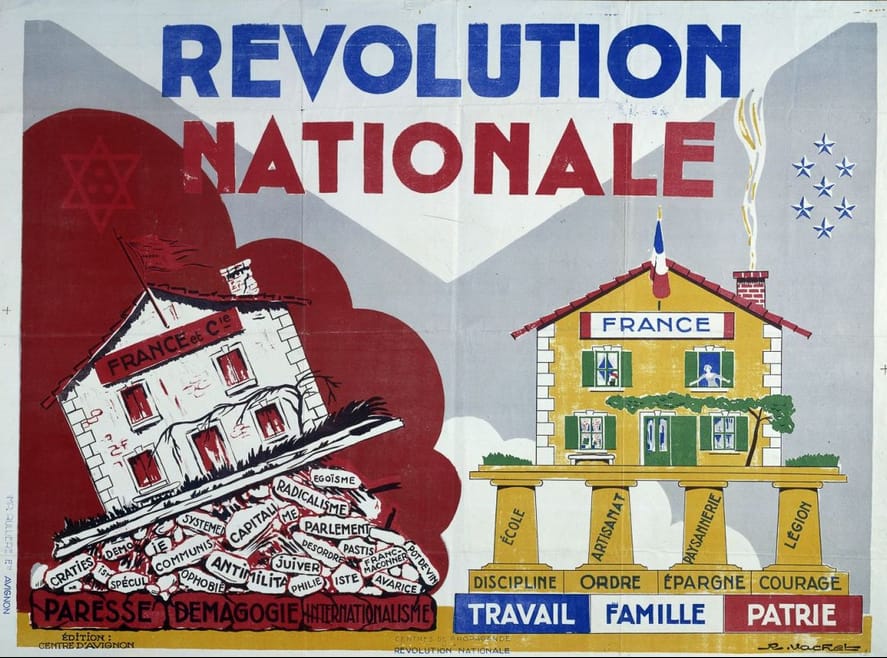
On October 20, 1940, in Montoire, Philippe Pétain secured the French government’s collaboration with the German occupiers. This decision led to military and economic collaboration aimed at elevating France to the status of an ally, as well as police collaboration against members of the Resistance and Jews.
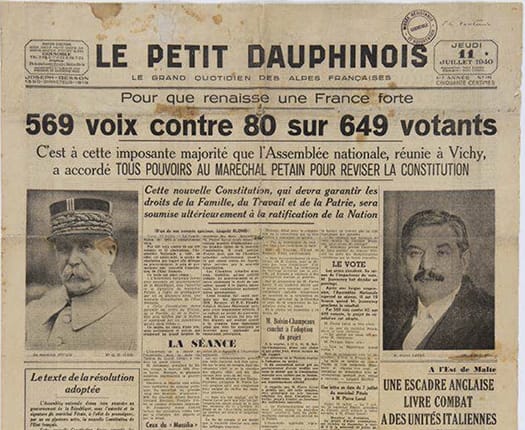
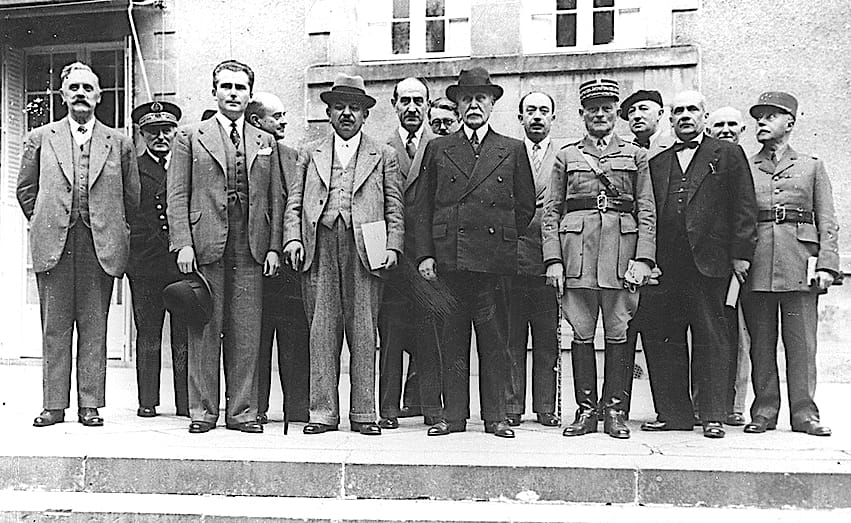
Collaboration with the German occupiers was an immediate demand of the Vichy government. This desire for collaboration had been deeply rooted in the minds of the French elite and top business leaders since the 1930s, inspired by German and Italian fascist models. The meeting at Montoire on October 24, 1940, between Pétain, who had sought it out, and Hitler marked the official beginning of this collaboration. The goal: to build a new social order.
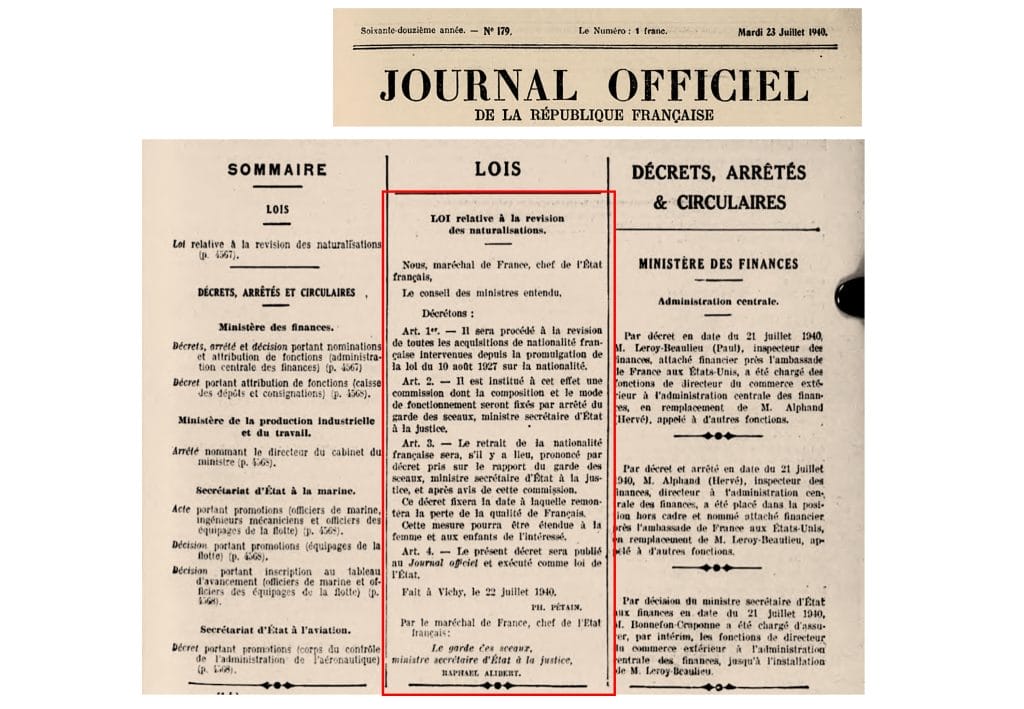
Although Pétain had reached an agreement with the occupying forces to establish a government in Vichy in the so-called “free” zone, Germany never considered engaging in discussions on a state-to-state basis. France was viewed merely as a source of wealth and labor. Economic collaboration took the form of the plundering of the country’s raw materials and products, as well as the participation of major companies in the German war effort. Police collaboration took over with the exclusion of so-called “asocial” groups, Jews, and foreigners, with the French state even preempting German orders. The Vichy regime’s anti-Jewish laws were fully in line with Nazi ideology, and collaboration served the occupier’s interests against the Resistance. The German occupiers, acting in their own interest, pitted the various Vichy leaders against one another. At the end of the war, despite the purge, many economic collaborators faced little or no repercussions; as for political, administrative, or police collaborators, several reemerged in the immediate postwar period.
References
— Various Authors, 2011, *Les Collabos*, Éditions Pluriel.
— Annie Lacroix-Riz, 2016, *The French Elites between 1940 and 1944*,Armand Colin.