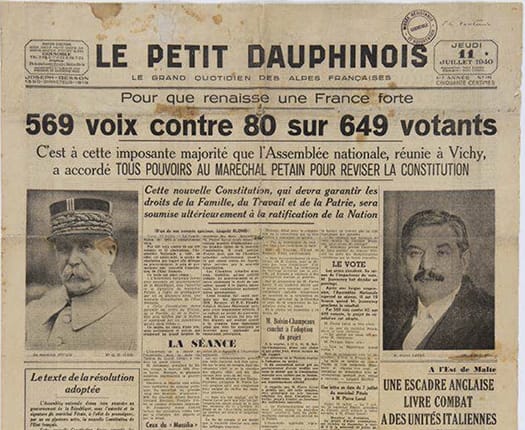
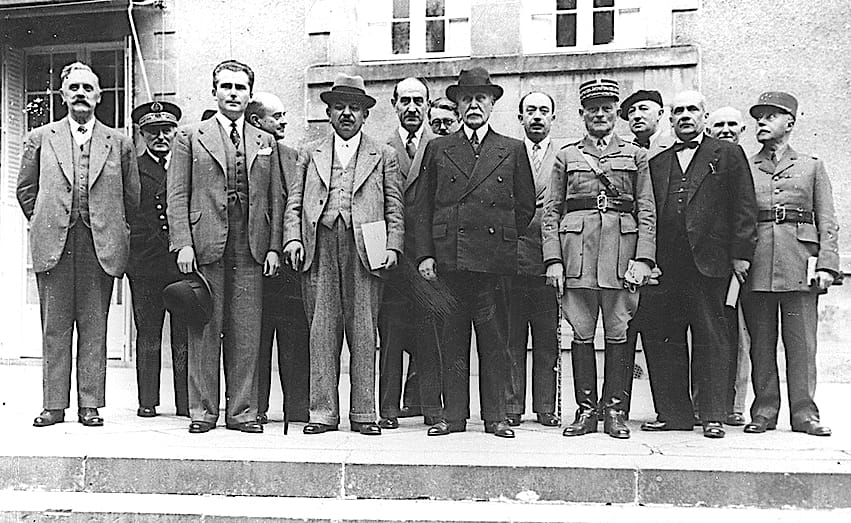
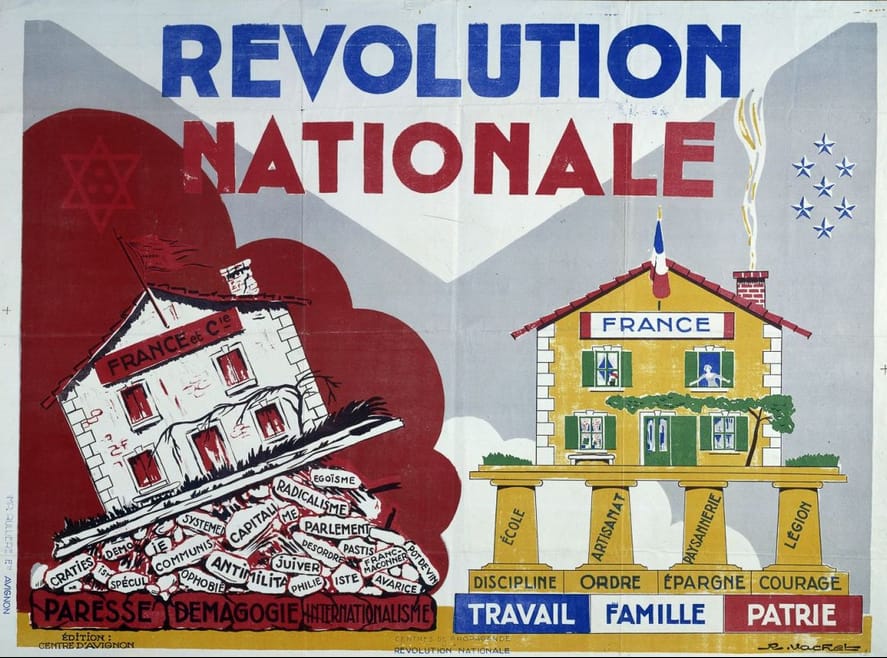
The armistice of June 22, 1940, stipulated that the southern part of French territory would not be occupied. On July 10, the Vichy regime—named after the city where the government was based—was established: Philippe Pétain became the head of an authoritarian state with absolute power.
He quickly decided to lead France into a state-sponsored collaboration with the German occupiers.
The terms of the armistice of June 22, 1940, divided France into two zones: an occupied zone and a so-called “free” zone, where a French state was established in Vichy on July 10—a state that was not merely an administrative body but a government defined as legitimate. Full powers were granted on July 10 to Marshal Pétain, the “providential” figure, who had long been prepared to lead an authoritarian state committed to the Occupier’s objectives.
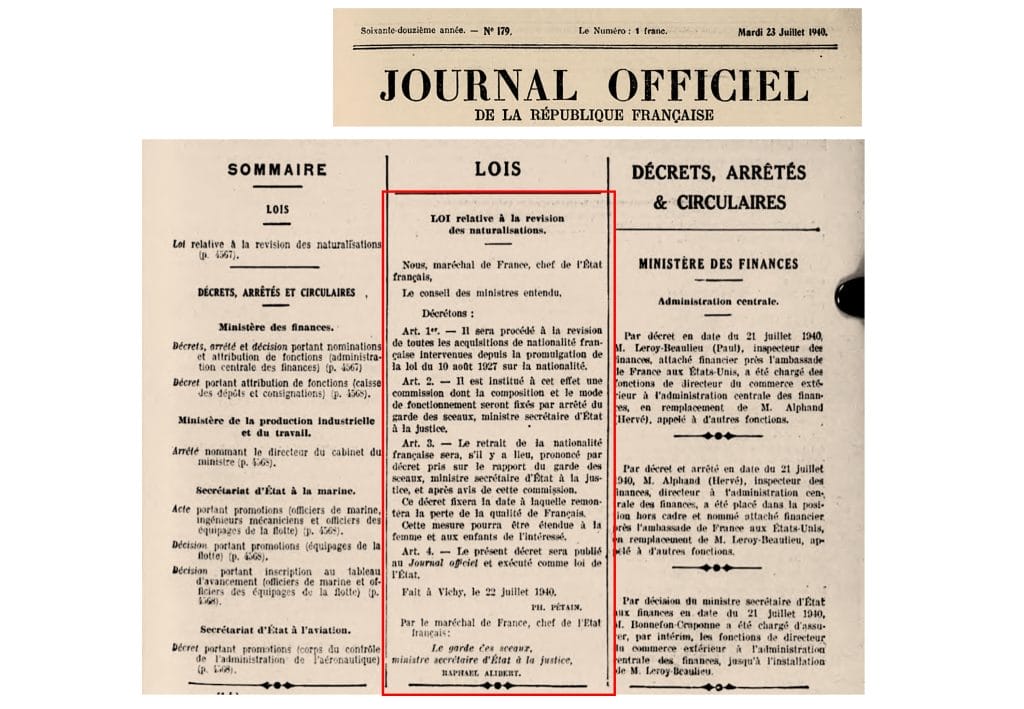
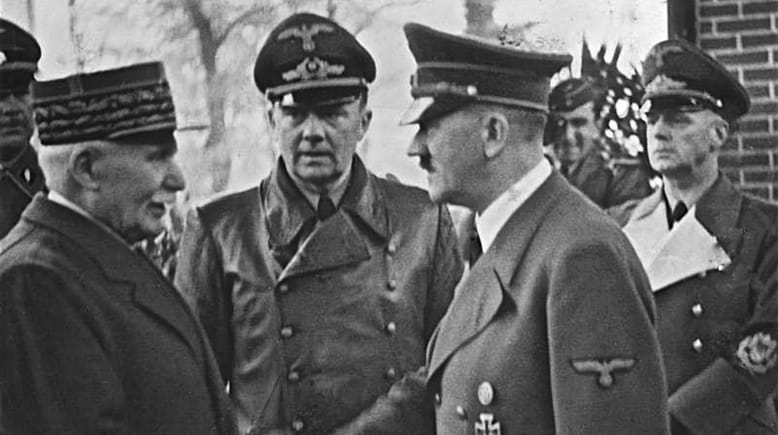
The practice of exclusion and the violation of freedoms formed the foundation of the new regime, and its political lineage with the final governments of theThird Republic was evident in the treatment of certain social groups (the unemployed, Jews, foreigners, etc.), with one notable difference: the Vichy regime, with its racist and xenophobic ideology, would respond to this situation with repression that would only intensify. At Pétain’s request to Hitler, the Montoire meeting on October 21 confirmed the acceptance of the principle of collaboration.
But the legitimacy of this French state is very quickly called into question by the loss of what little sovereignty remains, by the accumulation of coercive measures, and by the rise of a spirit of Resistance that shifts public opinion. The justifications put forward quickly proved ineffective: the supposed protective shield crumbled in the face of the impossibility of lifting restrictions and the continual concessions made to the occupier in the hope of securing a privileged status; the argument of double-dealing also quickly evaporated, as the objectives of the Vichy government—concerned with neutrality—were incompatible with those of England, which wanted France to resume the war.
Collaboration with the state by those who supported this choice became the only course of action. Defectors from the Vichy government and Pétain ended up in Germany in the French enclave of Sigmaringen.
References:
– Paxton, Robert O., *Vichy France, 1940–1944*, 1973, new edition 1999, Éditions du Seuil.
– Laurent Joly (ed.), *Vichy: History of a Dictatorship, 1940–1944*, 2025, Editions Tallandier.