(1896–1941)
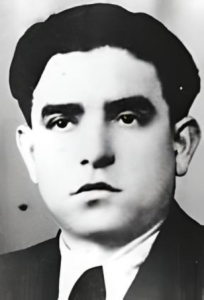
Born on January 7, 1896, in Warsaw to a Polish Jewish family of eight children, Israël Bursztyn began working at a very young age as an apprentice to a cabinetmaker in Warsaw.
At the outbreak of the war in 1914, the Germans sent him to the mines in Essen, where he took part in the labor strikes of 1916–1917 alongside German workers. After the Treaty of Brest-Litovsk (signed by the Russian government, Germany, and Austria-Hungary), he returned to Warsaw, joined the Social Democratic Party, and was immediately arrested and imprisoned.
After his release, he returned to Essen, Germany, where he joined the Spartacus League, organized his fellow immigrants, and founded the Jewish cultural movement Lumière, He was sentenced to six years in prison for his participation in the Spartacus uprising of November 1918, but he managed to escape and returned to Poland, where he was drafted in 1919.
He arrived in France in April 1922 and settled in the 20th arrondissement of Paris with his wife, Yochwet Brand, with whom he had two sons.
In 1927, he moved to the 11th arrondissement to work as a woodturner. He obtained French citizenship through naturalization in August 1930.
The crisis of 1930 forced him to become a hosiery salesman at the markets.
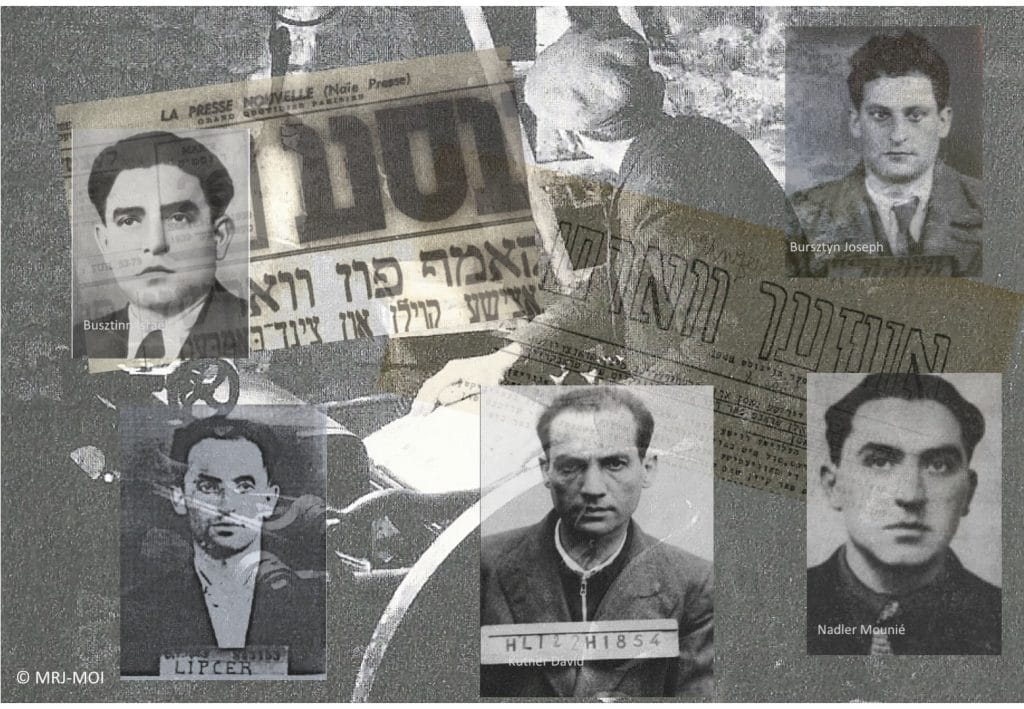
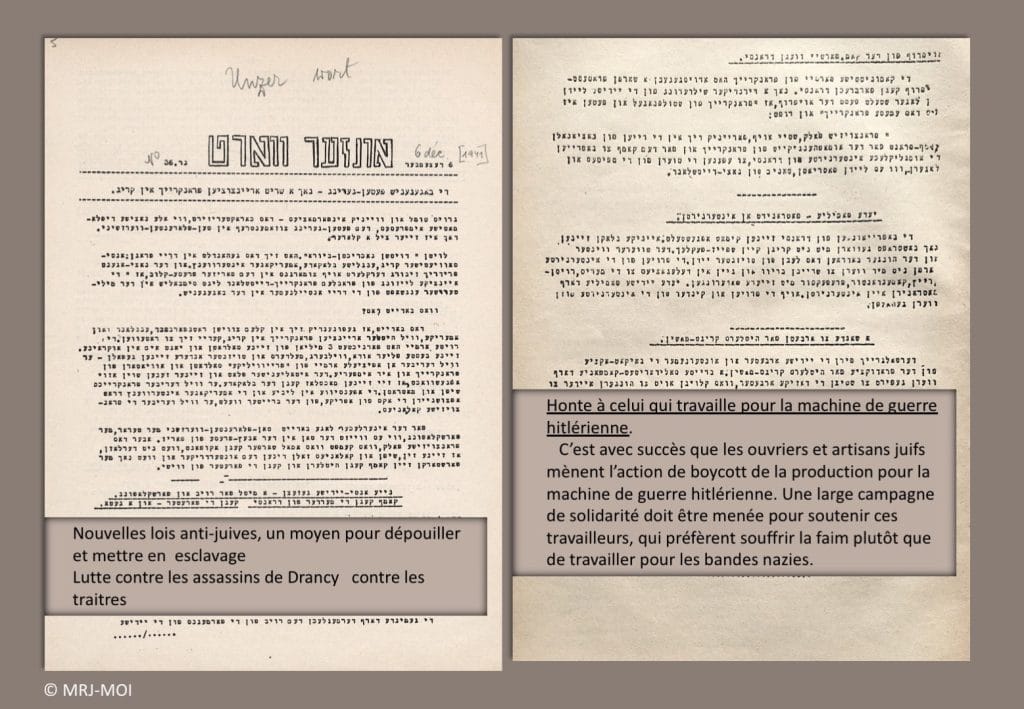
A labor activist and treasurer of the CGTU’s Union of Artisans and Market Vendors, he served as president of the Association of Jewish Market Vendors and Small Business Owners. A member of the Jewish section of the M.O.I., he served as a board member of the Yiddish-language newspaper *Naïe Presse* from its founding in 1934 and of the Jewish Workers’ Publishing Society, which also published books and pamphlets.
When war was declared, he was called up but quickly returned to Paris. As an activist with “Solidarité”—an underground organization that had emerged from the Jewish section of the M.O.I.—he helped pack care packages in his apartment for the internees at Pithiviers and Beaune-la-Rolande.
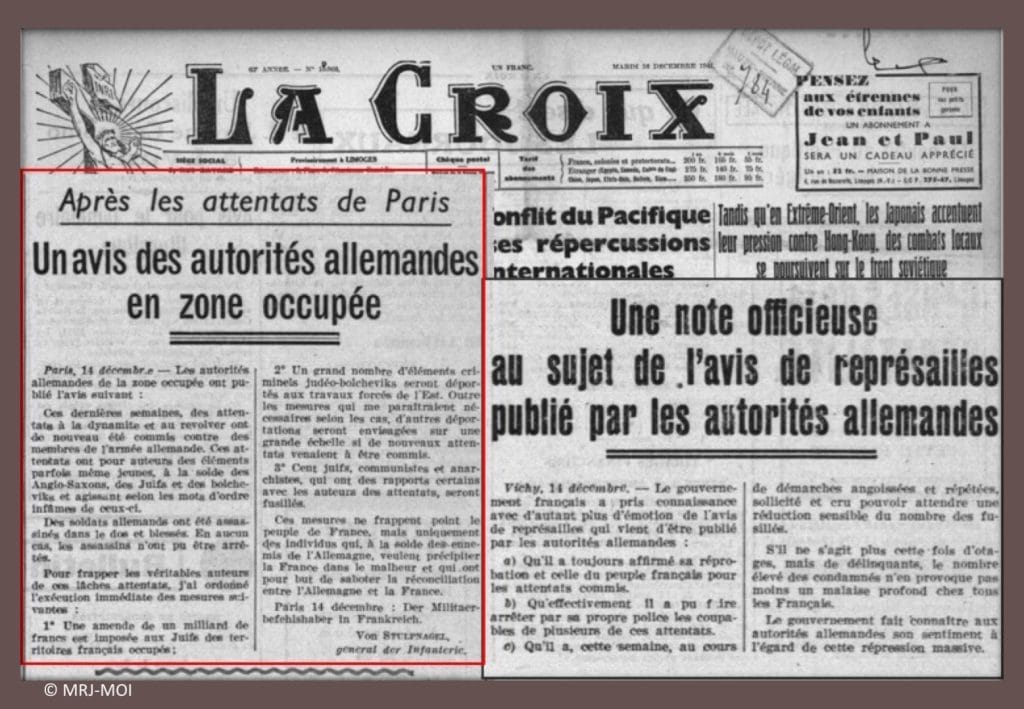
During the first roundup of Jews in the 11th arrondissement on August 20, 1941, he was arrested by the French police and interned at the Drancy camp. In retaliation for the attacks of November 1941, the German authorities ordered the execution of 100 hostages—Communists and Jews—including 53 Jews taken from Drancy.
Israël Bursztyn was one of the 95 hostages shot by the Germans at Mont-Valérien on December 15, 1941.
References:
– *Le Maitron*, by Lynda Khayat
– Cukier, Simon; Decèze, Dominique; Diamant, David; Grojnowski, Michel, 1987, Revolutionary Jews. Messidor. Éditions sociales.
– Diamant, David, 1971, *The Jews in the French Resistance, 1940–1944 (With or Without Weapons)*. Published by Le Pavillon Roger Maria.
– Photo: CDJC (DR)