Skip to content
Flyout Menu
A visit to the museum
Literature Review
About the Museum
Our achievements
Our film
Our blog
Our database of Resistance fighters from the M.O.I.
Contact
English
Français
(
French
)
A visit to the museum
Literature Review
About the Museum
Our achievements
Our film
Our blog
Our database of Resistance fighters from the M.O.I.
Contact
English
Français
(
French
)
A visit to the museum
Literature Review
About the Museum
Our achievements
Our film
Our blog
Our database of Resistance fighters from the M.O.I.
Contact
English
Français
(
French
)
Search
Home
Photos
Toutes les salles
1.
Before 1934
The Jewish section of the M.O.I.
2.
1934 - 1939
Against Fascism | Outbreak of War
3.
Jan 1940 - Sept 1940
The Occupation | Creation of “Solidarity”
4.
Sept 1940 - June 1941
State Antisemitism | Responses
5.
June - August 1941
Armed resistance
6.
August - Oct 1941
Execution of hostages
7.
Oct - Dec 1941
Persecutions | The Resistance
8.
Jan–Jul 1942
Vel’ d’Hiv Roundup | The FTP-M.O.I.
9.
July 1942 - Feb 1943
Rescue of Jewish Children
10.
August 1942 - May 1943
Stalingrad | Warsaw Ghetto Uprising
11.
1943
Creation of the UJRE
12.
Jan 1943 - Mar 1944
Repression | The Major Surveillance Operations
13.
Apr 1943 - March 1944
Unification of the Resistance
14.
Apr - Sep 1944
Insurrection and Liberation
15.
Oct 1944 - Nov 1945
End of the War | Reconstruction
Voir toutes les salles
Salle 9 - Rescue of Jewish Children
Jul 42 – Feb 43
9. The rescue of Jewish children
Photos
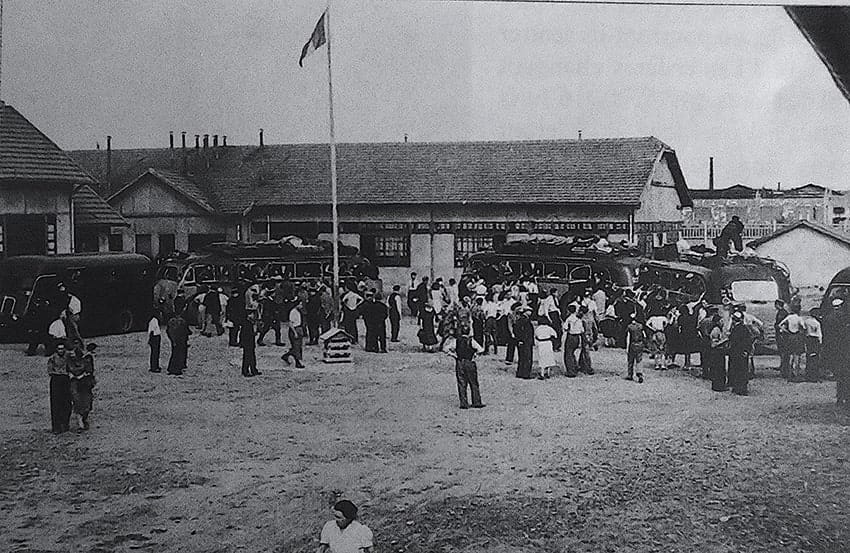
On August 26, 1942, in Lyon, 1,016 Jews considered stateless were arrested and then interned at the Vénissieux camp (photo taken on August 27).
Notes
Vénissieux Camp
Photos
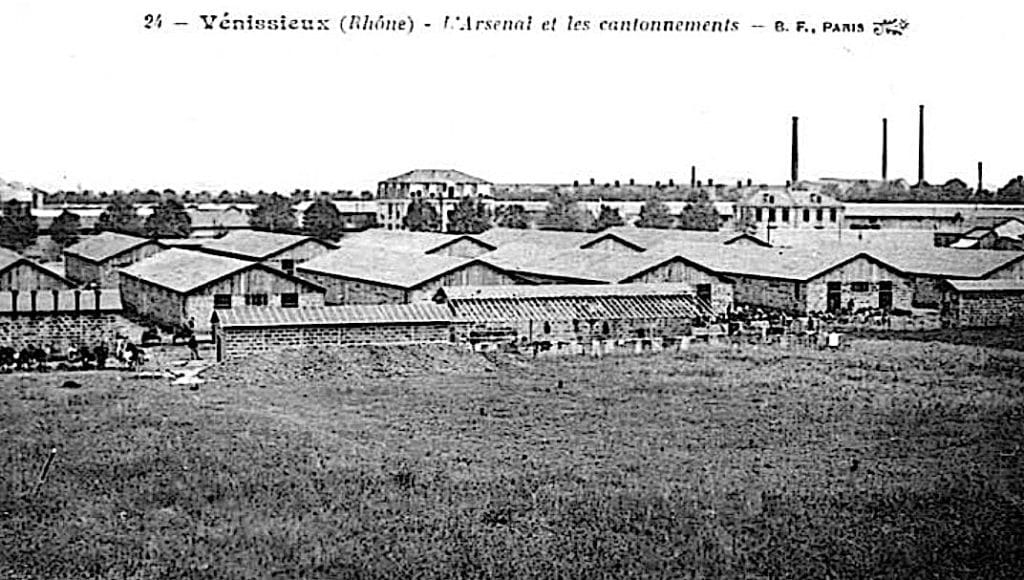
The Vénissieux camp, used to intern stateless Jews following the large-scale roundup of August 26, 1942, in Lyon.
Documents
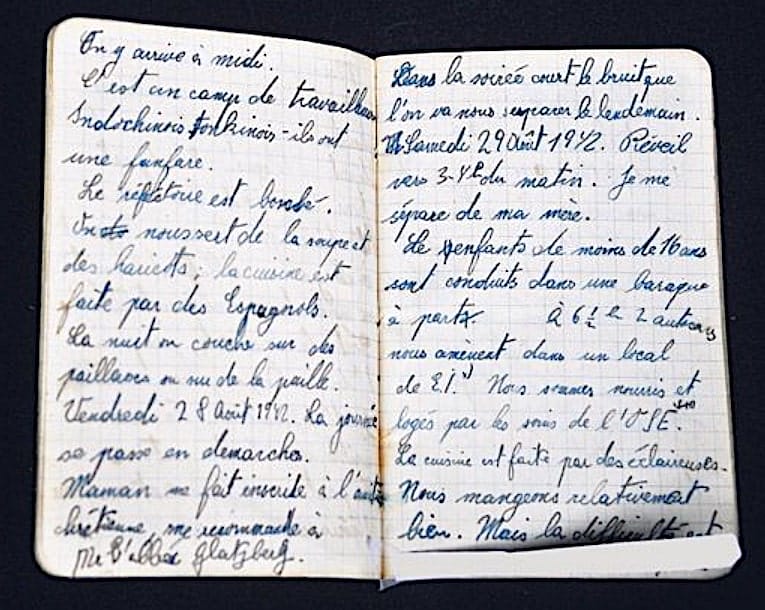
Vénissieux Camp: In his diary entry dated August 29, 1942, Jean Stern notes that the children were separated from their parents and taken into the care of the OSE.
Leaflets/Flyers
Leaflet from the Mouvement National contre le Racisme (MNCR) calling on the French people to oppose the persecution of Jewish children.
Notes
André Network (or André Service)
Leaflets/Flyers
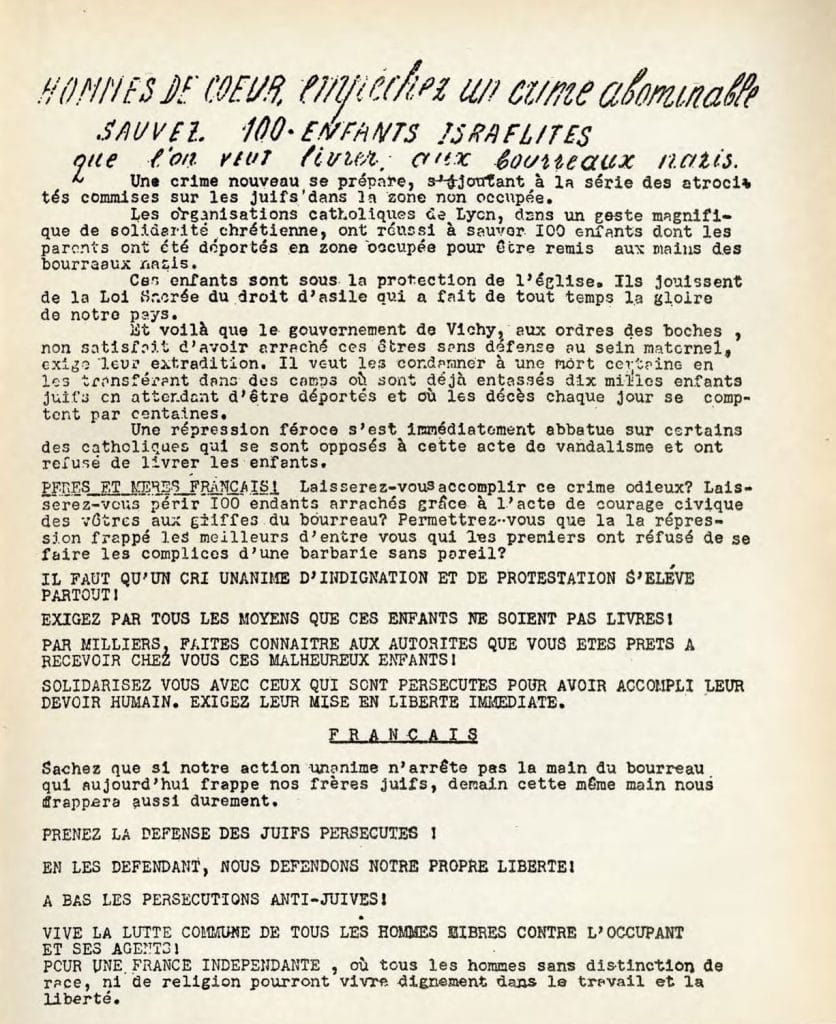
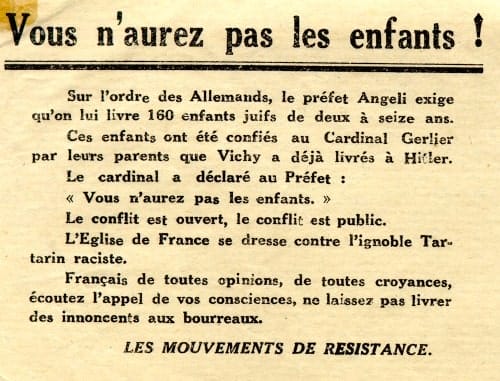
Leaflet from the Resistance regarding the children of Vénissieux. All the Jewish children were smuggled out of the camp during the night of August 28–29, 1942.
Notes
Amelot Committee
Documents
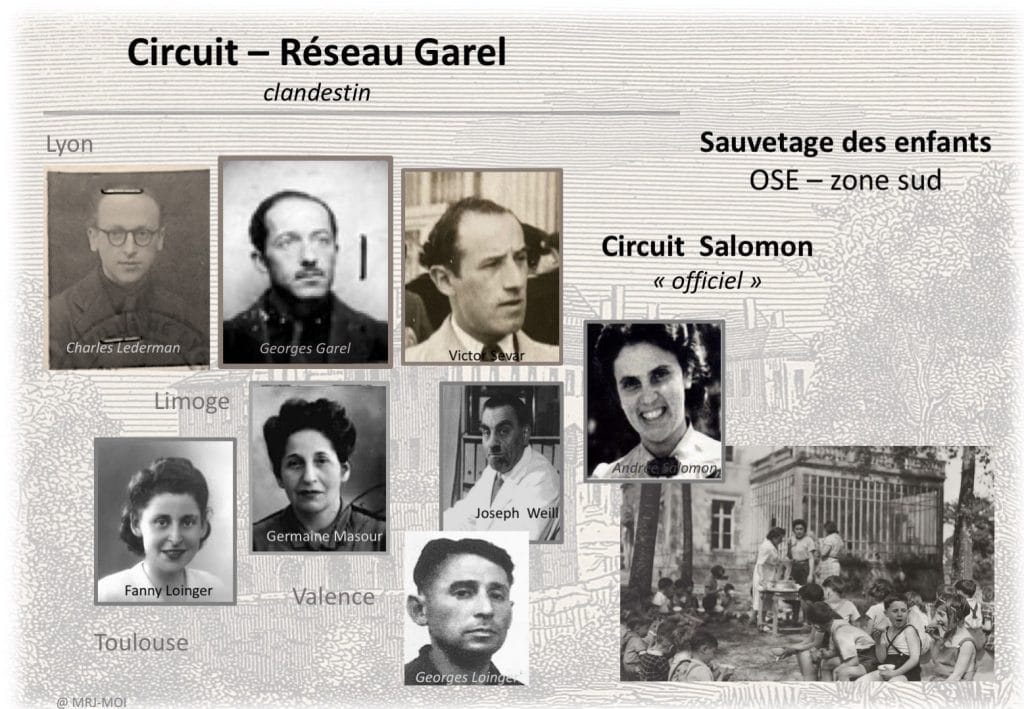
The key leaders of the Garel and Salomon networks, which made it possible to rescue a great many Jews.
Documents
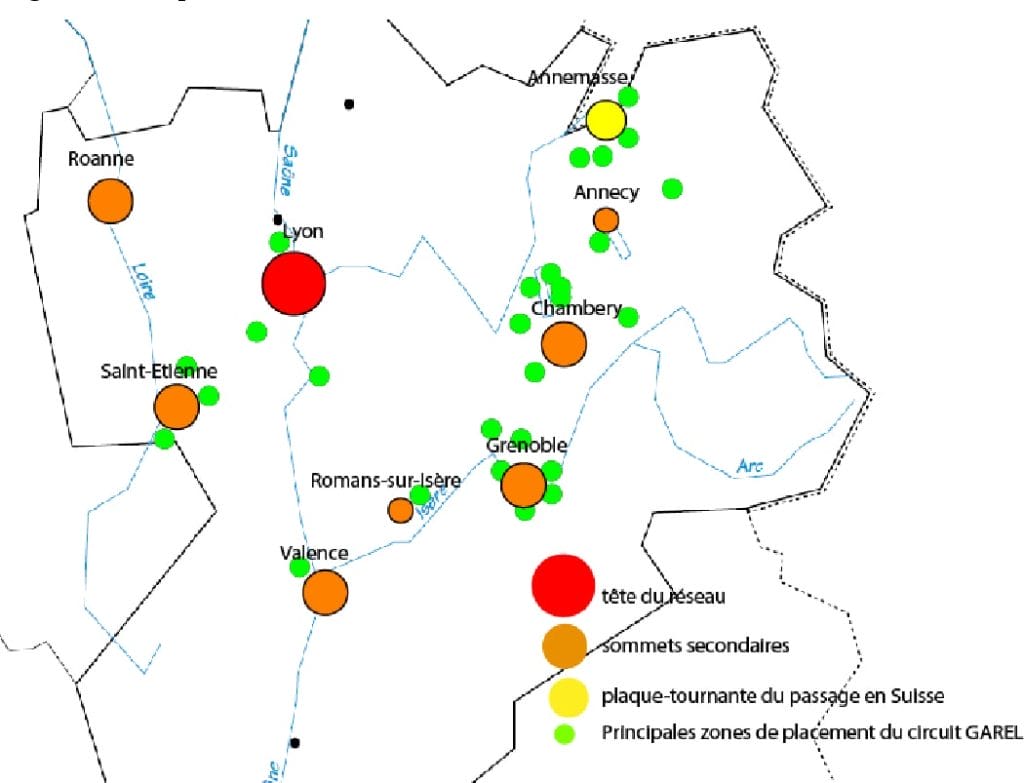
Diagram of the Garel Network, a Resistance network created by Georges Garel in Lyon as part of the Œuvre de secours aux enfants (OSE) to save Jewish children from deportation.
Photos
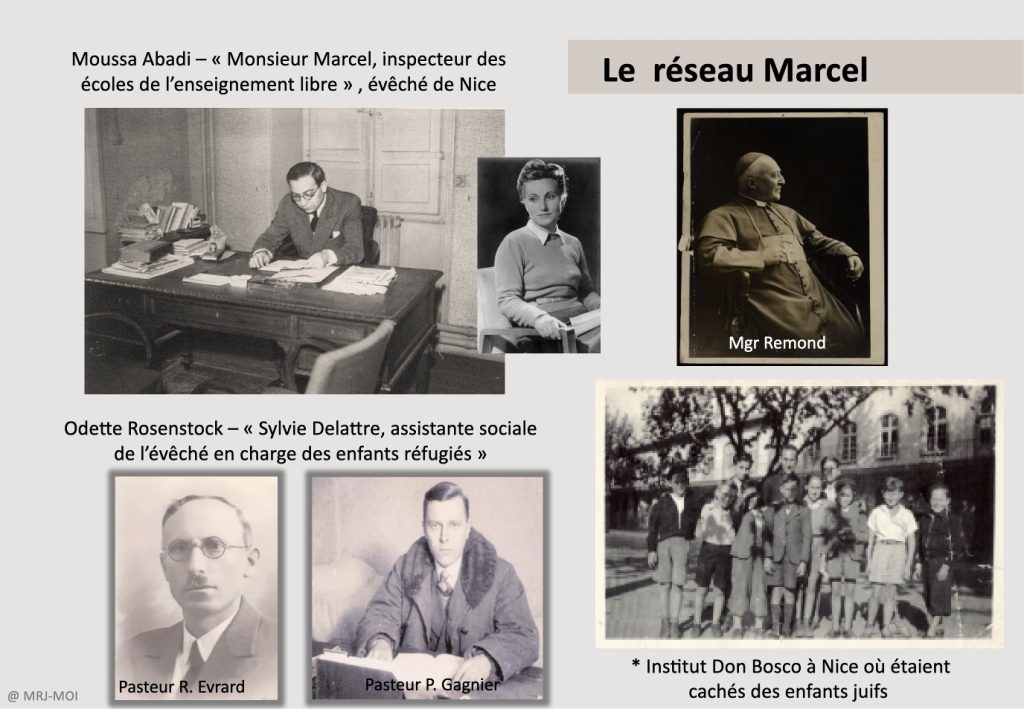
Odette Rosenstock and Moussa Abadi, founders of the “Marcel Network” in Nice in 1943. They saved 527 Jews in the Nice region with the help of the diocese and Protestant pastors.
Notes
Marcel Network (or Abadi Network)
Photos
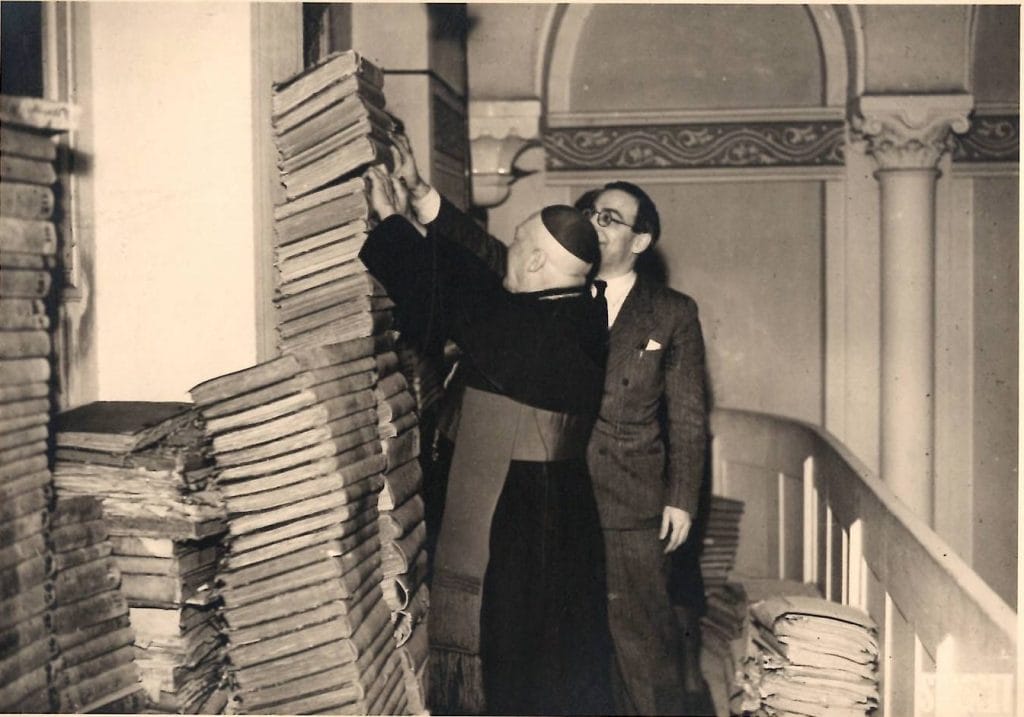
The Bishop of Nice, Monsignor Rémond, and Moussa Abadi (“Monsieur Marcel”) hiding the files of Jewish children who were in hiding in convents or with families among religious books. Nice, 1943.
Photos
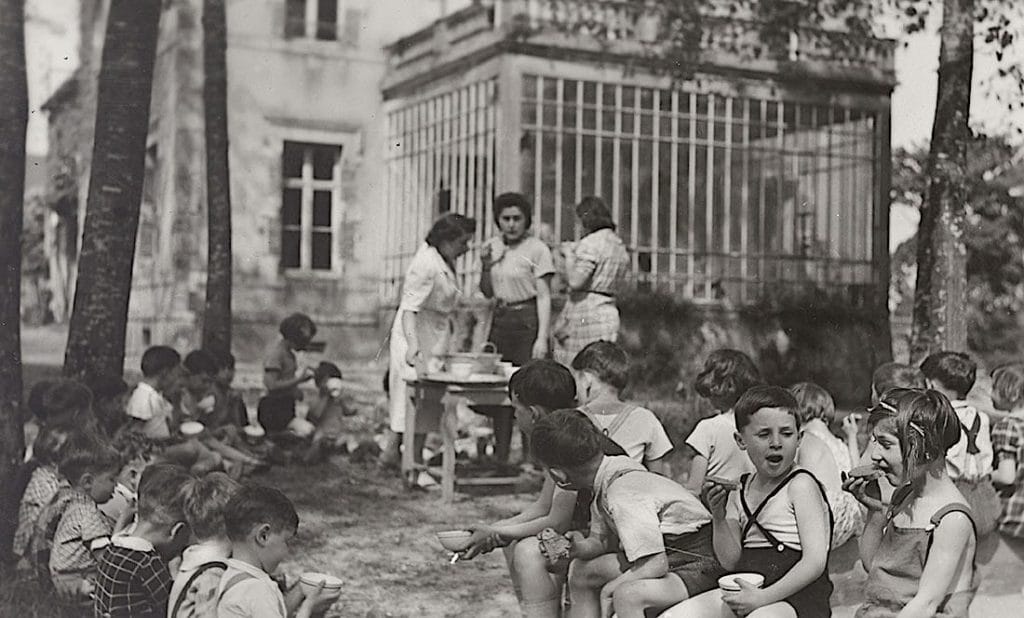
In 1942, the Château de Chabannes, run by the OSE, sheltered more than 100 Jewish children. In December 1943, the château was closed, and the children were entrusted to the Garel network.
Photos
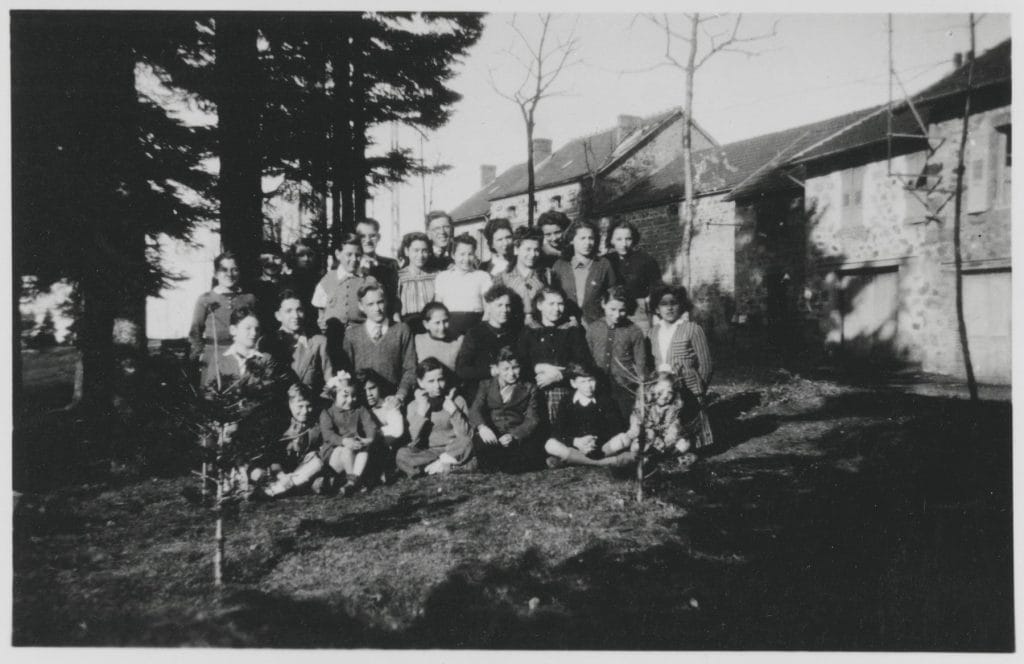
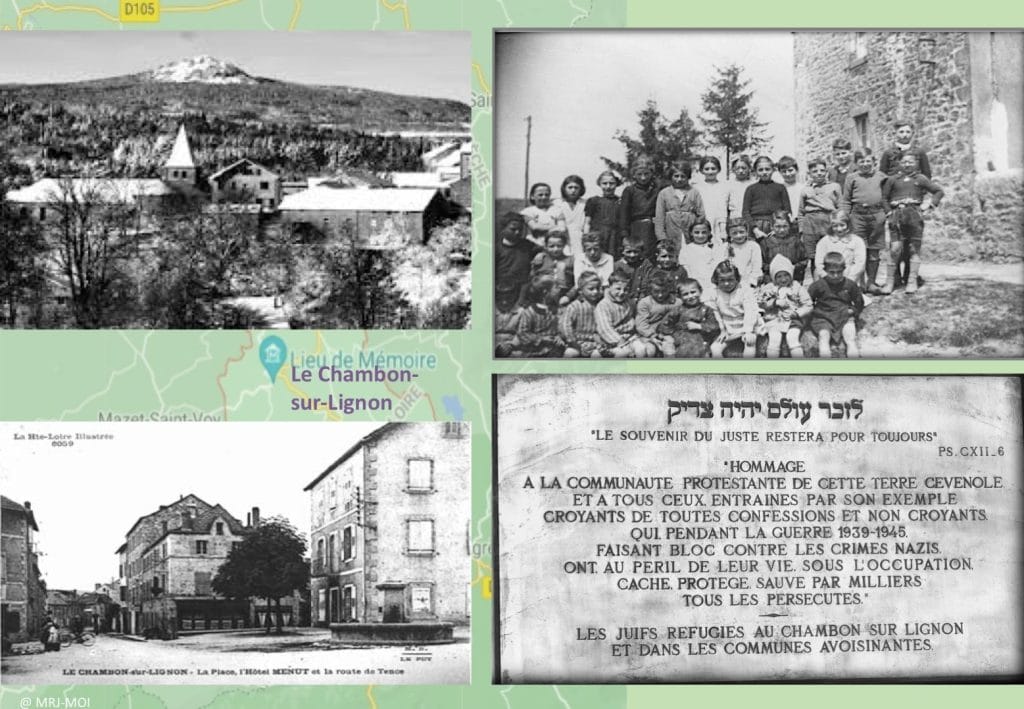
Jews hidden at the La Maison des Roches children’s home, run by Pastor André Trocmé (back row, center). Le Chambon-sur-Lignon, between 1941 and 1943.
Photos
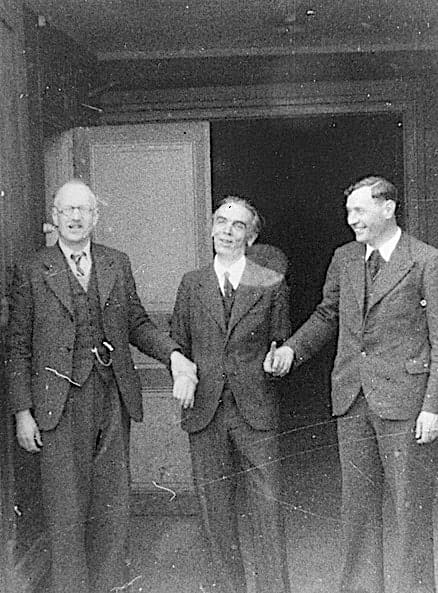
Pastor André Trocmé (left) protected a great many Jews from the Nazis, notably with the help of the residents of Le Chambon-sur-Lignon.
Photos
The village of Le Chambon-sur-Lignon, whose Protestant community distinguished itself during the Occupation by hiding 2,500 Jews. The entire village was designated “Righteous Among the Nations” in 1990.
Leaflets/Flyers
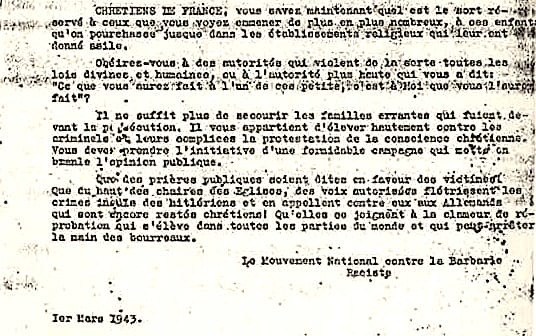
Excerpt from an MNCR leaflet calling on Christians “to take the initiative in launching a powerful campaign to mobilize public opinion” (March 1, 1943).
Photos
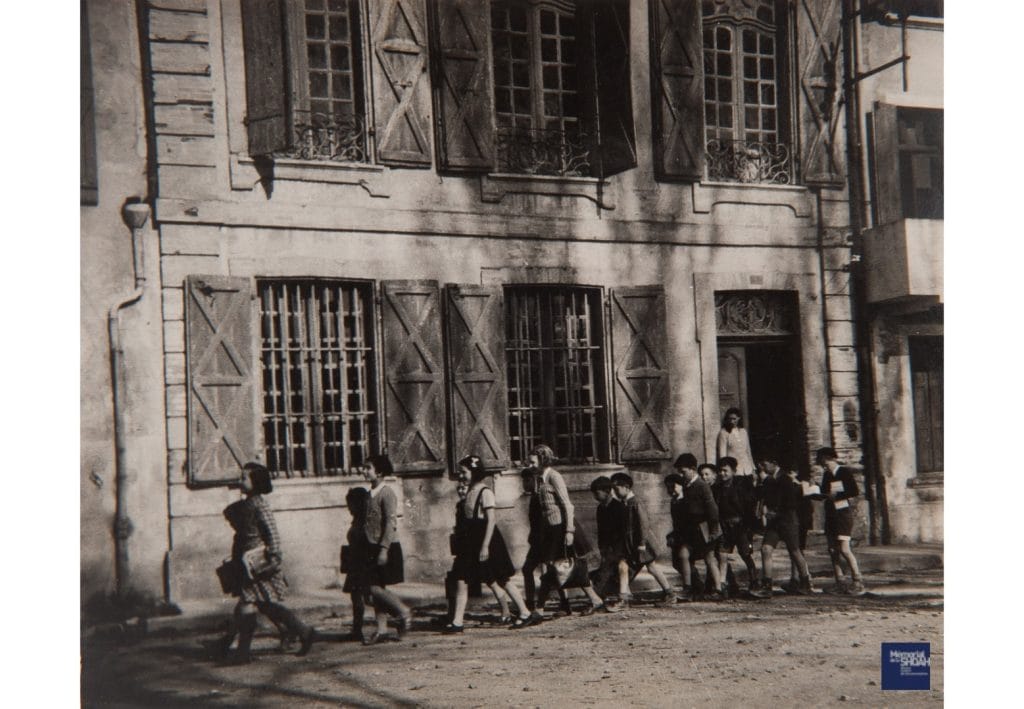
The Moissac Children’s Home, founded by the Éclaireurs Israélites de France, took in nearly 500 Jews, thanks to the active support of the local community.
Postcards
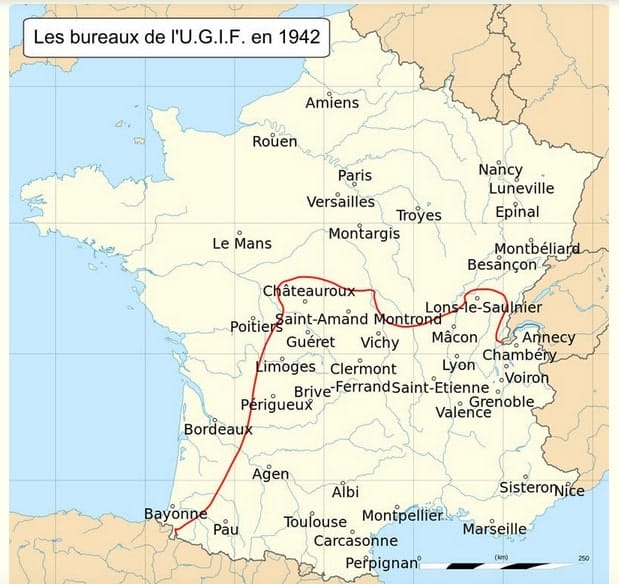
Map of the offices of the UGIF (General Union of French Jews) in 1942.
Documents
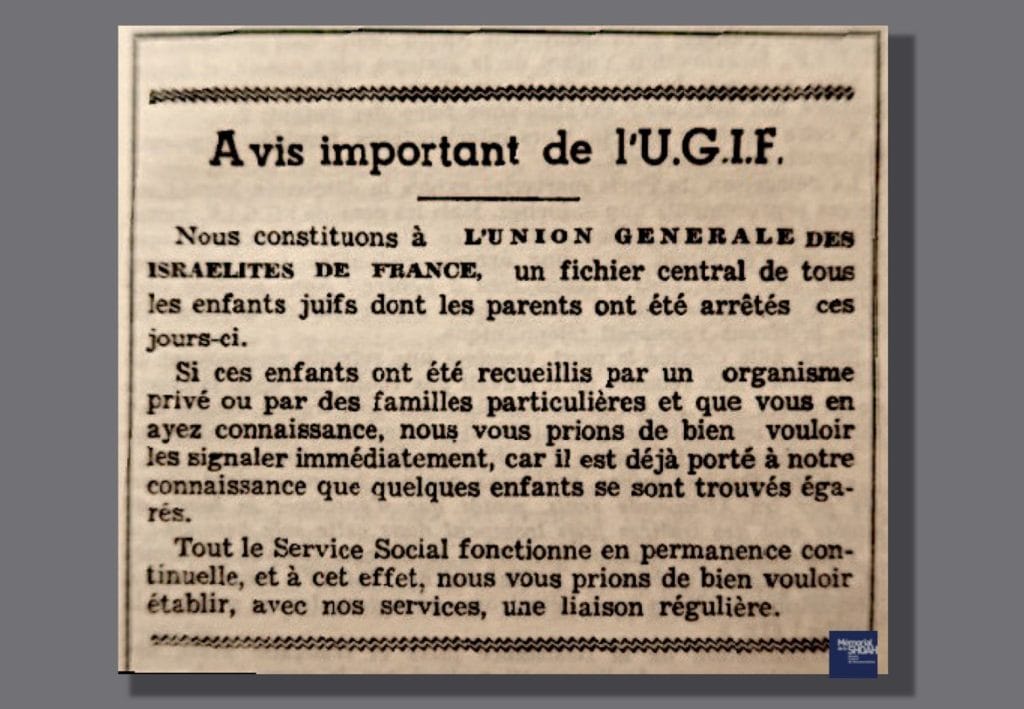
The UGIF compiled a registry of Jewish children who were taken into care after their parents were arrested (September 1942).
Videos
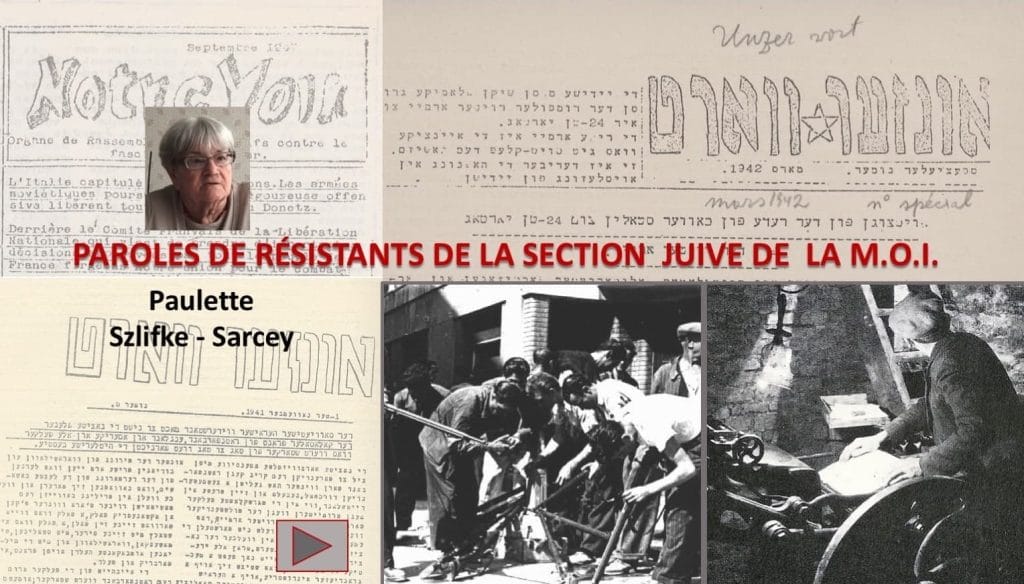
Paulette Sarcey (Slifke) condemns the harmful role of the UGIF.
Photos
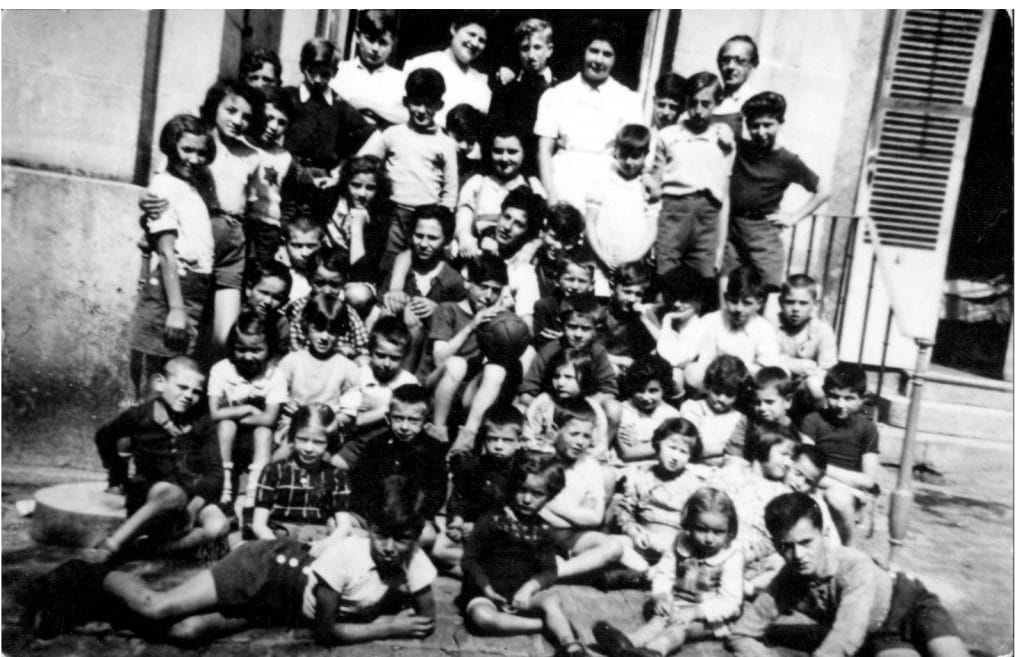
UGIF Center in Louveciennes: On July 22, 1944, the children and counselors were arrested; 6 children were deported to Bergen-Belsen and survived, while 34 others were deported to Auschwitz, 33 of whom were murdered upon arrival.
Photos
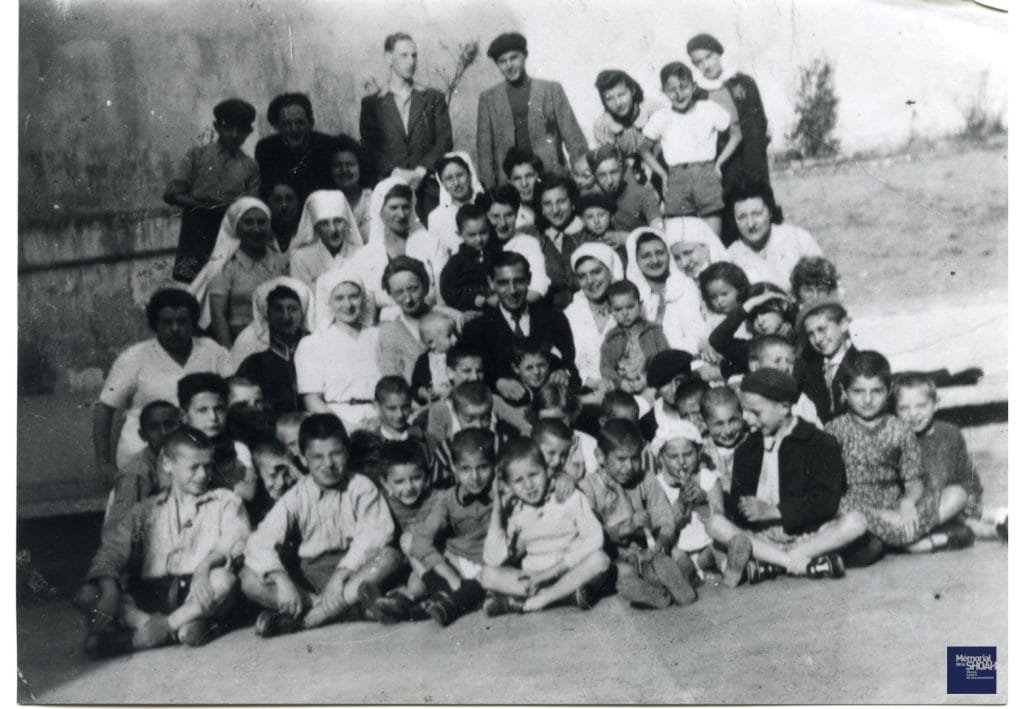
Following the roundups of the summer of 1942, the UGIF opened centers for children in the suburbs and in Paris (including the shelter on Rue Lamarck). These facilities were under the control of the General Committee for Jewish Affairs (CGQJ) and the Gestapo.
Page
1
Page
2
Page
3