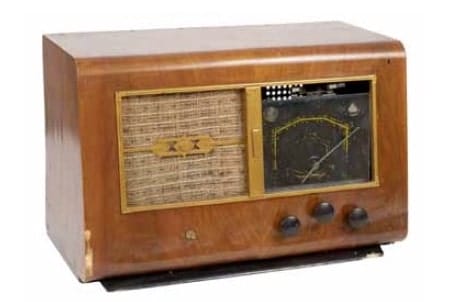
Radio Moscow began broadcasting in 1922. Its programs were broadcast in several languages. The Italian-language broadcasts were jammed on Mussolini’s orders. “Radio Moscow” followed and commented on Adolf Hitler’s rise to power in Germany and fought against Nazism during World War II.
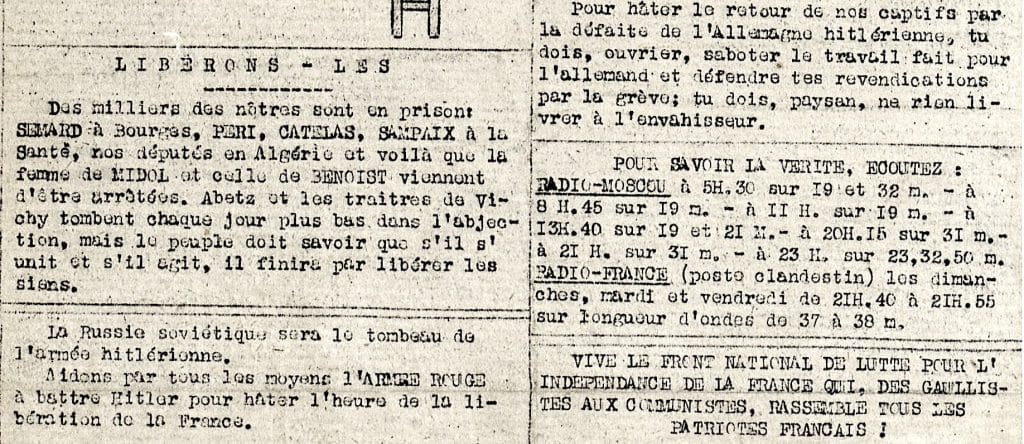
During World War II, Radio Moscow’s broadcasts focused on the fight against fascist countries and the Resistance.
Starting in August 1941, the French writer Jean-Richard Bloch became one of France’s voices from Moscow.
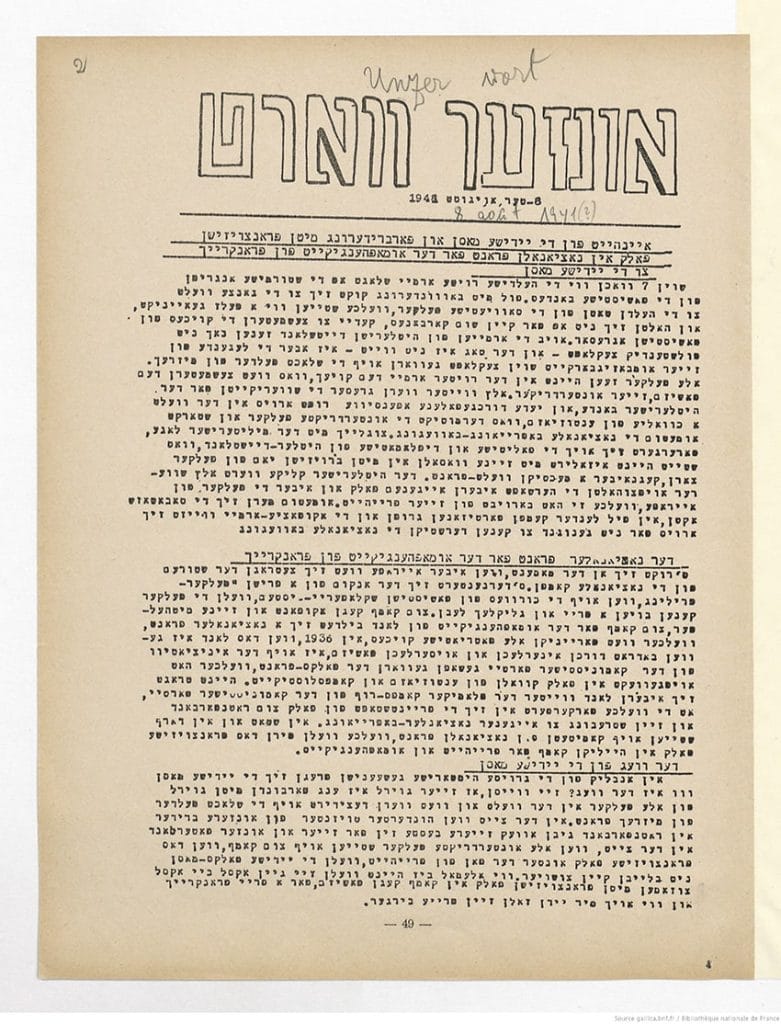
On August 24, 1941, Radio Moscow announced the creation of the Jewish Anti-Fascist Committee of the Soviet Union. An appeal to Jews around the world was broadcast in three languages: Russian, English, and Yiddish. It revealed the mass killings being perpetrated against Jews in Eastern Europe. Soviet artists and writers (including Ilya Ehrenburg and Vasily Grossman) called on Jews to intensify their struggle against Nazism and to support the Soviet Union in this fight. The writer David Bergelson addresses all Jews in Yiddish, calling on them to engage in Resistance against the Nazis who threaten the “very existence of the Jewish people.”
The message was picked up by the Jewish section of the M.O.I., both in Paris and Lyon, and was immediately published in its underground press. The unique plight of the Jews in this war was brought to light for the first time.
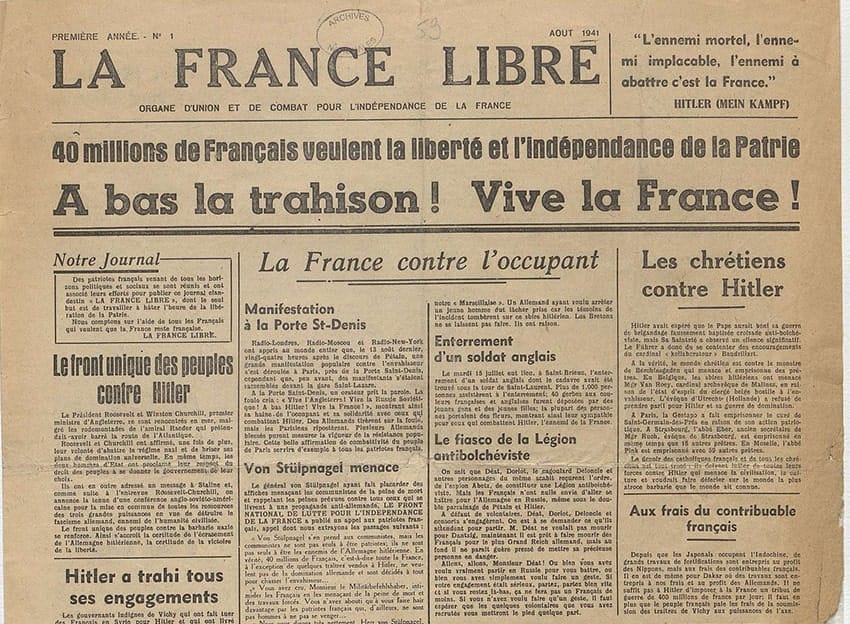
A late-night program on Radio Moscow is aimed at French resistance fighters, many of whom are communists. In addition to general news about military operations on the German-Soviet front, Radio Moscow also discusses the tactics and guerrilla methods of the French Resistance.
In addition, a half-hour weekly program produced by representatives of the diplomatic and military mission in Moscow is broadcast by General de Gaulle’s *France Combattante* movement.
Reference:
Ilya Ehrenburg, Vasily Grossman (and others), 1995, *The Black Book*, Arles: Actes Sud.