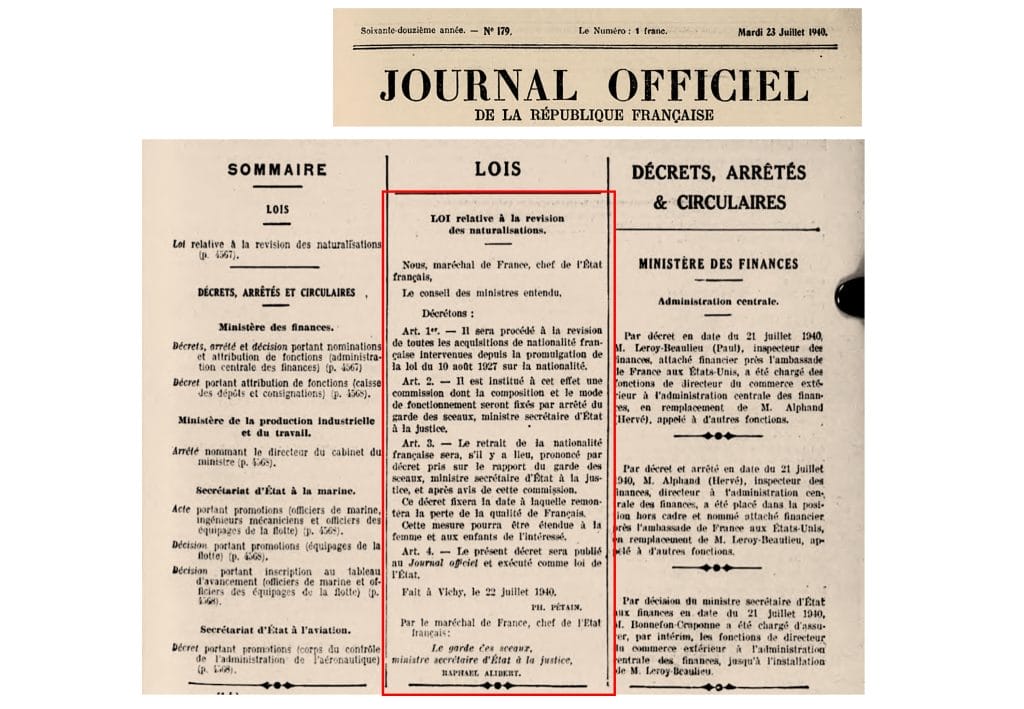
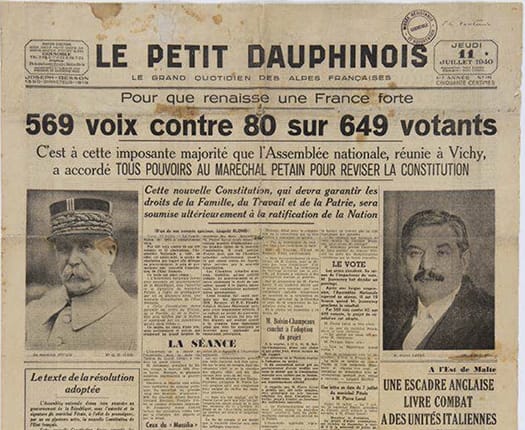
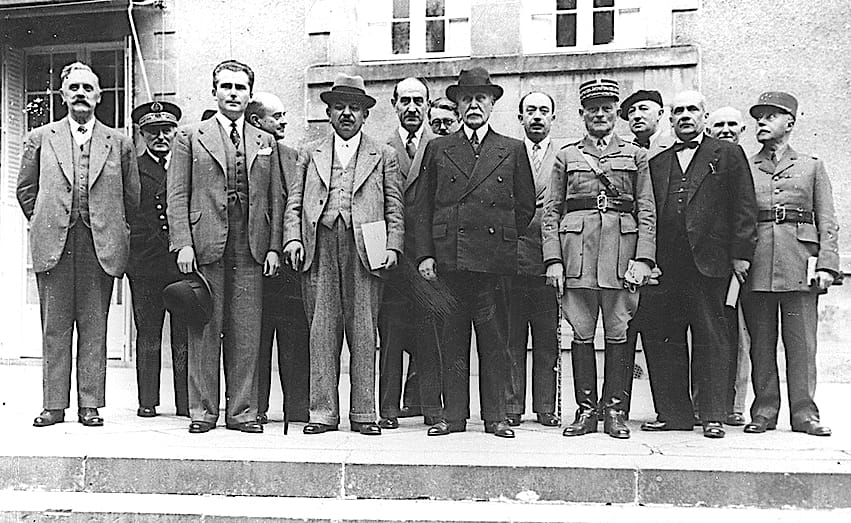
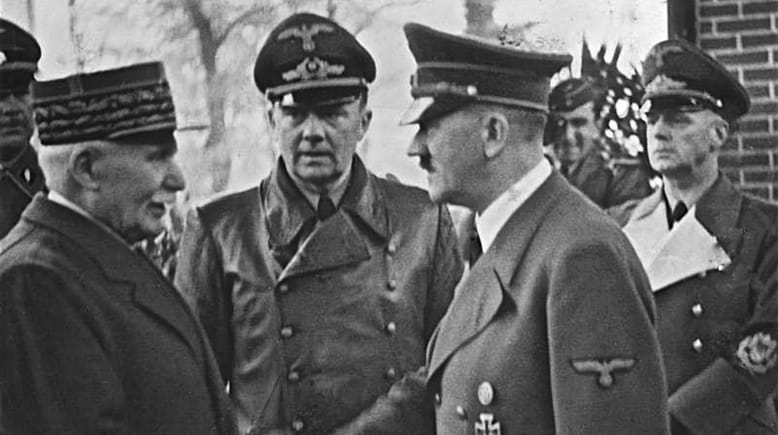
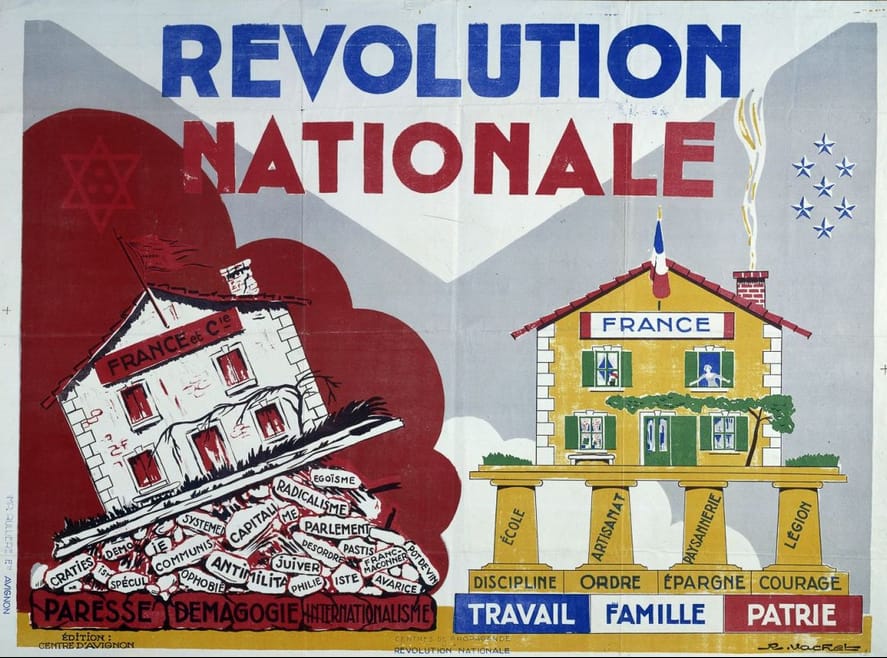
The National Revolution, spearheaded by the French government in 1940 and supported by far-right leagues, was based on interventionist principles: personal power, state control of society, and an anti-democratic regime of emergency rule. The National Revolution is synonymous with the policy of collaboration with the occupying forces.
Rural life and youth were glorified, and the Labor Charter—a blend of corporatism, statism, and paternalism—established a single union for all workers—with the exception of farmers—bringing together employers and employees. The implementation of the program faced numerous difficulties: rivalries among far-right leagues, the influence of the Catholic movement, a corporatist mindset, and the regime’s weak social base. The National Revolution is viewed as one of the key elements of the state’s collaboration with the Nazis.
References:
— Jean-Paul Cointet, 2000, “National Revolution” in *Historical Dictionary of France Under the Occupation*, 2000, Éditions Tallandier.
— Gérard Noiriel, 1999, *The Republican Origins of Vichy*, 1999 , Hachette Littérature