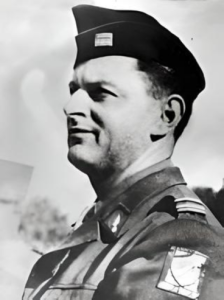
Born in Morlaix on June 12, 1908, Henri Tanguy became a metalworker in the Paris region at the age of 14 and joined the Communist Youth. He joined the ranks of the Anti-Fascist International Brigades in 1937, during the Spanish Civil War. As a brigade political commissar, he developed unquestionable military expertise on the battlefield. He was wounded during the Battle of the Ebro.
During World War II, in 1940, he helped establish the Communist Party’s clandestine Organisation Spéciale (OS) and organized acts of sabotage against German troops in the Paris region. Noticed by the PCF for his military skills, he devoted himself from then on to the armed struggle against the Occupying forces. Henri Tanguy was one of the military leaders of the first armed groups that became the French Francs-tireurs and Partisans (FTPF or FTP), Resistance forces that became operational in 1942. He also ran, along with his wife, Cécile, the underground publication *Le Franc-tireur parisien*.
In 1944, the French Forces of the Interior (FFI), which brought together the main Resistance movements, were formed. Henri Tanguy represented the FTP within the FFI.
He was in charge of the capital and the Paris region, and at that time adopted the pseudonym “Rol,” borrowed from one of his comrades in the International Brigades who had been killed during the Spanish Civil War.
Henri Rol-Tanguy was officially elected regional commander of the FFI on June 5, 1944, with the rank of colonel. He was supported by a highly effective staff.
Rol-Tanguy implemented the tactics of the FTP and FTP-M.O.I. (particularly urban guerrilla warfare) and applied them with extreme rigor.
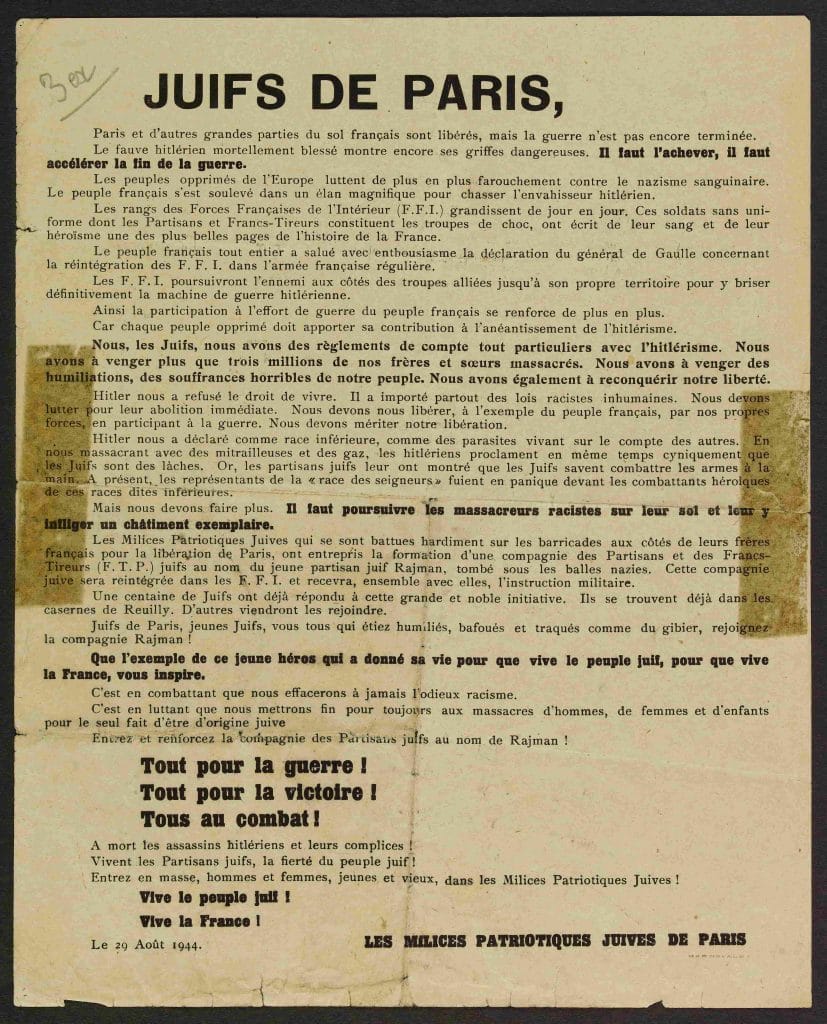
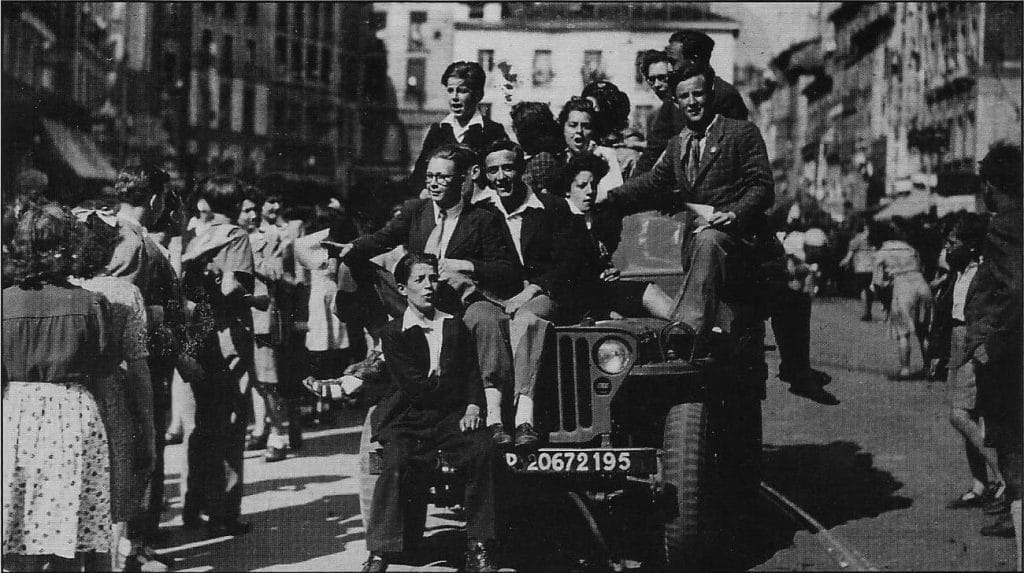
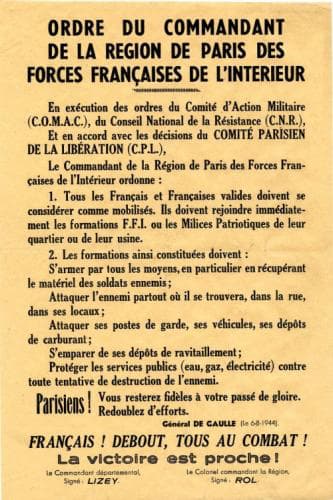
On August 18, Rol issued the order for general mobilization in agreement with the Paris Liberation Committee (CPL). On the 19th, he led the Paris uprising. The Second Armored Division (2nd DB), commanded by General Leclerc, entered Paris, with the “Nueve” leading the way (the Spanish Republicans of the 9th Company, attached to the 2nd DB).
On August 25, at the Montparnasse train station, he signed, alongside General Leclerc, the act of surrender submitted by General von Choltitz, a German general.
In 1945, he took part in the campaign in Germany that marked the end of World War II.
On June 18, 1945, he was named a Companion of the Order of the Liberation by General de Gaulle.
Although recognized as an excellent officer, Rol-Tanguy fell victim to the Cold War because he was a communist.
Unemployed, Rol-Tanguy was forced into retirement in 1962.
The Paris Museum of the Liberation—the General Leclerc Museum and the Jean Moulin Museum, which opened in 2019 on Place Denfert-Rochereau in the 14th arrondissement—pays tribute to him through a tour of his underground command post.
References:
— Roger Bourderon, 2004, *Rol-Tanguy: A Clandestine Hero of World War II*. Tallandier.
— Photo: Museum of the Order of Liberation