The term “ghetto,” of Venetian origin, referred in the 16th century to a neighborhood set aside for Jews by the authorities. Gradually, the isolation of Jews within European cities, in specific neighborhoods, became a form of enforced segregation.
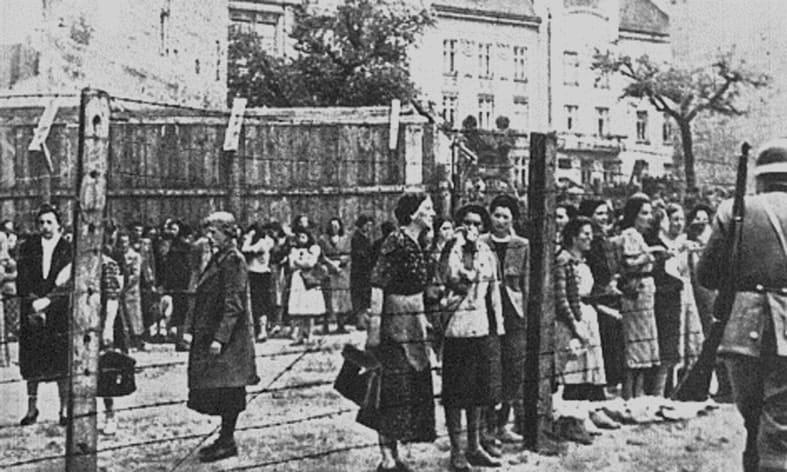
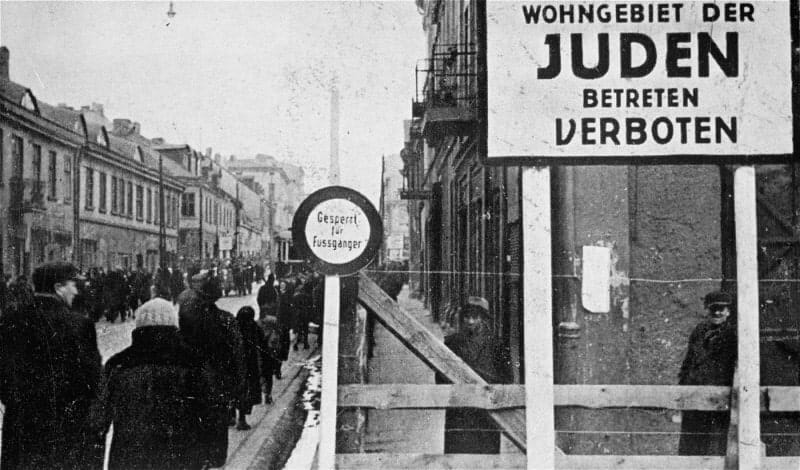
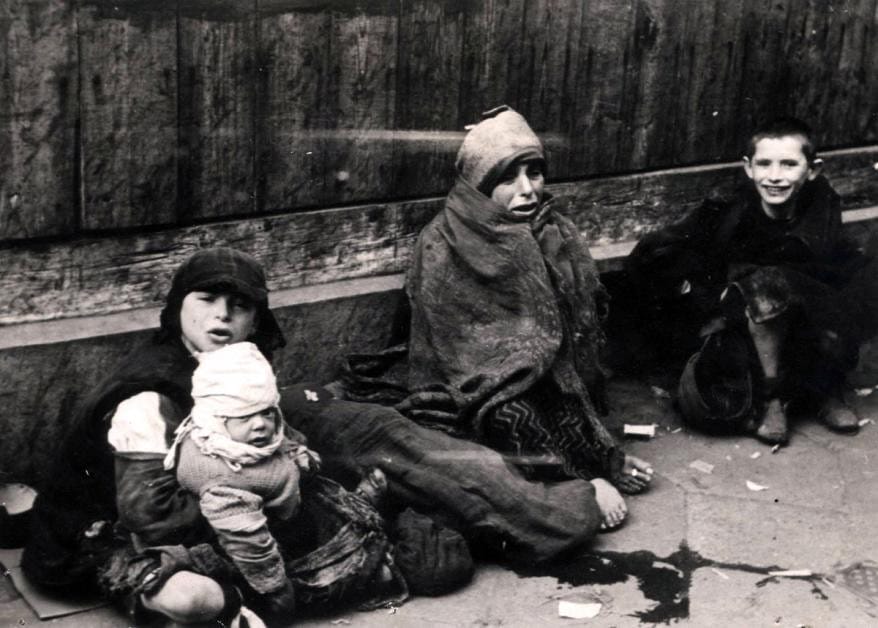
They were forced to live there, isolated from the non-Jewish population. Under the Nazi regime, the inhabitants of the ghettos were systematically starved, left to die where they were, or sent to extermination camps.
Jewish quarters, or “juiveries,” have existed throughout history in European cities, including those in France. Jews either lived there freely or were subject, to varying degrees, to segregation laws. The juderías of Catholic Spain in the 15th century facilitated the work of the Inquisition. The first quarter imposed on Jews by state authorities—the Venice ghetto—was established in 1516. It was closed from dusk until dawn.
In 19th-century Central Europe, Jewish neighborhoods were poor, cramped, and overcrowded; residents’ movements were restricted, but community and cultural life there was often vibrant. During World War II, the Jewish neighborhoods—transformed into ghettos controlled by the Nazis—became part of the extermination apparatus.
Some ghettos were linked to extermination centers: Łódź and Chelmno, Minsk and Maly Trostinets, Wilno and Ponar.
The Nazis confined the Jews of Eastern Europe to their residential quarters, cutting them off from all contact with the outside world, particularly in Wilno, Kaunas, Kraków, Warsaw, Lublin, Lwów, Riga, Białystok, Łódź… In Wilno (now Vilnius), the Jews were divided among two ghettos.
Daily life in all these ghettos—forced labor, deprivation, unsanitary conditions, poverty, and numerous deaths from epidemics or mistreatment—was similar to the conditions faced by prisoners in the extermination camps beginning in December 1941.
The mass killings of Jews by the mobile extermination units (Einsatzgruppen) greatly increased the number of victims, but the Nazis had plans for industrial-scale extermination.
In Warsaw, the ghetto rose up in revolt before being destroyed stone by stone following the heroic Warsaw Ghetto Uprising in April–May 1943.
The ghettos, which were preliminary steps toward the “Final Solution to the Jewish Question,” are doomed to disappear
through the widespread use of Zyklon B and the mass deportation of Jews to the gas chambers of the extermination camps.
Through an inappropriate extension of the term—and in no way comparable to the conditions in Jewish ghettos during the Nazi era—the term “ghetto” is currently used in a different sense. It refers to a disadvantaged neighborhood where an ethnic, cultural, or religious minority is concentrated, living in isolation under precarious conditions.
References:
— Rojtman, Pierre-Jacques, and Louis Wirth (2004), “The Ghetto.” In : *Diasporas: History and Societies*, No. 4, “Cinema, Cinema,” pp. 180–191. Éditions Persée.
— Larousse Encyclopedia, online: https://www.larousse.fr/encyclopedie