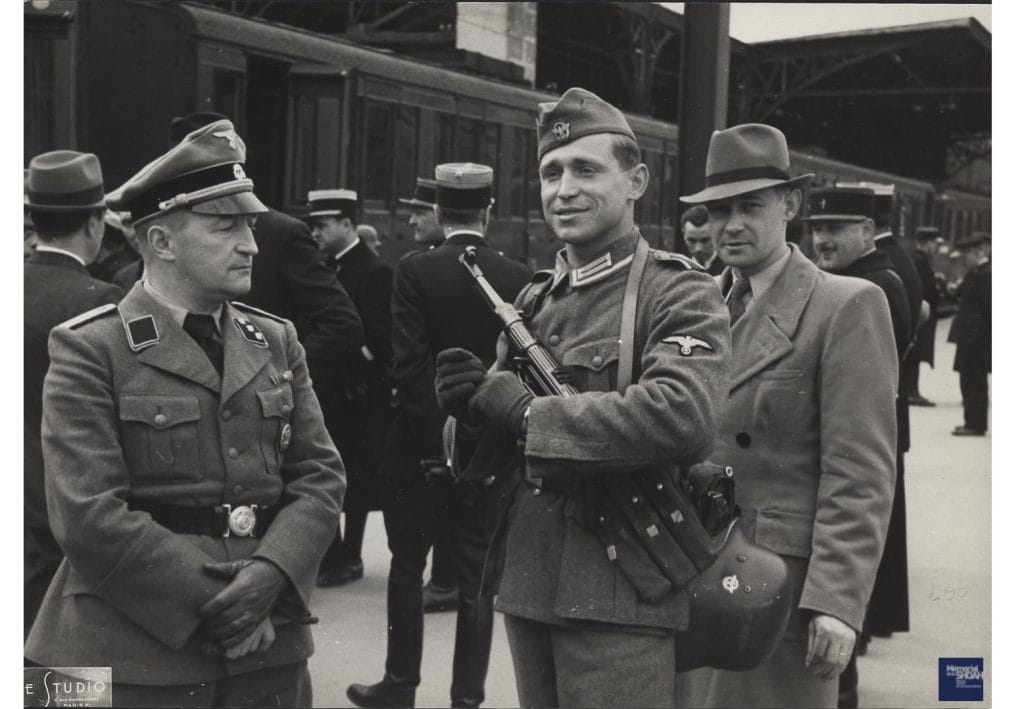
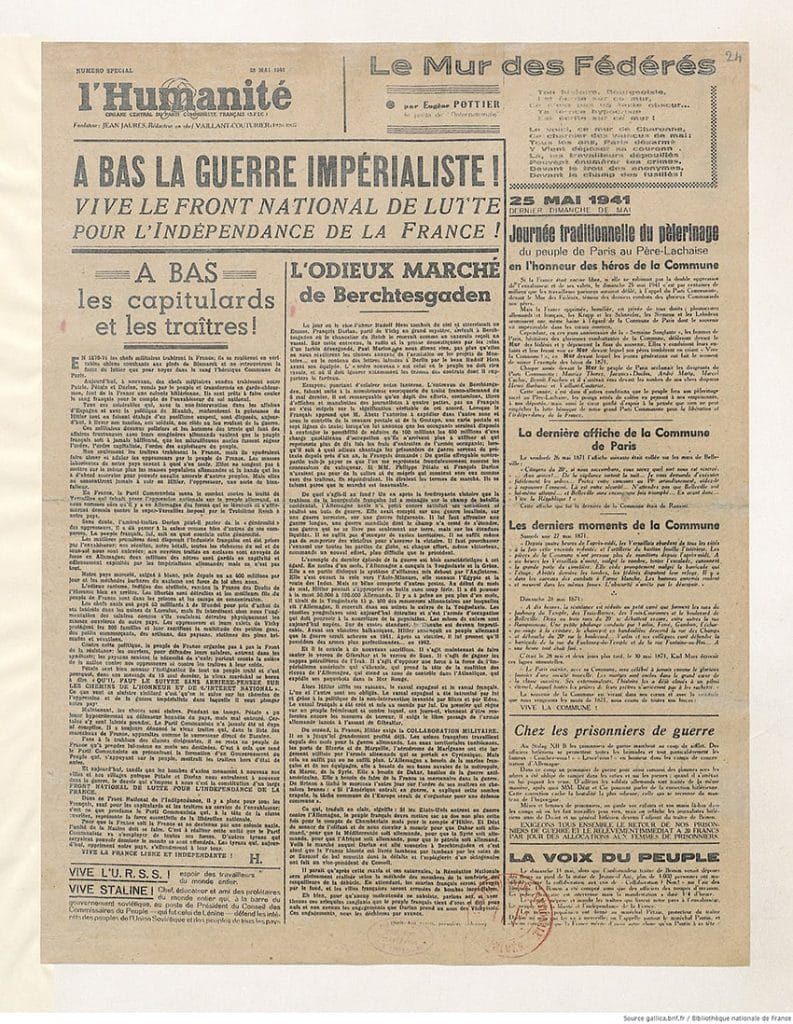
The Gestapo (Geheime Staatspolizei, or “Secret State Police”), founded by the Nazi Göring, instilled terror and, under Himmler, expanded its reach to the entire Reich (the Nazi German state) and the occupied territories. The Gestapo’s objective was the annihilation, by any means necessary, of opponents of the Nazi regime and, later, of Resistance fighters in the countries occupied by Hitler. It also played a leading role in the extermination of the Jews of Europe.
In Germany, Hitler was appointed chancellor on January 30, 1933. As early as February 12, Göring took command of the Prussian police and, on April 28, created the Gestapo, which was authorized to act without restriction, to carry out secret arrests, impose indefinite detention, and send people to concentration camps—without charges, without trial, without evidence, and outside the jurisdiction of any court. All German states were affected. Led from 1935 to 1945 by Heinrich Müller, the Gestapo was organized into six departments, each comprising several sections.
Section B4, headed by Adolf Eichmann, would organize the extermination of the Jews of Europe. On June 17, 1936, Himmler was appointed head of the SS (Schutzstaffel). On September 27, 1939, all police agencies (Gestapo, SD, Kripo, SS) were consolidated into the Reich Main Security Office (RSHA), placed under Heydrich’s command. All senior officers joined the SS, the Nazi regime’s main organization, which was entirely devoted to Hitler. On July 31, 1941, Heydrich launched Operation Reinhard to plan the extermination of two million Polish Jews.
In Paris, the Gestapo, headquartered on Rue des Saussaies, was initially headed by Kurt Lischka. Its 3,500 police officers were aided by 6,000 French agents and the tips provided by 24,000 “informants.” In April 1942, in the occupied territories, police powers were transferred from the military to SS Police General Carl Oberg. Torture was widespread and carried out, among other examples, by the head of the Gestapo in Lyon, Klaus Barbie—nicknamed the “Butcher of Lyon”— who tortured Jean Moulin and was responsible for the murder of 4,000 people and the deportation of 7,500 Jews. Many members of the Resistance were tortured by Gestapo agents.
Led by Lafont and Bonny, one of the French Gestapo’s offices, located on Rue Lauriston in Paris’s 16th arrondissement, was responsible for numerous atrocities. This group consisted of gangsters and former corrupt police officers. Their connections with the Occupation forces enabled them to engage in various forms of illicit activity, notably looting Jewish property.
References:
— Jacques Delarue, 1996, *History of the Gestapo*, Fayard.
— Höne, Heinz, 1972, *The Black Order: A History of the SS*, Tournai, Casterman.