In Drancy, the unfinished Cité de la Muette housing complex served as an internment camp and later as a gathering place for Jews during the German Occupation.
Nearly 63,000 internees at Drancy were deported to extermination camps.
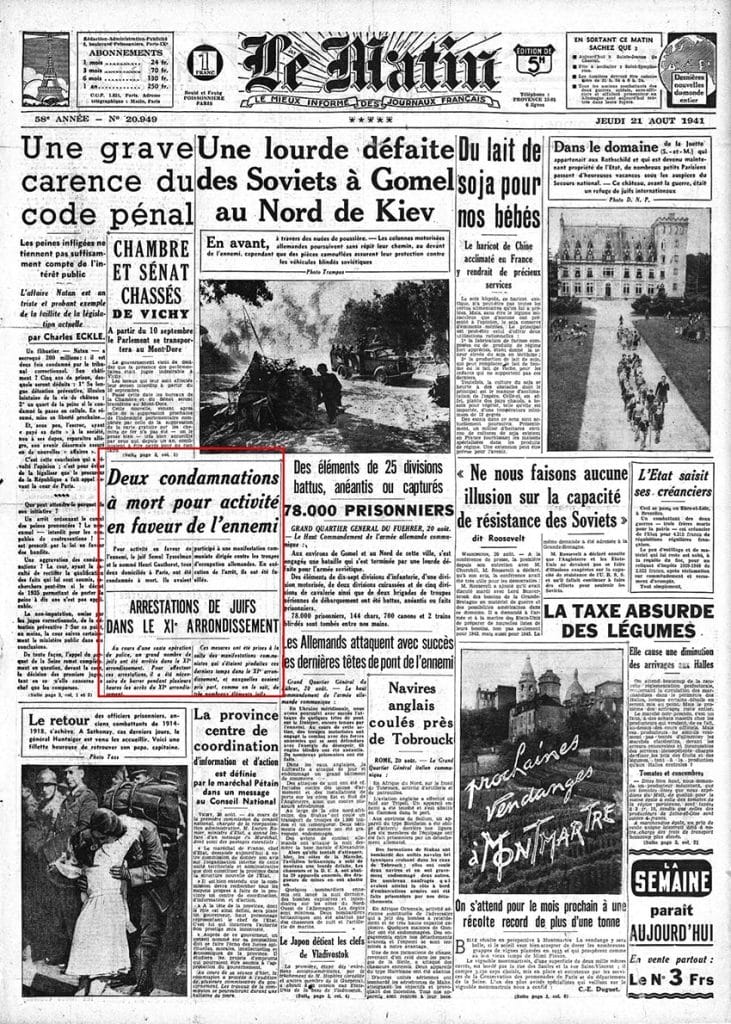
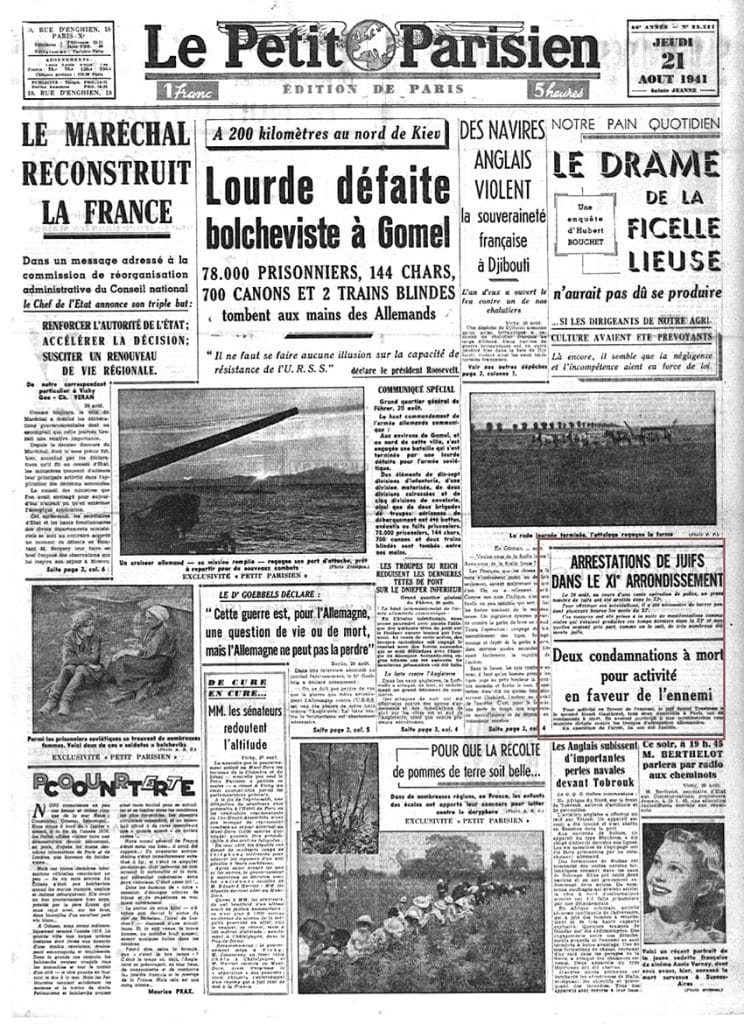
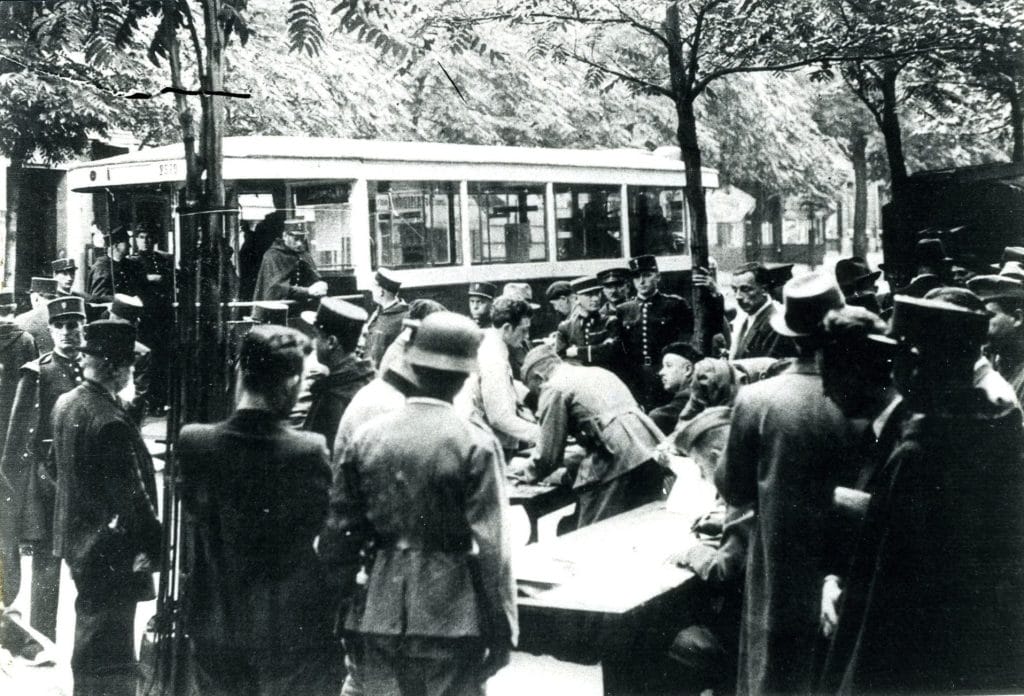
In Drancy (in the Paris region), beginning in 1941, the Cité de la Muette—which was under construction at the time—was converted into an internment center and a site of reprisals. On August 20, following the large-scale roundup carried out in Paris, 4,230 men were transferred to Drancy.
The camp, under Gestapo control, is guarded by French gendarmes. Living conditions there are appalling. The facilities are rudimentary, and hunger is a constant. The lack of visits, the harassment, and the constant brutality of many guards only add to the internees’ distress. Dangerous sanitary conditions and malnutrition lead to disease, particularly acute dysentery.
The health situation quickly spiraled out of control, and in November 1941, the Germans released more than 1,000 sick internees, both adults and children. They were all transferred to Rothschild Hospital.
An escape route, organized by medical staff with the help of a priest, will save a number of these children.
From December 1941 through March 1942, Jews—mainly Communist Resistance fighters of immigrant origin—were taken from the camp to be shot at Mont-Valérien or deported.
After the Vel’d’Hiv roundup on July 16, 1942, childless couples and single people were taken directly to Drancy. Families, including the elderly and children, followed.
The Cité de la Muette became the hub for the deportation of Jews from France to the death camps.
In April 1944, the 44 Jewish children from Izieu (Ain), who had been gathered at a shelter, were sent to Drancy by the Nazi Klaus Barbie before being murdered at Auschwitz.
At the beginning of the following summer, as Allied forces advanced, the Nazis stepped up the deportation of thousands of Jews who were being transported to the camp from the southern zone.
The last convoy left Drancy on August 17, 1944. The deportees were marched on foot to the Bobigny train station by the Nazi Aloïs Brunner, the camp’s last commander.
Virtually all of the Jews from France who were deported passed through Drancy on the orders of the Nazis and their French collaborators. In total, approximately 63,000 Jews, divided into some 60 convoys, departed from the Bourget-Drancy station and then the Bobigny station, mainly bound for Auschwitz-Birkenau.
The Drancy camp, liberated on August 20, 1944, by the Resistance, remains a symbol of anti-Semitic persecution in France.
References:
— Maurice Rajsfus, 2012, *Drancy: A Very Ordinary Concentration Camp, 1941–1944*. Published by Le Cherche-Midi
— Directed by Jean-Christophe and Rémi Bénichou, 2015, *The Jews Saved from the Rothschild Hospital*, TV documentary . Aired on France 5.