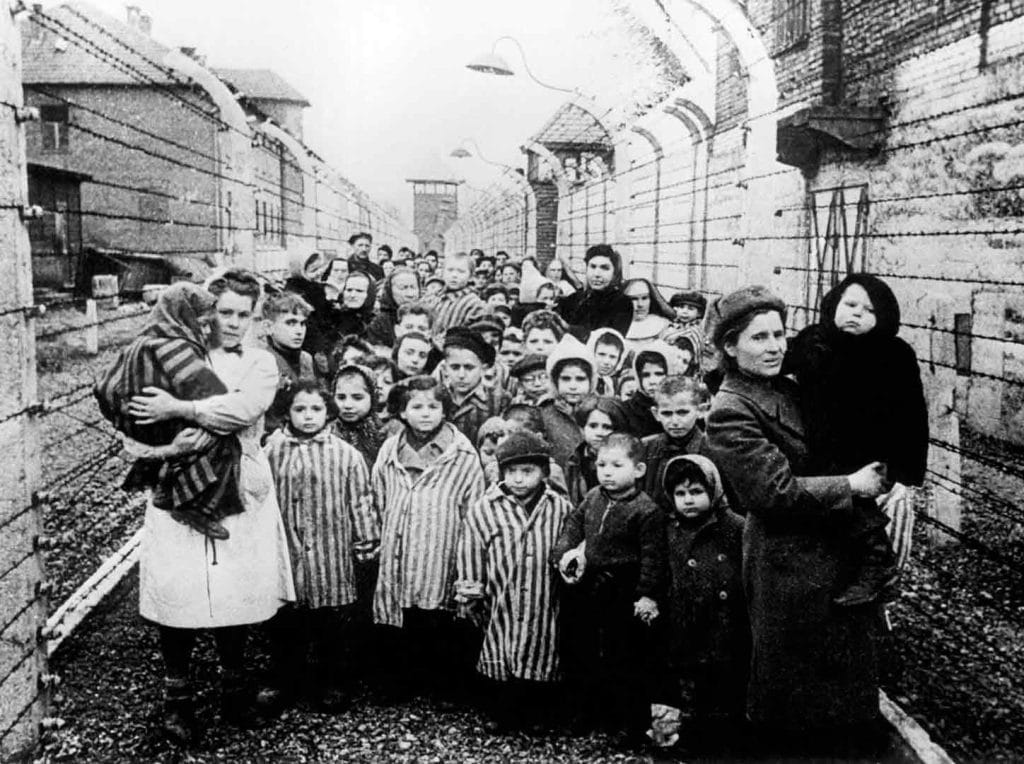
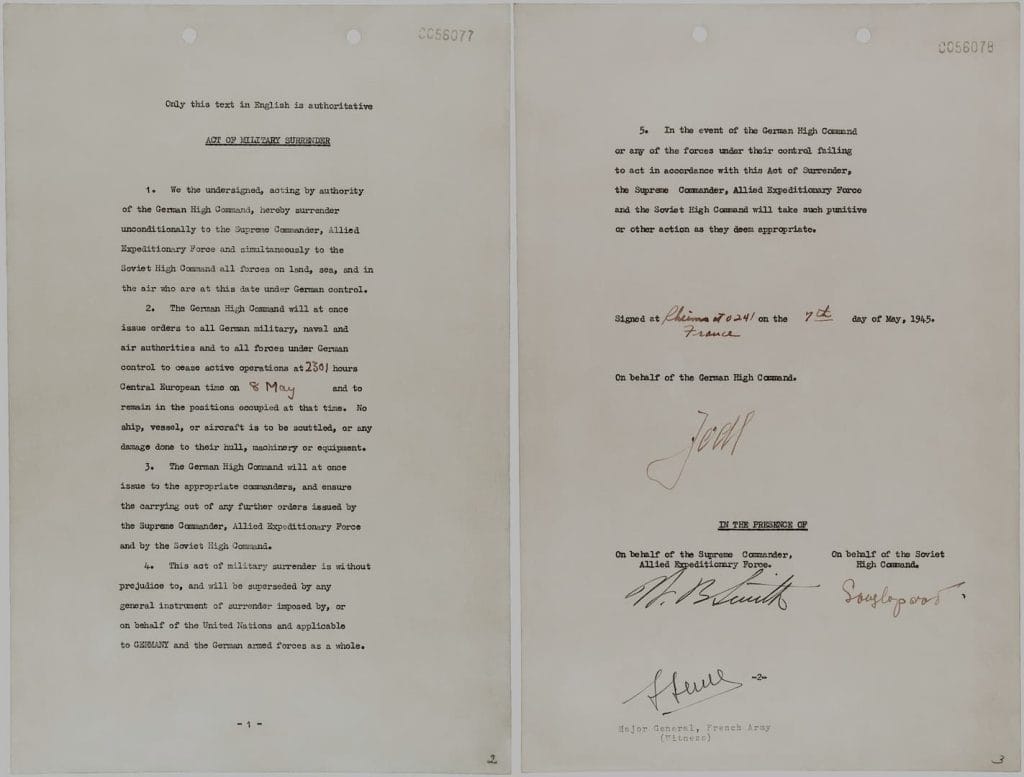
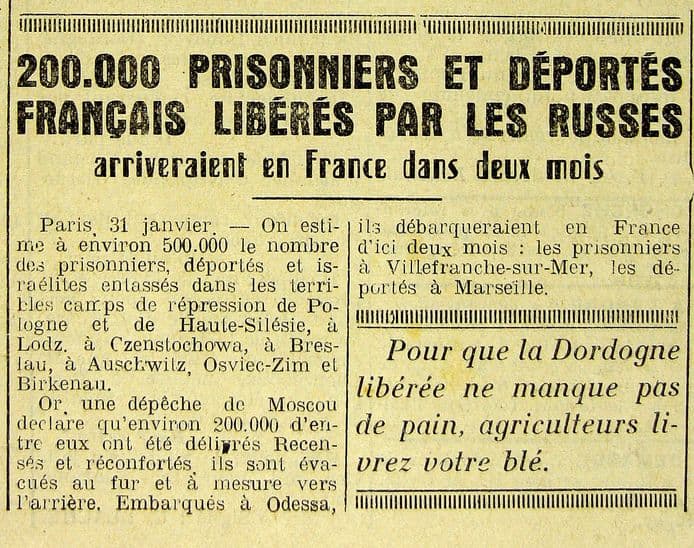
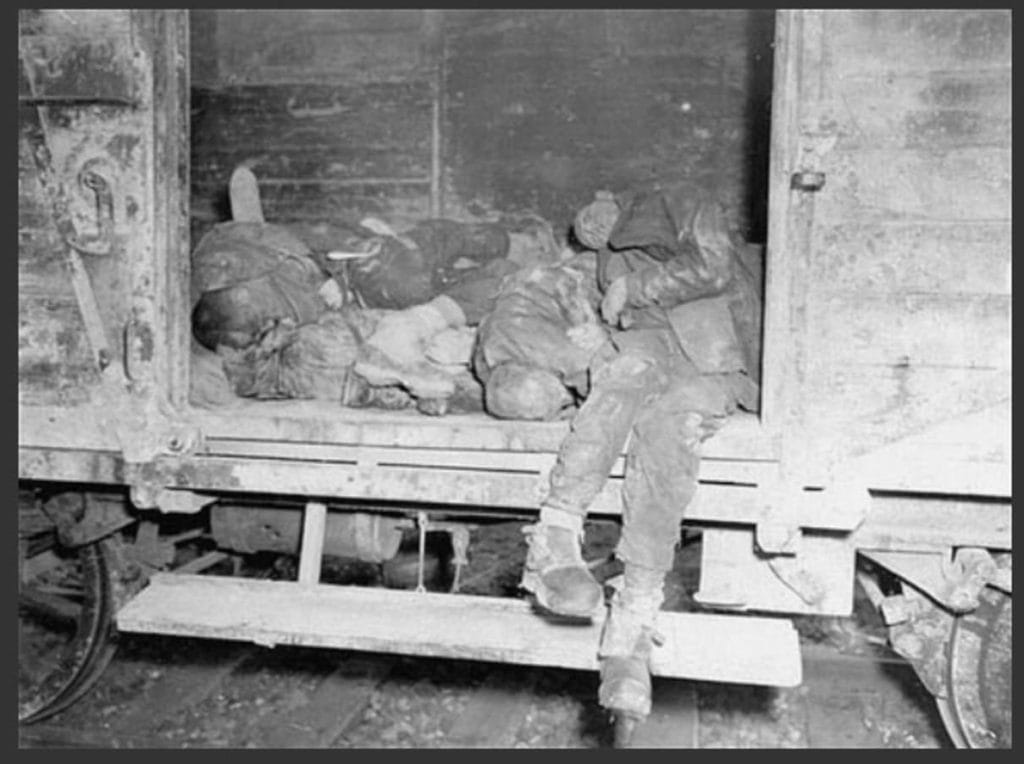
At the end of World War II, as the Allies advanced, the SS destroyed all evidence of their crimes (gas chambers and crematoria). They transferred the surviving deportees to camps without killing facilities in Austria and central Germany; the process of exterminating the Jews was not to be revealed.
In 1944 and 1945, during the forced marches (the “death marches”), countless men and women died of exhaustion, starvation, disease, or exposure, or were executed by SS guards who had been ordered to kill the weakest. The Nazis needed labor, and deportees who were still fit for work could be “reused” in weapons production.
“We marched all night, through snow up to our knees. We were forbidden to stop, on pain of being shot on the spot; we relieved ourselves while walking. The SS, worried about the advance of Soviet troops, picked up the pace. Our strength is rapidly waning; numerous corpses litter the road. After a night and a day of marching, we stop at a barn…
Then we walked for another two days and three nights, covering more than 250 km to the Gross-Rosen train station, where a train was waiting for us. We got on board. They were open-platform cars.
A thin layer of snow covers the ground and turns to water as we take our seats… About eight days after leaving Auschwitz, we arrive at the Ravensbrück camp. It is a vision of hell on earth… There is nothing but vermin, dead bodies, and excrement…”
Paulette Sarcey, a young activist with the Jewish section of the M.O.I., recounts her “death march,” which tens of thousands of female deportees were forced to endure.
References:
— Sarcey, Paulette (with Karen Taïeb), 2015, *Paula: Surviving with Determination*. Tallandier
— Letter from Jews who participated in the Resistance and were deported, January 1995, No. 21.