The Royallieu military barracks were requisitioned by the German army and converted into an internment and transit camp on June 21, 1940.
It was from this camp in Compiègne-Royallieu—Frontstalag 122—that the very first deportation train to leave French soil departed.
This transport, dated March 27, 1942, took 1,112 Jews to Auschwitz. The second transport, consisting entirely of Jews, left the camp on June 5, 1942.
Royallieu was the second-largest internment camp in France during the Occupation, after Drancy. It was the only camp to be under the sole control of the German administration and the Nazi security service from June 1941 to August 1944. It held approximately 54,000 people, mainly Jews and/or members of the Resistance.
The camp is divided into three sections:
— French political prisoners (communists, members of the Resistance, etc.), who make up 70% of the internees,
— the Anglo-Saxon prisoners.
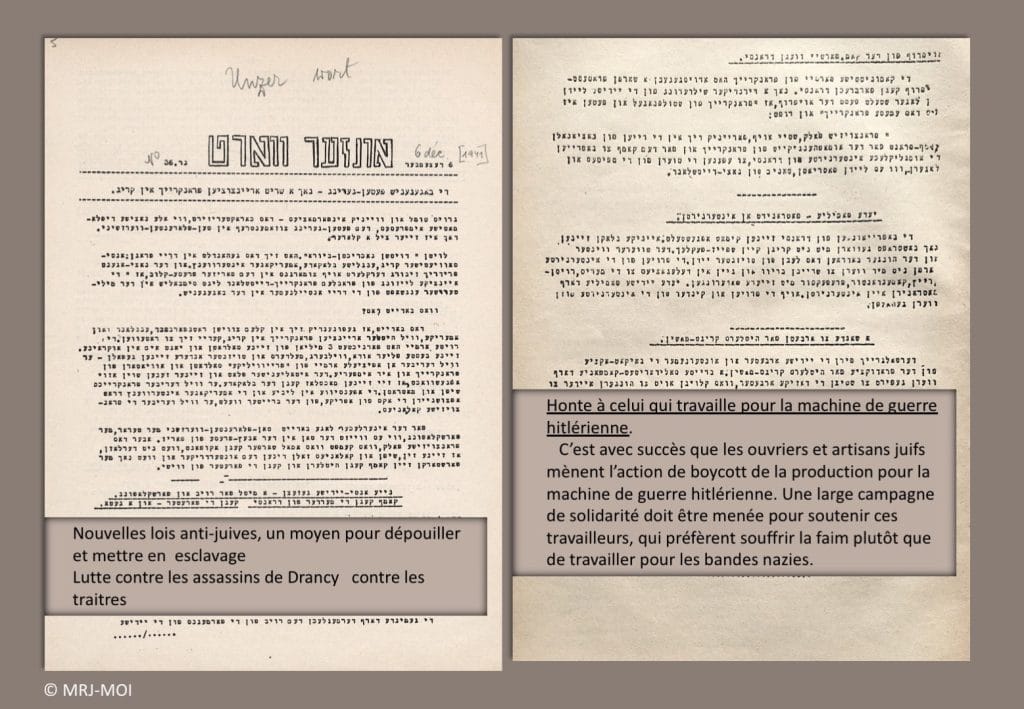
— and, in the third phase, Russian nationals, women, and then, from December 1941 to July 1942, Jews.
Between June 1941 and August 1944, 50,000 people were deported to Nazi camps.
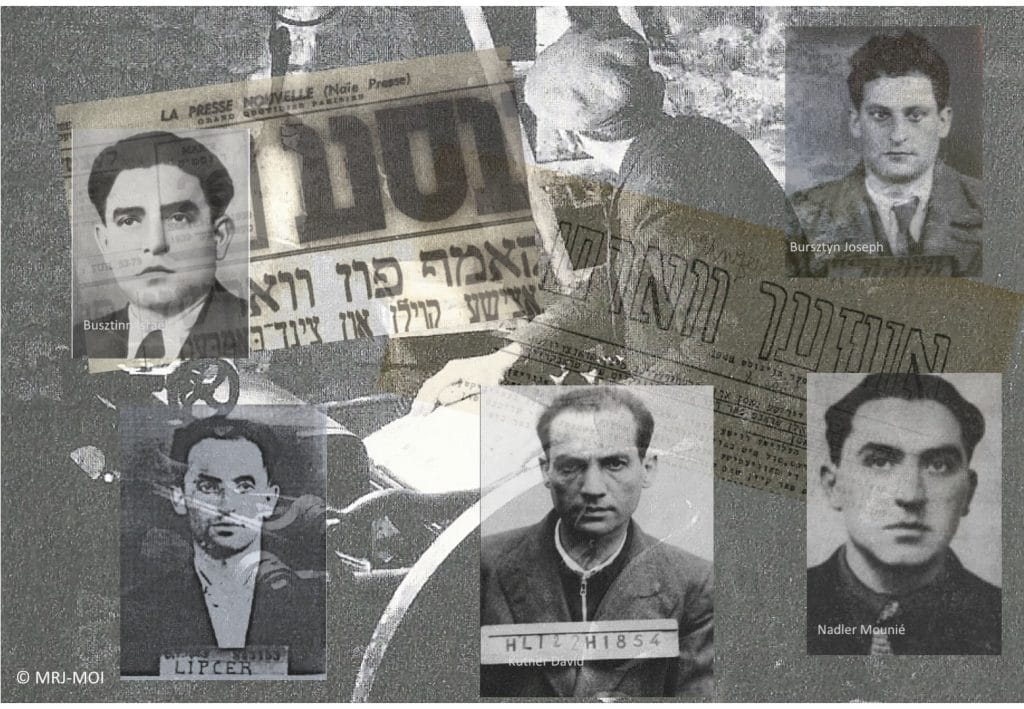
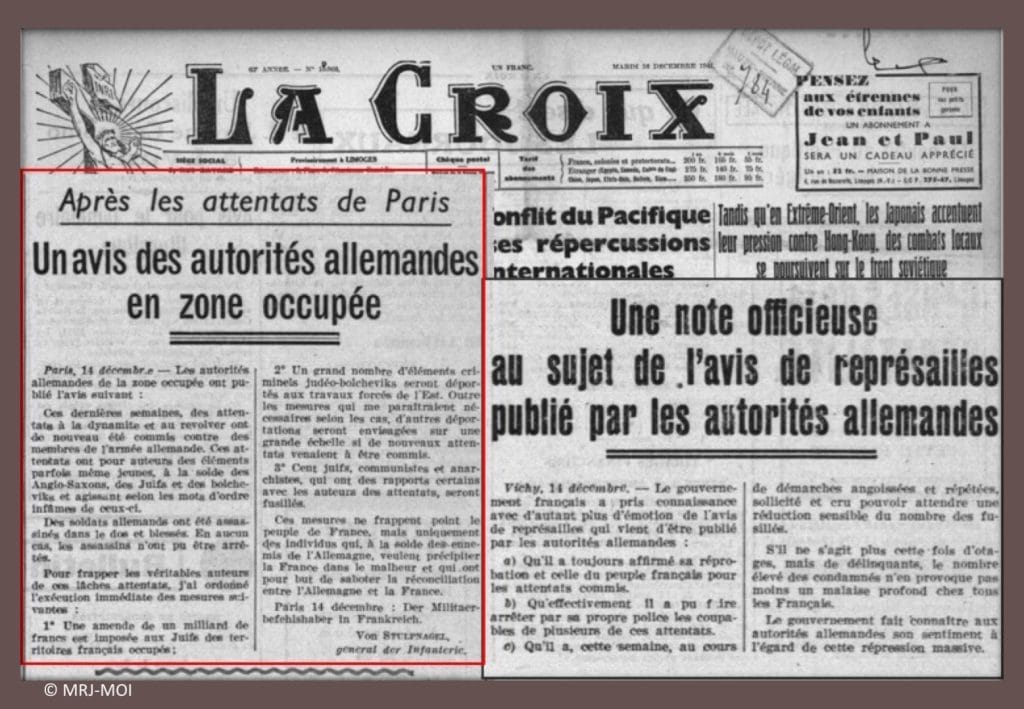
On December 12, 1941, a roundup of 743 French Jews, known as the “roundup of prominent figures,” was carried out in Paris by the French police and the Gestapo. Three hundred Jews interned at Drancy, transferred at the request of the German authorities, made up the rest of the planned contingent.
On March 27, 1942, after three months of internment under inhumane conditions, they all boarded the first transport that departed from Compiègne, leaving France bound for the Auschwitz death camp. On June 5, 1942, 1,000 Jews were deported and left Compiègne for Auschwitz.
The first “repression convoy,” made up of Resistance fighters, departed on July 6, 1942; it was part of the Nazi policy against Judeo-Bolshevism. The hostage policy was intended to deter communist Resistance fighters—whether Jews or not—from continuing their attacks against officers and troops of the occupying army.
In December 1942, General Von Stülpnagel proposed to Hitler that 1,000 Jews and 500 young communists be deported to Eastern Europe.
Between June 1941 and August 1944, 28 main convoys departed from the Compiègne train station, transporting nearly 40,000 political prisoners to the Nazi camps at Auschwitz, Mauthausen, Buchenwald, Ravensbrück, Dachau, and others…
Reference:
Husser, Beate; Besse, JP; Leclère-Rosenzweig, F. 2007, Frontstalag 122—Compiègne—Royallieu. A German Internment Camp in the Oise. 1941–1944, Published by the Oise Departmental Archives.